The Government of The Gambia has issued a detailed response to the recent CepRass National Opinion Poll, acknowledging widespread public concerns over corruption, economic management, and President Adama Barrow’s performance while insisting that the ruling National People’s Party (NPP) maintains a strong structural advantage heading into December’s presidential election.
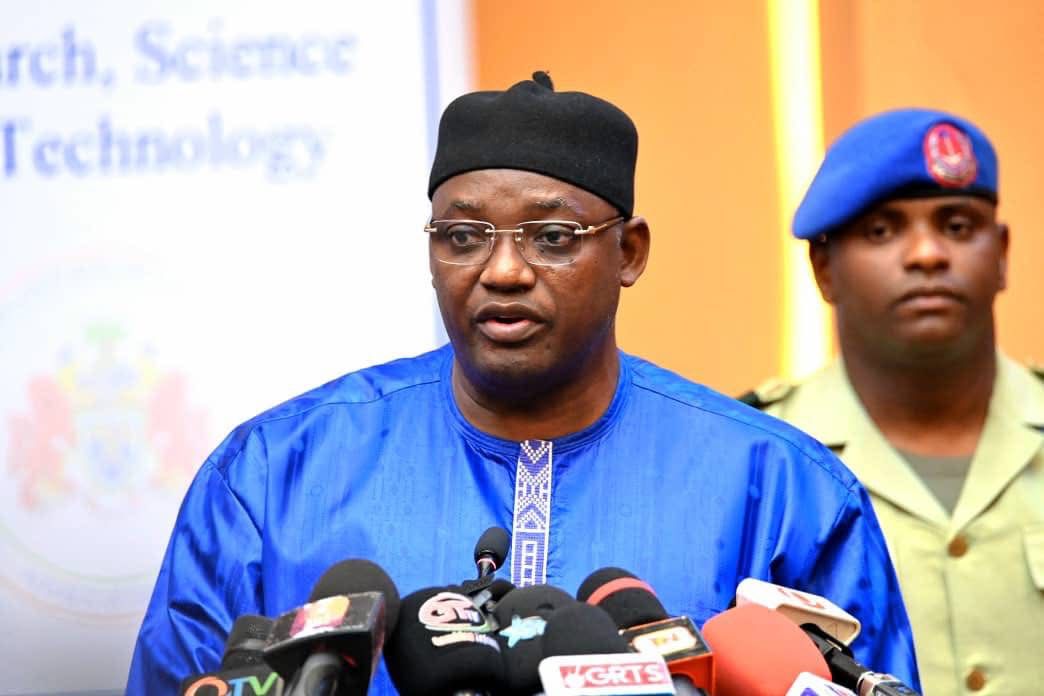
In a formal press statement released by the Ministry of Information, Media and Broadcasting Services, the government described the CepRass findings—conducted late last year and released in late January—as a snapshot of public perceptions rather than a full assessment of its achievements. It highlighted that key areas such as infrastructure expansion, energy access, health and education investments, and national stability were not covered in the survey.
The poll revealed significant dissatisfaction: 66% of respondents rated the government’s fight against corruption poorly, while 60% gave low marks to economic management, and 66% expressed unhappiness with job creation. Only 37% expressed trust in President Barrow, with 56% disapproving of his overall performance. Additionally, 58% viewed his record as worse or much worse than that of previous presidents.
The government attributed these views to global economic pressures, including inflation and cost-of-living challenges, rather than domestic failures alone. It pointed to ongoing investments in agriculture, tourism, energy, and social protection programs, while emphasizing its commitment to translating growth into visible jobs and household resilience, particularly for youth.
On corruption, the statement defended institutional reforms, including the establishment of a dedicated Anti-Corruption Agency and strengthened audit and oversight mechanisms. It stressed that anti-corruption efforts must follow due process and the rule of law, rejecting what it called “political slogans or mob justice.”
The government also addressed the role of social media, noting that 76% of respondents have access to such platforms. While crediting them for boosting civic participation, it warned of misinformation, half-truths, and amplified frustration that can distort perceptions.
A significant portion of the statement focused on electoral implications. The poll showed 46% of respondents believed the NPP Alliance was most likely to win, compared to 20% for the United Democratic Party (UDP), with the rest scattered or undecided. In voting intention, 34% backed the incumbent President, while 49% preferred “another candidate”—though the government argued this opposition support fragments, with UDP at roughly 17% overall, leaving the NPP with a consolidated bloc roughly double its nearest rival.
The government framed this as evidence of incumbency advantages, organizational strength, alliances, and electoral experience favoring the NPP. It suggested public frustration exists but has not coalesced into a unified alternative, reinforcing the ruling party’s perceived dominance.
The statement contrasted the current democratic environment—marked by peace, pluralistic politics, independent media, active civil society, competitive elections, and respect for human rights—with previous repressive eras, arguing that freer expression naturally amplifies criticism.
On constitutional reform, it reiterated its commitment to the process, including term limits, which were proposed but rejected by the National Assembly.
In conclusion, the government portrayed the poll as reflecting an engaged, critical populace demanding better governance and faster reforms. It reaffirmed a dedication to institutional strengthening, lawful anti-corruption measures, economic transformation, and the preservation of stability through dialogue and improvement.
The response comes as political parties, including the UDP and others, have begun analyzing the poll’s insights to refine strategies for the 2026 race, with observers noting that the findings highlight both challenges for the incumbent and advantages in organization and perceptions of likely victory.