By Sainabou Sambou
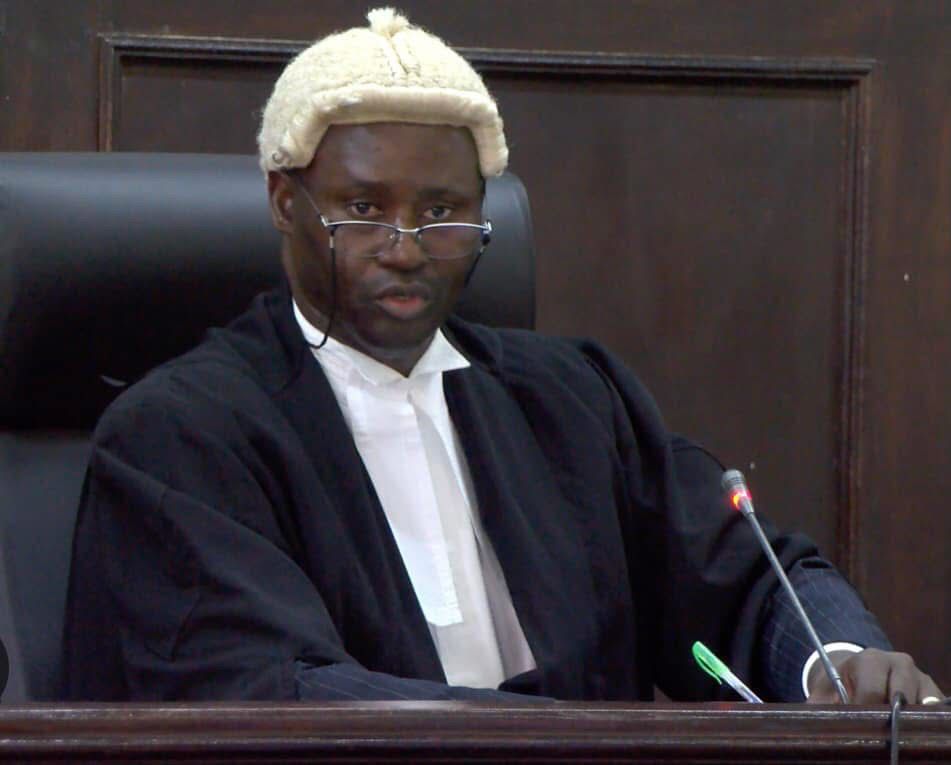
In a packed courtroom in Banjul, the High Court, under the steady gaze of Justice Ebrima Jaiteh, delivered a major ruling on July 8, 2025, granting Paulo Djabi, the first accused in a gripping money laundering case, access to an additional 25 percent of his restrained funds. The decision, sealed by the court, allows Djabi to cover mounting living expenses and legal fees as his high-stakes trial unfolds.
The courtroom buzzed with anticipation as Djabi’s counsel, the seasoned Counsel, Mr. S.M. Tambadou, rose to argue a Motion on Notice filed on June 4, 2025. Tambadou sought to unlock 50 percent of the funds held by the Sheriff of The Gambia and the Drug Law Enforcement Agency (DLEAG), which were frozen under a prior court order dated October 31, 2023. His client, a father of two burdened with extended family obligations, faced financial ruin, Tambadou argued, his voice steady but urgent.
Affidavits from Djabi and a supporter, Mustapha Jabbi, painted a dire picture: restricted movement, no income from abroad, and an initial release of only 25 percent. Invoices labeled “PJ” for property management, school tuition for Djabi’s daughter, and legal fees bolstered the plea.
“Mr. Djabi is indigent,” Tambadou declared, gesturing to the affidavits. He dismissed the prosecution’s opposition as a tired rehash of earlier arguments, lacking fresh substance. The funds, he insisted, were essential for his client’s survival and a fair defense.
State Counsel M. Singhateh, sharp and resolute, countered fiercely. Representing the prosecution, she argued that releasing half the restrained assets would gut the restraining order’s purpose. Quoting Section 51(6)(a) and (b) of the Anti-Money Laundering and Combating of Terrorist Financing Act, 2012, she stressed that the frozen funds were critical evidence in the case. “The integrity of the prosecution depends on preserving these assets,” she said, her words slicing through the tense air.
Justice Jaiteh, calm and measured, leaned forward, his pen poised over the affidavits and exhibits. He acknowledged Djabi’s hardship, noting that Section 51(6) of the Act allowed releases for reasonable living and legal costs. His voice carried weight as he observed that only one of the 21 charges involved physical cash, and the requested funds seemed peripheral to that count. Invoking the constitutional presumption of innocence, he underscored the need for a fair trial.
The gallery held its breath as Jaiteh delivered his ruling. “I am not persuaded that 50 percent is proportionate,” he said, pausing briefly. “However, a further release of 25 percent serves the interests of justice.”
The words landed like a gavel, measured yet final. The court ordered the Sheriff and DLEAG to release the additional funds strictly for Djabi’s living expenses and legal defense.
As the session adjourned, whispers rippled through the courtroom. For Djabi, the ruling offered a lifeline, easing the financial chokehold while keeping the bulk of the funds locked as evidence. For the prosecution, it was a partial victory, as it preserved most of the case’s foundation. Outside, the Banjul heat shimmered, but inside, the case burned hotter than ever, with the trial’s next chapter looming.
The ruling, signed and sealed by Justice Jaiteh, marked a delicate balance between compassion and caution, ensuring Djabi’s survival without unraveling the prosecution’s case. As the court emptied, one truth lingered: in this legal chess match, every move counts, and the board is far from settled.