By Fatou Dahaba
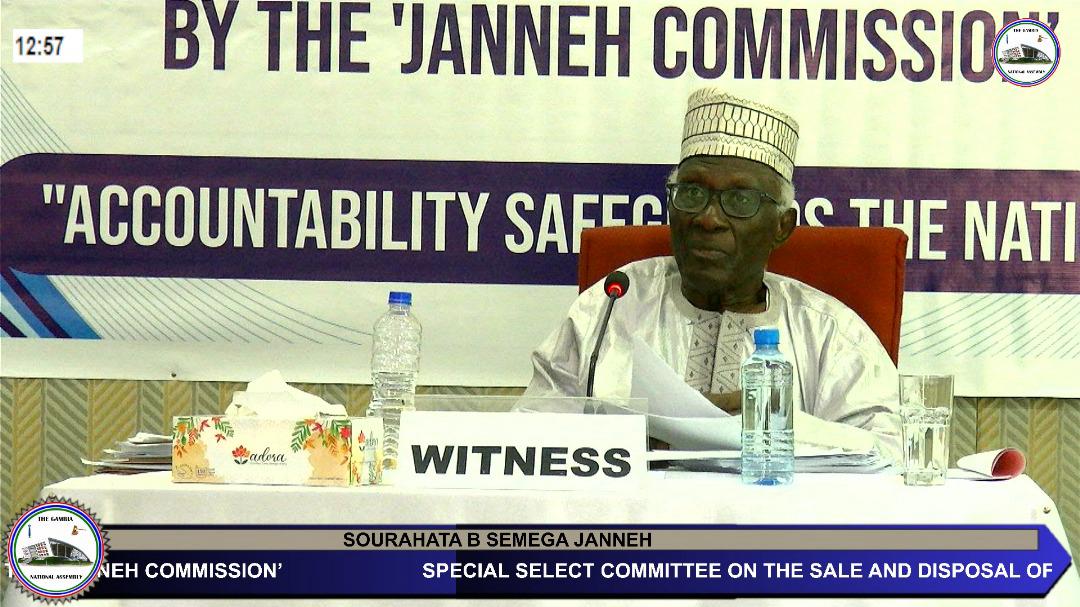
Former Chairman of the Janneh Commission, Lawyer Surahata Janneh, on Tuesday vigorously defended the commission’s direct involvement in the sale of former President Yahya Jammeh’s vehicles, while explaining why it deliberately avoided handling the disposals of livestock and aircraft.
Appearing before the National Assembly’s select committee probing the controversial disposal of Jammeh-era assets, the veteran lawyer insisted the commission had legitimate authority to sell hundreds of vehicles but acknowledged it acted without formally lifting a pre-existing High Court injunction that had frozen nearly all of Jammeh’s assets.
“The government had obtained an injunction from the High Court freezing everything except three assets – Dudes Hotel and two others we later identified,” Janneh told the committee. “That order should have been relaxed before any sales, but we believed the commission had concurrent jurisdiction with the High Court.”
The revelation drew sharp questions from committee members and counsel Dibba, who asked whether a Commission of Inquiry has the power to effectively set aside or vary a High Court order without a formal application. Janneh conceded that no such application was ever made, and the commission proceeded under its own interpretation of its mandate.
Regarding the mechanics of vehicle sales, Janneh explained that every vehicle was assigned a reserve price, which served as the minimum bid. However, several vehicles were sold below reserve, triggering accusations of procedural breaches.
Counsel Dibba pressed Janneh on who authorized sales below the reserve price. Testimony from former commission field officers revealed that whenever a buyer offered less than the reserve, they would seek verbal approval from Commissioner Abissiah George. The officers claimed that then-Commission Secretary Ramatoulie Sarr rarely visited the field herself and relied on her two assistants.
Perhaps the most striking moment came when Janneh categorically denied ever being consulted on below-reserve sales.
“As far as I am concerned, I was never personally approached about selling any vehicle below the reserve price,” he stated. The officers had earlier told the committee they could not reach the chairman because “he did not have a mobile phone at the time.”
Janneh also distanced the commission from any sales orchestrated by Alhaji Mamadi Kurang, the former commission secretary. He confirmed that the Cabinet had written to the commission demanding that Kurang halt his activities and issue an apology. Still, he insisted neither the President nor the Attorney General ever interfered with the commission’s core work.
The former chairman further justified the commission’s selective engagement: vehicles were sold directly because they were straightforward and generated immediate revenue for the state, whereas livestock would have required ongoing care and feeding, and aircraft posed complex regulatory and maintenance issues.
Committee members expressed concern that the commission’s failure to seek variation of the High Court injunction could render many vehicle sales legally questionable. Janneh maintained that the commission operated in good faith, despite intense pressure to recover state funds quickly.