By Sainabou Sambou
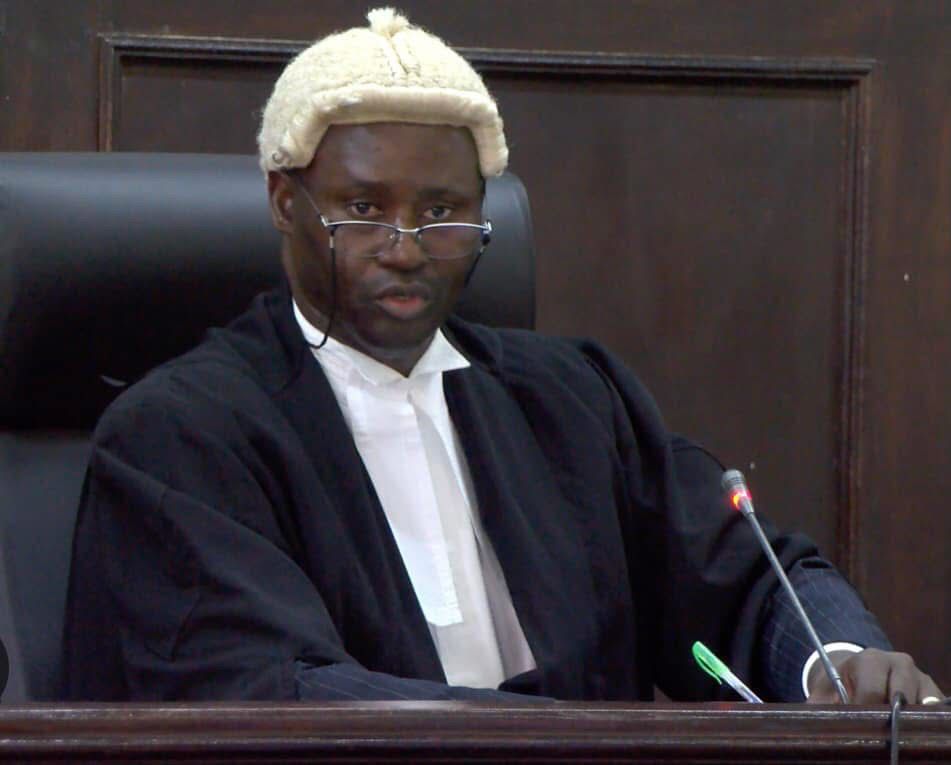
Justice Ebrima Jaiteh of the High Court in Banjul on Monday, November 17, 2025, ruled that three senior officials—Balla Kandeh, Omar Malleh Ceesay, and Muhammadou Lamin Jaiteh—must open their defence in a multimillion-dollar corruption case linked to the Global Fund malaria grant.
The men are jointly charged in a 28-count indictment filed on March 17, 2025. The charges include official corruption, procurement violations, economic crimes, forgery, obtaining money by false pretences, and theft, all arising from alleged irregular payments under the Global Fund malaria programme between 2018 and 2020.
In delivering the ruling, Justice Jaiteh noted that the indictment “strikes at the heart of integrity in public finance,” stressing that the funds in question were intended to support national health services.
During the prosecution’s case, 12 witnesses testified, including officials from the Ministry of Health, officers of the Police Fraud Squad, and representatives of the Health Promotion and Development Organisation (HePDO). The State also tendered a wide range of documents, including payment vouchers, memoranda of understanding, consultant CVs, bank statements, and internal correspondence.
Key testimony came from Muhammed Sissohor (PW4) and Basirou Phillot (PW5), who told the court their names were used without their consent as supposed consultants, leading to unauthorised cash withdrawals. Justice Jaiteh described this as “deliberate identity misuse” that reflected “a calculated scheme and clear criminal intent.”
Other witnesses addressed procurement processes, approval procedures, administrative controls, and details of the police investigation. The accused persons’ extra-judicial statements were also admitted into evidence.
After the State closed its case, all three accused filed “no case to answer” submissions. The court, however, held that the prosecution had presented evidence which, if believed, could sustain convictions.
Justice Jaiteh analysed the evidence count by count. He found that the State had produced sufficient prima facie evidence on all charges—including official corruption, disobedience of statutory duty, false pretences, economic crimes, forgery, and theft.
Regarding individual responsibility, the judge noted that the evidence against Balla Kandeh was largely circumstantial but still strong enough to raise a prima facie case, including indications that he knew the consultant’s CV was false.
For Omar Malleh Ceesay, the judge stated that the case was the “strongest,” citing testimony that he personally brought the forged CV to the Contract Committee—directly linking him to the alleged offenses.
As for Muhammadou Lamin Jaiteh, then Permanent Secretary, the court found that his approval of payments supported by disputed documents, coupled with his police statement, allowed for an inference of knowledge and participation.
Justice Jaiteh dismissed the no-case submissions in their entirety, ruling that all three accused must enter their defence on all 28 counts when the trial resumes.
All three accused were present in court. The State was represented by S.L. Jorbateh, M. Sarr, and F. Drammeh, while the defence counsel, K. Jallow, appeared on behalf of the accused persons.