By Aja Beyai
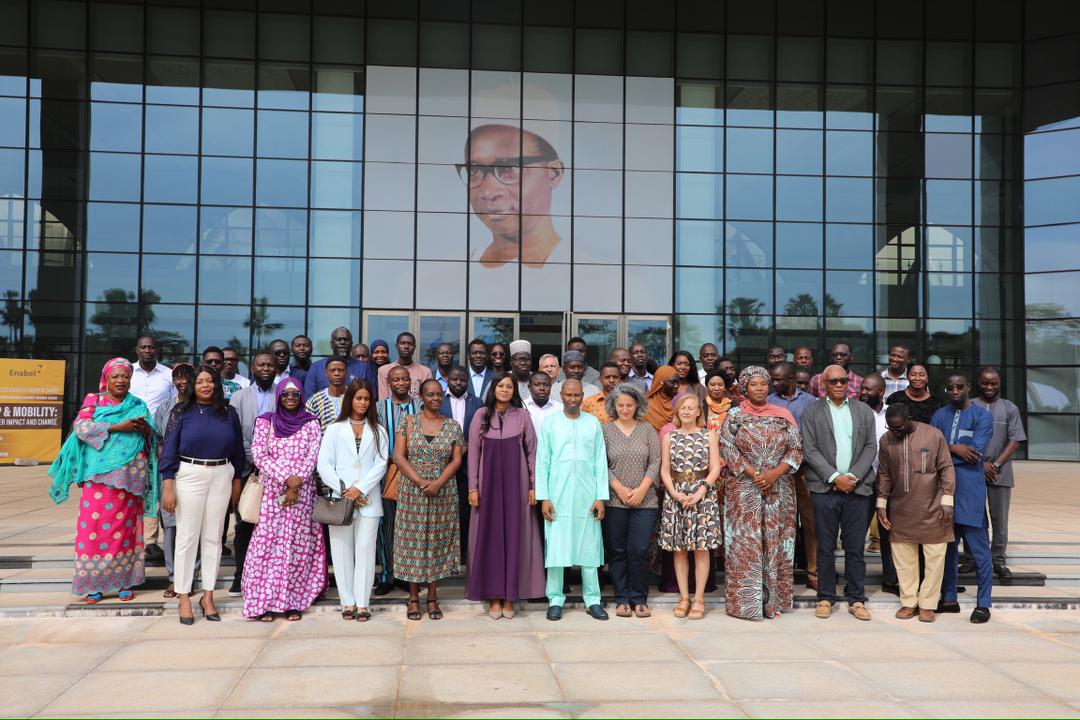
In a landmark move to harness mobility as a catalyst for economic growth, The Gambia, the European Union, and Enabel, the Belgian Development Agency, held a workshop on Thursday as part of the Boosting Gambian Talents (BGT) project at the Sir Dawda Kairaba Jawara International Conference Center. The event, coinciding with Global Entrepreneurship Week, brought together government officials, private sector leaders, civil society, and diaspora representatives to co-create the project’s Theory of Change.
The BGT project, funded under the EU’s Flexible Mechanism for Migration and Forced Displacement, aims to strengthen The Gambia’s entrepreneurial ecosystem by forging partnerships between Gambian and European private sectors. It focuses on training, job creation, and fostering inclusive economic growth, with a particular emphasis on empowering youth and women. By linking mobility with entrepreneurship, the initiative seeks to transform migration into a choice driven by opportunity rather than necessity.
Speaking on behalf of the Minister of Trade, Industry, Regional Integration and Employment, Permanent Secretary Mr. Abdoulie Jallow underscored the project’s alignment with The Gambia’s Recovery-Focused National Development Plan (2023–2027). “This initiative will convert the entrepreneurial spirit of our youthful population into thriving enterprises,” Jallow said, highlighting its role in supporting Micro, Small, and Medium-sized Enterprises (MSMEs) as engines of job creation. He commended the EU and Enabel for turning migration challenges into development dividends.
Enrica Pellacani, Head of Cooperation at the EU Delegation, emphasized the project’s dual focus on economic inclusion and migration governance. “We aim to turn mobility into a positive force that drives entrepreneurship and builds resilient communities,” she stated. Pellacani noted that BGT is one of three EU-funded initiatives in The Gambia addressing migration through legal pathways and skills development. She described the workshop as a “common journey” where stakeholders would shape the project’s intervention logic to reflect local realities.
Raffaella Grecco Tonegutti, Coordinator of Enabel’s Human Mobility Team, echoed the call for collaboration. Tonegutti stressed the importance of knowledge exchange between Gambian and Belgian ecosystems, while Jeng urged participants to ensure national ownership of the project’s outcomes.
The workshop’s Theory of Change exercise invited input from diverse stakeholders, including government ministries, private sector actors, academia, and online participants from Belgium and Senegal. Discussions centered on promoting entrepreneurship, leveraging diaspora networks, and creating pathways for mutually beneficial mobility and exchange.
Permanent Secretary of the Ministry of Foreign Affairs, Ms. Fatou Kineh Jobe, delivered opening remarks reaffirming the government’s commitment to people-centered migration governance. She hailed BGT as a continuation of successful EU-Gambia partnerships, such as the Migration and Sustainable Development in The Gambia (MSDG) project.
As Global Entrepreneurship Week unfolds, the BGT launch marks a bold step toward a resilient and inclusive economy. With youth unemployment and irregular migration as persistent challenges, stakeholders pledged sustained collaboration to ensure the project delivers tangible results. “Every job created, every skill developed brings us closer to a future where young Gambians thrive at home and abroad,” Pellacani concluded.
The workshop concluded with a formal declaration of openness, setting the stage for implementation in 2026.