By: Kebba Ansu Manneh
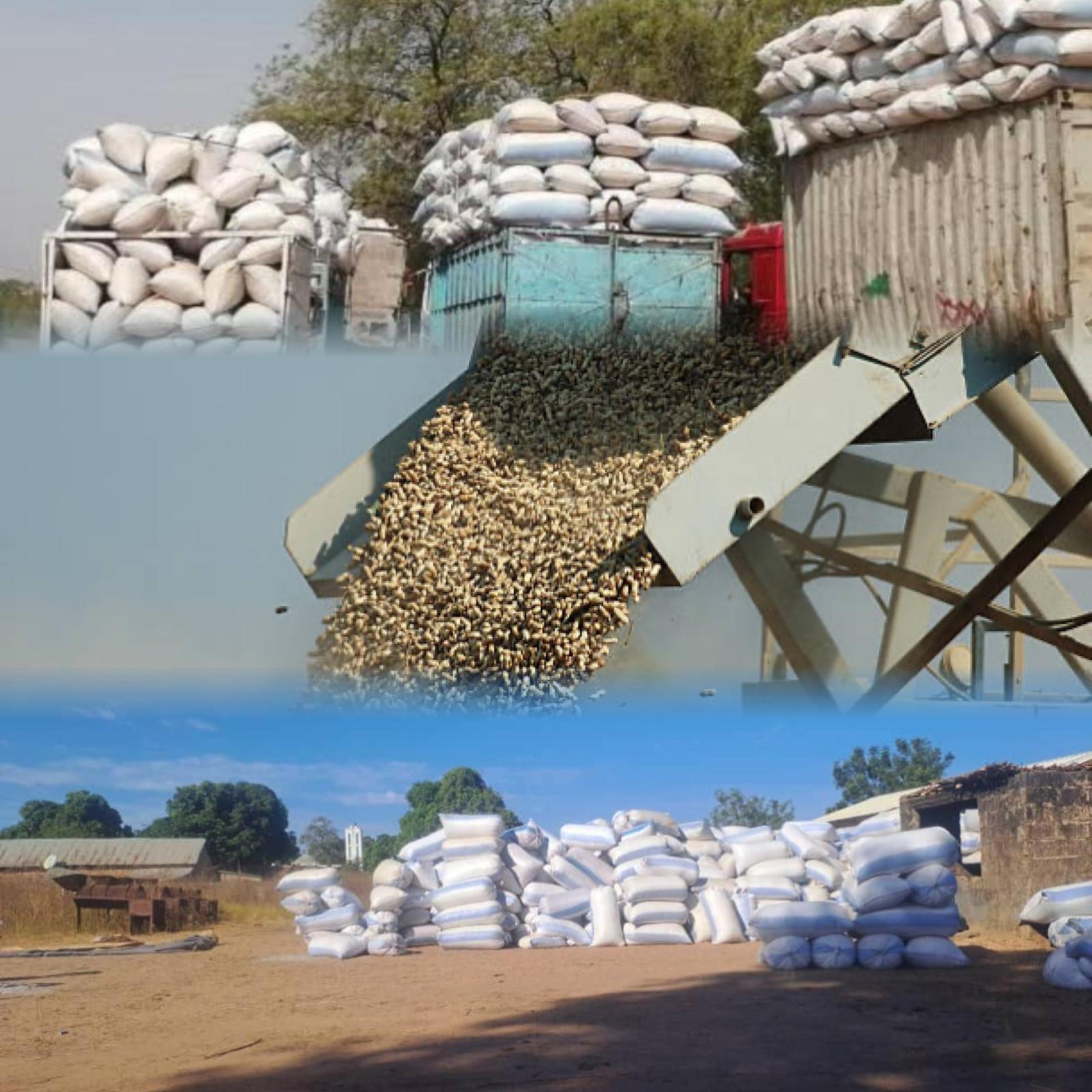
The National Food Security, Processing and Marketing Corporation (NFSPMC) has announced that it has purchased groundnuts from farmers valued at over D1.67 billion since the start of the 2025/2026 trading season, marking a significant boost to rural economies and food security efforts in The Gambia.
In its latest periodic SECCO disbursement report released on February 7, 2026, the NFSPMC detailed that a total of D1,671,468,493 worth of farmers’ groundnut has been acquired. This figure comprises D1,320,196,093 paid directly to 105 Cooperative Produce Marketing Societies (SECCOs) nationwide, alongside D351,272,400 disbursed to contracted private traders for the procurement of 8,782 metric tonnes of clean, screened farmers’ stock.
The report, which analyzes verified delivery and financing data up to the publication date, underscores NFSPMC’s performance-based approach to funding. Additional “float” financing is withheld from SECCOs that have not met the minimum delivery threshold of 89% of expected tonnages, aiming to ensure accountability and efficient operations across the value chain.
Among the top recipients of funds disbursed to SECCOs were Fass Omar Saho (D26,154,450), Ndungu Kebbeh (D24,700,000), Mamud Fana (D23,998,330), Medina Sering Mass (D21,263,090), Kuntair, Dalaba, Kerr Jarga, Bati Njol, Niamina Jareng, and Jarreng Passy. These cooperatives ranked highest in allocations, reflecting strong purchasing activity in their regions.
The report also highlighted performance variations: Geniere, Boiram, Ndungu Kebbeh, and Niamina Jarreng recorded the highest percentage points in terms of expected tonnages received, demonstrating exemplary delivery rates. In contrast, Ndemban, Sami Pachonki, Bintang, Bakadaji Nianija, and Banna Tenda lagged with the lowest percentages, indicating areas for potential improvement and targeted support.
Lamin Fofana, Communication Officer for NFSPMC, described the ongoing season as a success in sustaining momentum. “This disbursement report confirms NFSPMC’s continuous support for groundnut intake from SECCOs and its sustained commitment to maintaining efficient and effective logistics operations across the value chain,” he stated.
Fofana emphasized the broader socioeconomic benefits, noting that the trade season not only injects vital funds into farming communities but also creates employment opportunities. Each SECCO employs a manager responsible for weighing and recording groundnuts from farmers, as well as a president and at least four community-selected committee members. NFSPMC contracts with 105 SECCOs and pays a commission of D2,000 per ton, further stimulating local job creation.
Farmers in regions such as Niamina and Jarra expressed satisfaction with the process, confirming timely receipt of payments through their SECCOs. Unlike previous seasons plagued by delays, mobile payment challenges, cash shortages, and incidents of fake banknotes, this year’s operations have been smoother, thanks to reforms including digital payment systems and improved logistics.
Many farmers commended NFSPMC for addressing past shortfalls. They urged the government to invest further in the sector through farmer empowerment schemes, improved access to funding, and support for mechanized farming to enhance productivity and sustainability.
The 2025/2026 groundnut trade season, which began in December 2025 with a fixed farm-gate price of D38,000 per metric tonne, continues through March 2026. NFSPMC’s role as the primary buyer in the early months has helped stabilize the market, with ongoing monitoring to ensure high delivery rates and equitable benefits for producers.