By Alhagie Omar Jallow
As a communications intern at the Solo Sandeng Foundation, I have spent the past year working closely on the case of Michael Sang Correa. I took part in community outreaches, radio discussions, and social media campaigns to raise awareness about his trial in the United States. When the verdict came, it felt both distant and deeply personal.
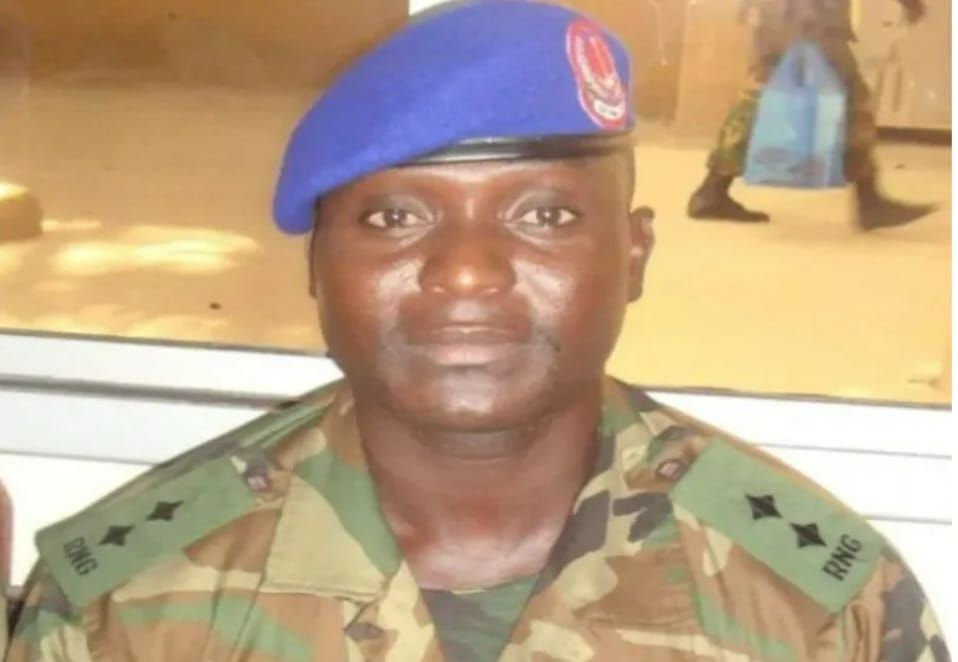
On June 15 in Denver, a federal jury convicted Correa — a former member of the feared Junglers unit under Yahya Jammeh — of torture and conspiracy to commit torture. On Friday, August 22nd, he was sentenced to 67.5 years in prison. For many Gambians, this was not just another news story. It was a reminder that accountability, however delayed, is possible.
Listening to Survivors
In my work with the Foundation, I have listened to survivors describe their experiences in painful detail. Some carry scars that never healed. Others still search for answers about loved ones who disappeared. Their voices are heavy with memory, yet also with determination.
Tamsir Jasseh, a U.S. Navy veteran who returned to Gambia in 2006 to help rebuild the police force, told the Denver court that he was tortured despite not participating in the coup attempt that year. His story mirrors the experience of countless others: innocent citizens caught in the machinery of fear and repression.
For survivors, Correa’s sentencing was more than a legal outcome. It was a recognition of suffering that had been too long ignored. It was a signal that justice does not always stop at borders.
The Shadow of Jammeh’s Rule
Yahya Jammeh seized power in 1994 in a military coup, ruling Gambia for 22 years with an iron fist. His government systematically suppressed dissent, jailed political opponents, and silenced independent media. The Junglers, the elite unit Correa served in, became notorious for carrying out beatings, torture, and extrajudicial punishments. Families lived in constant fear.
Even after Jammeh lost the 2016 election and fled into exile, the scars of his regime linger. Many survivors remain in silence, uncertain whether domestic justice is possible. The Truth, Reconciliation and Reparations Commission documented widespread abuses, yet many of its recommendations remain unimplemented.
A Wider Message
Correa’s conviction in Denver, along with prosecutions of Jammeh’s allies in Germany and Switzerland, sends a broader message. It demonstrates that perpetrators of human rights abuses can be held accountable, even years later and far from where the crimes occurred. It tells Gambians that the world is paying attention to our past, and that the silence which once surrounded Jammeh’s abuses is no longer absolute.
But it also underscores a painful reality: Gambians cannot rely solely on foreign courts to deliver justice. The rule of law must take root at home if healing is to be complete. Accountability must extend beyond isolated trials to systemic reform.
Reflections on Justice
For my generation, the trial represents both a moment of relief and a call to responsibility. I have witnessed firsthand how storytelling, documentation, and public engagement can amplify the voices of those who endured violence. The Solo Sandeng Foundation, which I am proud to support, has been at the forefront of this effort, advocating for survivors and keeping their stories in public consciousness.
Yet justice achieved abroad cannot replace accountability at home. To move forward, Gambians must see trials on Gambian soil, carried out under Gambian law. Only then can reconciliation become real, and citizens regain trust in institutions meant to protect them.
When Judge Christine Arguello said, “Justice is not only about a sentence, but restoring faith in the rule of law,” her words reached beyond the courtroom. They spoke to what Gambians have long waited for — a justice system that protects citizens rather than silences them.
Continuing the Work
I will continue my part, however modest: engaging communities, supporting survivors, and using every platform available to keep this conversation alive. Because justice is not only about what happened in Denver. It is also the promise we still owe to ourselves, as a country learning to confront the past honestly and to build a future without fear.
The Correa trial offers a measure of accountability, but it also reminds us that the journey is far from over. For survivors, for young Gambians, and for the nation itself, justice is both an end and a beginning.