By Ebrima Mbaye
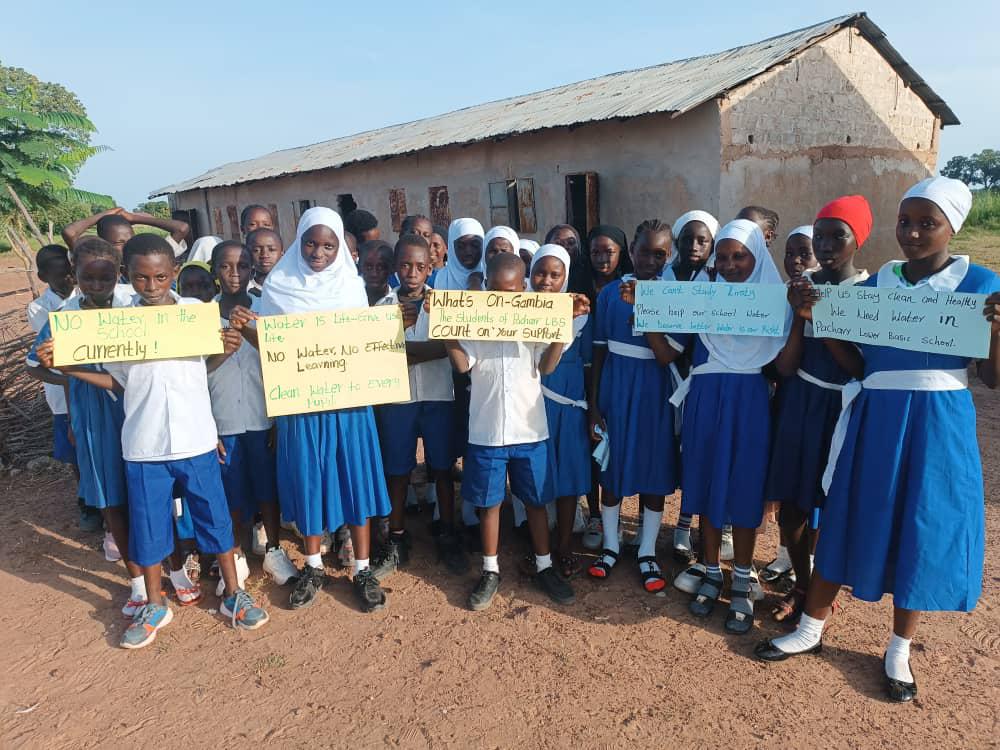
Dozens of pupils at Pacharr Lower Basic School in the Lower Fulladu West District of the Central River Region staged a peaceful protest on school grounds today, hoisting handmade placards that pierced the heart: “Help us stay clean and healthy, we need water in Pacharr Lower Basic School!” “Water is life, give us life!” “No Water, no learning!” and “No water in the school currently!”
The children’s cries echo a dire crisis gripping the rural institution, where a crippling water shortage has turned classrooms into battlegrounds against thirst, dirt, and despair. Under the relentless Gambian sun, students and teachers alike endure sweltering days without a single drop of water for drinking, handwashing, or basic hygiene—threatening their health, attendance, and the very essence of education.
Senior teacher Modou E. Boye, his voice thick with urgency, penned a desperate open letter on behalf of the school. “We write to kindly seek your support in providing clean and safe drinking water for our school,” he implored. “Currently, our school has no access to water, which has made it very difficult for pupils and teachers to stay clean, healthy, and to learn effectively.”
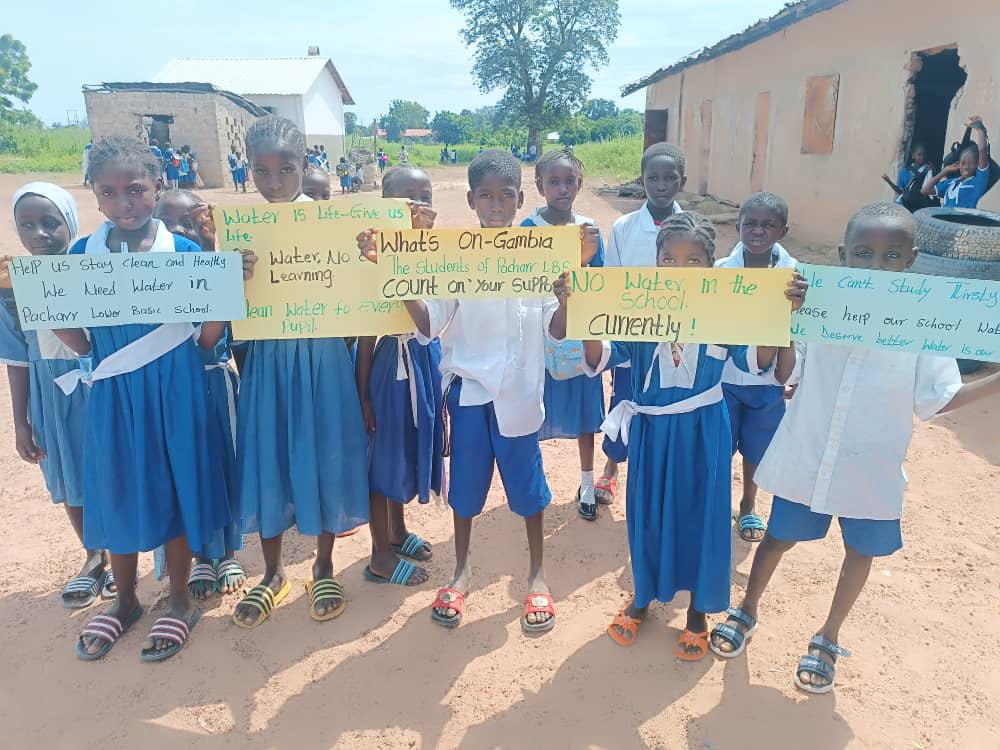
Boye painted a vivid picture of the daily struggle: children arriving parched, unable to concentrate as dehydration sets in; lessons interrupted by the absence of sanitation facilities; and a spike in illnesses from unwashed hands amid dusty, hot conditions. “Water is life, and without it, effective teaching and learning become a great challenge,” he wrote. “Our pupils struggle daily under harsh conditions… This situation is affecting attendance, concentration, and overall well-being.”
The protest, organized spontaneously by the pupils with teacher guidance, drew cheers from community elders who gathered at the school’s dusty perimeter. “These children are our future,” said local farmer Fatou Jallow, wiping sweat from her brow. “How can they learn without water? It’s a disgrace!”
School authorities report that the shortage stems from a broken community borehole, which has remained unrepaired for months due to funding woes. Attendance has plummeted by 30% in recent weeks, with parents keeping sickly children home. Health experts warn of an increasing risk of waterborne diseases, such as cholera, in the region.
Now, the unified voices of pupils, teachers, and villagers amplify a clarion call: Clean water is not a luxury—it’s a child’s right. “We therefore appeal to the government of The Gambia, Gambians in the diaspora, NGOs, philanthropists, and all well-wishers to kindly come to our aid,” Boye urged. “Help us install a reliable water supply system… Your support will go a long way in ensuring that our pupils enjoy a safe, clean, and conducive learning environment.”
As the sun dipped low, the young protesters folded their placards but not their resolve. Will The Gambia’s leaders—and global hearts—answer before the next dry spell strikes? For now, in Pacharr, every lesson begins with a prayer for rain—or relief.