By Fatou Dahaba
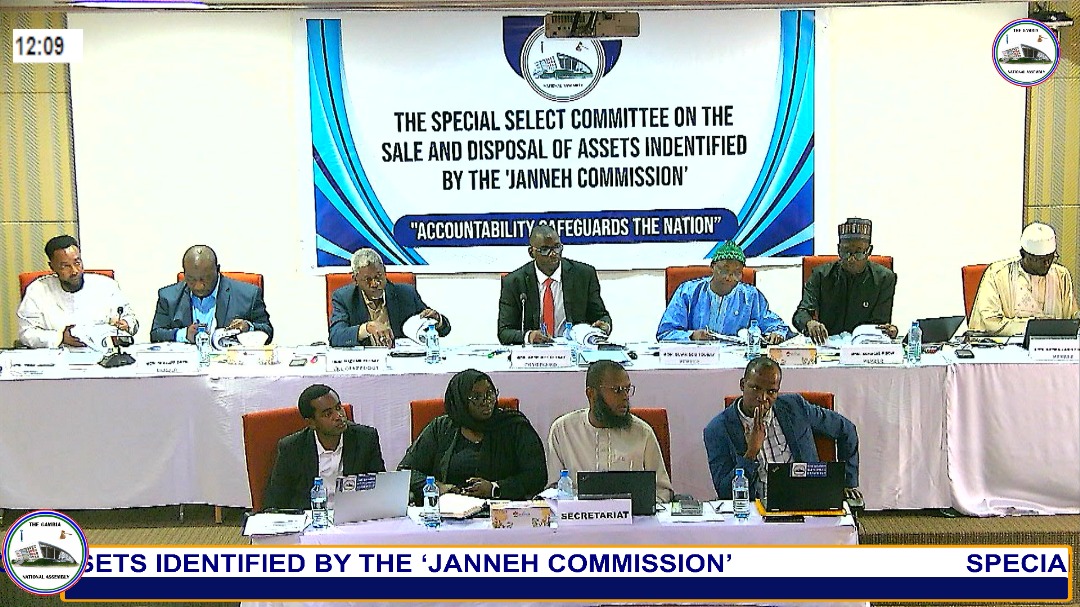
The National Assembly’s Special Select Committee investigating the controversial sale and disposal of assets identified by the 2017–2019 Janneh Commission concluded its public hearings on Wednesday after 60 intensive days, hearing testimony from more than 32 witnesses.
Committee Vice Chairman Hon. Madi Ceesay announced the closure of the public phase while emphasizing that the panel’s work is far from over. “This is not the end of the work. We have only finished the public hearings,” Ceesay said in the Assembly chamber. “The Committee will continue working to finalize the details in anticipation of presenting the final report to plenary sometime in December, during the current session.”
Over the two months, the seven-member committee took sworn testimony from former government officials, business figures, victims of asset seizures, and technical experts. Additional written statements were collected from witnesses who appeared before the committee’s investigation team. All evidence will be incorporated into the final report.
Ceesay extended gratitude to victims who came forward, acknowledging the emotional difficulty many faced. “I want to thank the victims for their cooperation, although it was sometimes difficult with some of them. In the end, most were very cooperative. We will continue working until the end,” he said.
Attorney General and Minister of Justice Dawda Jallow, who attended the closing session, praised the committee’s diligence and reaffirmed the Barrow administration’s commitment to implement its forthcoming recommendations.
“We have a lot to be proud of in this process,” Jallow stated. “Ten or more years ago, where we were and where we are today is completely different. This is democracy in action – the legislature playing its role in holding the executive accountable.”
Reflecting on The Gambia’s transition from 22 years of authoritarian rule under former President Yahya Jammeh, the Attorney General stressed the importance of national healing alongside the pursuit of justice. “We encourage you to do a good job,” he told committee members. “We can learn from this and even improve these processes as we move forward.”
Established earlier this year, the Special Select Committee was mandated to examine how assets seized or accumulated during Jammeh’s regime were evaluated, sold, and managed after the Janneh Commission exposed widespread misappropriation of state resources through shell companies and secret accounts.
The committee retains powers to summon additional individuals, inspect documents, and recommend legal or administrative action. Its final report, expected before the end of the current legislative session in December, is widely anticipated as a critical step toward closure and restitution for victims of the former regime.