By Fatou Dahaba
President Adama Barrow today launched a $5 million livelihoods program under the West Africa Coastal Areas (WACA) Resilience Investment Project, targeting the transformation of lives for 4,000 vulnerable households along the flood-prone Koto Stream in Greater Banjul.
The World Bank-funded initiative, unveiled at the Sir Dawda Kairaba Jawara International Conference Center, prioritizes women, youth, and persons with disabilities, offering skills training, grants, and support for sustainable enterprises to foster financial independence and climate resilience.
Speaking at the ceremony, President Barrow urged beneficiaries to seize the opportunities responsibly. “The opportunities are yours to take. Use them wisely and sustainably to transform your communities for the better,” he said, reaffirming his government’s commitment to inclusive development.
He highlighted recent policy milestones enabled through WACA support, including The Gambia’s first Climate Change Bill and the new National Land Policy, describing them as critical steps toward stronger national resilience. “True resilience requires strong investment in infrastructure and services that protect the lives and dignity of people,” the President added, noting that the project would help families not only withstand flooding but thrive despite climate challenges.
Massaneh Landing Ceesay, WACA Project Coordinator, called the launch a major milestone for communities living along the Koto Stream, which sustains over 200,000 residents across 11 neighborhoods. “The real celebration belongs to the communities whose lives this project is designed to protect and improve,” he stressed, describing the stream as a vital lifeline now threatened by pollution and seasonal flooding.
Ceesay explained that the livelihoods component will directly assist 4,000 households through urban farming, horticulture, waste recycling, composting, and small-scale green enterprises. Grants will be channeled to both individual entrepreneurs and community groups, with particular emphasis on empowering women and youth.
Yusupha Keita of the International Trade Centre (ITC), a key implementing partner, underscored the need to align national development goals with grassroots aspirations. “Economic resilience begins with people,” he said. The program, he added, aims to convert informal survival activities—such as street vending, gardening, and artisanal crafts—into viable, sustainable businesses by providing training, market linkages, and access to finance.
Matar Touray, representing the World Bank, painted a stark picture of the challenges facing communities along rivers. Climate-induced flooding and coastal erosion, he said, endanger thousands of livelihoods along the Koto Stream. Citing market assessments, Touray noted that over 60% of Gambians rely on natural resource-based income sources, while 84.6% of women remain in vulnerable employment.
Many jobs in fisheries processing, tie-and-dye production, and petty trade are informal, low-paid, and sometimes environmentally damaging, he observed. Strengthening job quality and inclusion is therefore essential for long-term resilience.
The program will deliver targeted entrepreneurship and livelihood training to 300 individuals and 20 community groups, embedding climate-smart practices such as waste recycling, composting, and urban agriculture.
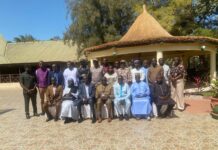
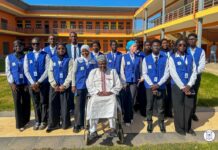
Attendees, including community representatives, development partners, and government officials, welcomed the initiative as a tangible step toward addressing both immediate economic hardship and the growing threat of climate change in one of the country’s most densely populated and vulnerable areas.
With implementation set to begin immediately, the $5 million investment signals a renewed push to build a more resilient and equitable Gambia, one household at a time.