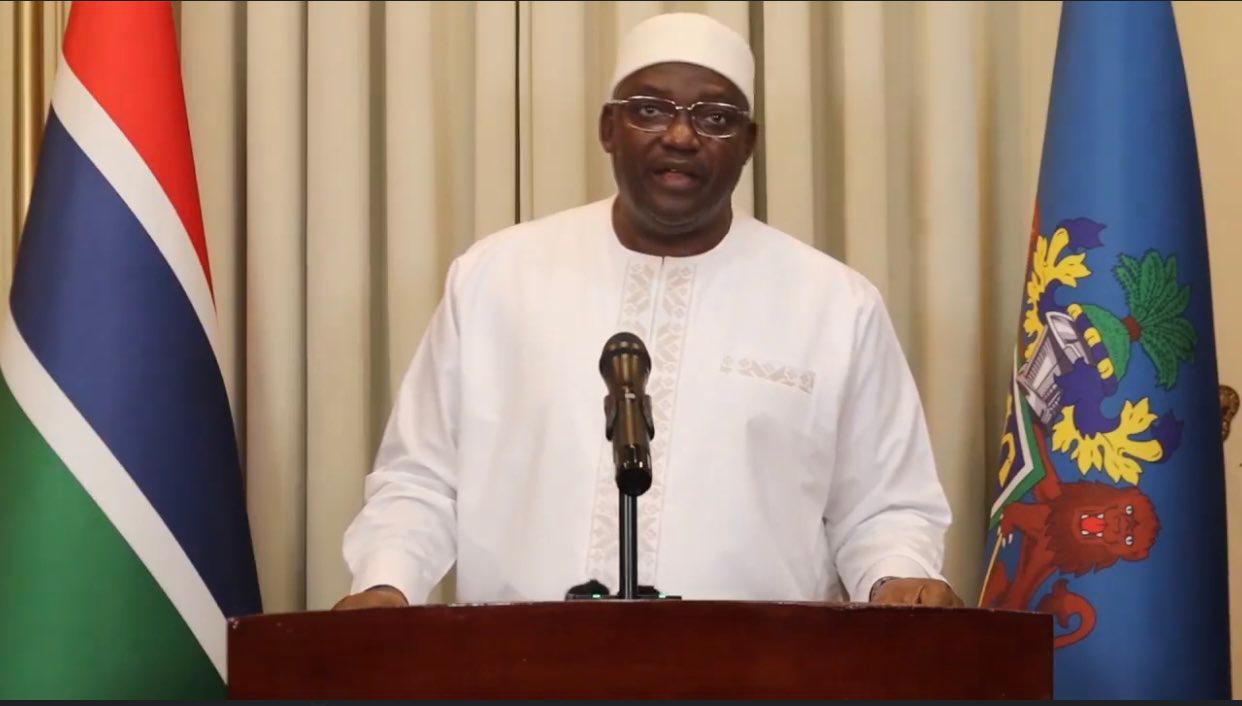
In his annual New Year’s address, President Adama Barrow expressed profound gratitude to the Almighty for the blessings of peace, stability, and progress as The Gambia transitions into 2026. Highlighting 2025 as a “historic year” marked by the jubilant celebration of 60 years of political independence, the President touted significant advancements under his nine-year leadership.
Barrow emphasized the thriving of democracy and the rule of law, alongside transformative development achievements that have reshaped the nation’s sectoral and physical landscapes. He pointed to the successful implementation of the 2023-2027 Yiriwa National Development Plan, urging all Gambians to take pride in the year’s accomplishments.
Key highlights included the completion of numerous infrastructure projects, particularly expanded road networks that have enhanced safety, eased travel, and driven economic progress across the country. The President also celebrated efforts toward universal electricity access, noting plans to connect most rural communities to the national grid for the first time in history.
In education and health, Barrow described expansions as sources of national satisfaction. University and tertiary places increased substantially, ensuring fair access for qualified candidates—a remarkable feat for a small nation. Healthcare improvements have similarly elevated service delivery.
Internationally, The Gambia’s standing has strengthened, evidenced by hosting major meetings and taking active roles in bodies such as the UN, OIC, AU, and ECOWAS, thereby reversing decades of isolation.
Addressing domestic governance, the President cited enacted legislation, new bodies, and policy implementation as signs of accelerated progress, while stressing unity as the greatest challenge to faster development.
With 2026 designated as the year of the presidential election—scheduled for December 5—Barrow acknowledged the excitement but urged ethical politics, restraint, and zero tolerance for violence, enmity, disunity, or hate speech. He called on media and social content creators to promote shared Gambian values.
Despite achievements, Barrow candidly acknowledged lingering challenges: the pending new Constitution, uneven rainfall during the 2025 farming season, rising global prices driving the cost of living, youth unemployment, irregular migration, crime, and international conflicts in regions such as Palestine, Ukraine, and Sudan.
To tackle these, he advocated collective action to boost productivity, reduce import dependency, and foster a patriotic, efficient public service. Proposing a national resolution centered on “Punctuality, Productivity, Professionalism, and Efficiency,” Barrow renewed the fight against corruption.
Looking ahead, opportunities abound in human resources, peace, stability, and technology, all of which are ready to be harnessed. Planned initiatives include expanding road construction, pursuing universal energy access, positioning The Gambia as a medical tourism hub, and supporting the growing tourism sector.
2026 will serve as a stocktaking year to assess five-year performance, build on successes, address shortcomings, and accelerate institutional reforms.
Barrow extended gratitude to citizens, diaspora for remittances and investments, and international partners. He reaffirmed commitments to inclusivity and the protection of rights, warning that while nation-building requires collective effort, a few can disrupt peace.
Concluding on an optimistic note, the President declared the worst over and the best yet to come, appealing for prayers for the less fortunate and deceased. “I wish you all a very happy, productive, and peaceful 2026,” he said.