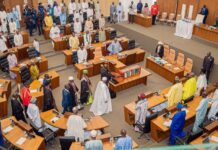
In a powerful intervention amid The Gambia’s protracted constitutional deadlock, prominent legal expert Hon. Sarjo Barrow has called for a constitution that is fundamentally rigid and cannot be easily amended, warning that flexible frameworks enable power abuse and democratic erosion.
Barrow’s opinion piece, “A Constitution Should Limit Power, Not Enable It,” comes months after the National Assembly’s rejection of the 2024 Draft Constitution Bill in July 2025 – the second major failure following the 2020 draft’s defeat. With the country still governed by the 1997 Constitution drafted under Yahya Jammeh’s military regime, Barrow argues the nation faces a critical juncture.
“Should our Constitution protect the people from power, or should it be easily reshaped by those who hold power?” Barrow poses, stressing that history shows that easily amendable constitutions lead to fragility, elite self-preservation, and instability across Africa.
He highlights West African precedents: leaders in Guinea and Burkina Faso manipulated lax rules to extend terms, sparking unrest and coups. Closer to home, Jammeh amended the 1997 Constitution over 50 times during his 22-year rule, exploiting its lack of term limits and ease of change to entrench authority “constitutionally.”
Barrow, clarifying his views are personal and not linked to any U.S. institution, dismisses reliance on strong institutions alone, citing Senegal’s term-limit ambiguities under former President Macky Sall that provoked protests. Proper safeguards, he insists, require mandatory referenda for amendments, placing popular sovereignty at the core.
Advocating a concise, principled document focused on enduring values like term limits, separation of powers, judicial independence, and rights – while leaving policy to legislation – Barrow proposes entrenching all provisions. Core changes should demand parliamentary supermajorities, binding referenda, and protections against pre-election manipulations.
The 2024 draft’s rejection, falling short of the required three-quarters majority (35 for, 21 against), stemmed from deep divisions over executive powers, judicial appointments, and perceived lack of inclusivity. Critics labeled it executive-dominated, while supporters saw it as progress, retaining much of the 2020 version.
With 2026 elections looming and no term limits under the current framework – potentially allowing President Adama Barrow a third bid – Barrow warns: “When politicians control constitutional change, citizens lose.” He urges courage to prioritize a people-centered charter over partisan interests.
Civil society and opposition echoes resonate, viewing rigid protections as vital to prevent backsliding. As Justice Minister Dawda Jallow vowed to revisit approaches despite the setback, Barrow’s call amplifies demands for reform rooted in public consent, essential for a durable democracy legacy.