By Sainabou Sambou
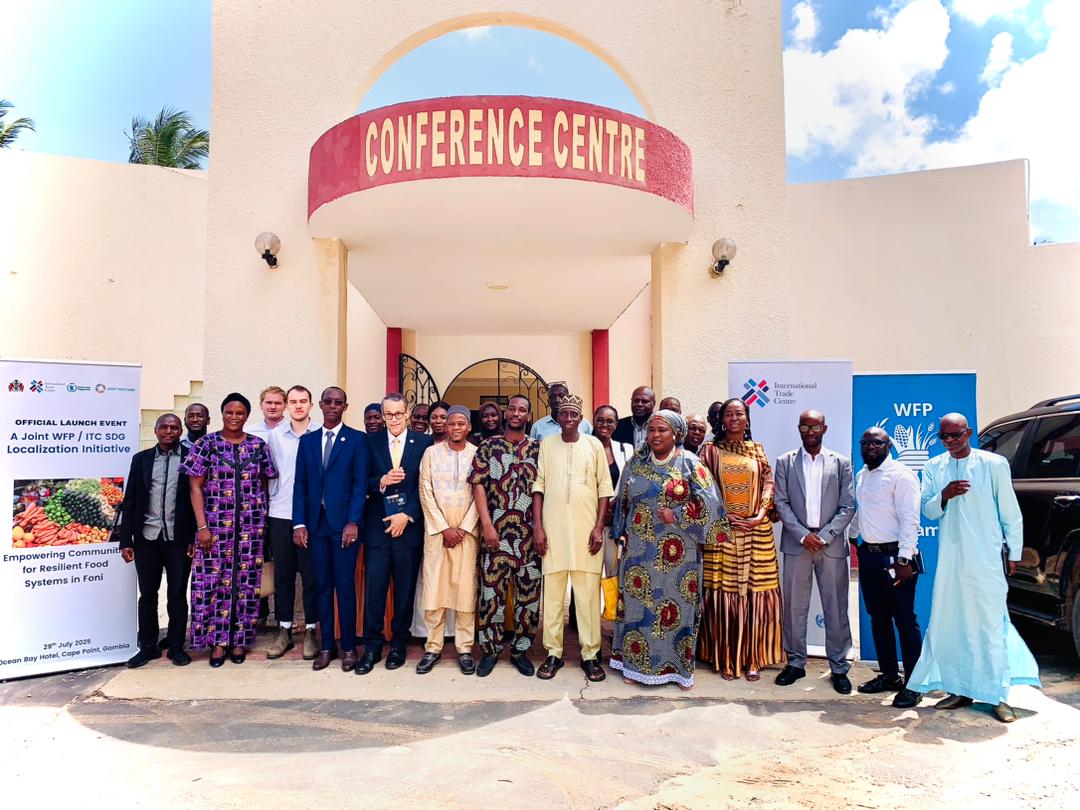
A transformative initiative, “Empowering Communities for Resilient Food Systems in Foni,” was launched today at a local hotel in Bakau, aiming to bolster food security, enhance market access, and foster sustainable development in 50 schools and surrounding communities in Foni. Funded by the United Nations Joint SDG Fund and partners, the project is a collaborative effort between the World Food Programme (WFP), the International Trade Centre (ITC), and the Government of The Gambia.
Yusupha Keita, ITC Country Representative, delivered a keynote address, calling the project a timely and people-centered intervention. “In today’s world of rising food insecurity and climate unpredictability, the urgency of building resilient food systems cannot be overstated,” Keita said. He highlighted the project’s focus on improving market access, promoting sustainable agriculture, and strengthening local capacities through a Human Security approach, building on prior UN Peacebuilding Fund and Human Security Programme efforts in Foni, Lower River Region (LRR), and North Bank Region (NBR).
Keita shared the success story of Ya Fatou and Jimbi Surr from Ardulai, who, through a previous UN project, accessed national markets at the GCCI International Trade Fair, made sales, and built vital networks. “This is the power of meaningful support bringing access, hope, and dignity to those often left behind,” he said.
Dr. Omar A. Bah, Principal Education Officer at the Ministry of Basic and Secondary Education, representing the Minister and Permanent Secretary, praised the initiative as a key component of the Ministry’s Home-Grown School Feeding Programme (HGSFP), launched in 2012. “This project seeks to transform local food systems and enhance community resilience by addressing systemic challenges in governance, market access, and sustainability,” Dr. Bah said. He noted that WFP’s support for school feeding in The Gambia since 1970 will be enhanced through this project, diversifying school meals with locally grown foods while celebrating cultural diversity. “Children will taste and appreciate others’ cultures through food, promoting understanding, tolerance, and appreciation,” he added.
UN Resident Coordinator Karl-Frédérick Paul emphasized the project’s alignment with the UN’s commitment to inclusive, community-led development. “This joint initiative, led by WFP and ITC, seeks to address inequalities and build resilience,” Paul said. He underscored its contributions to Sustainable Development Goals (SDGs) 2 (Zero Hunger), 12 (Responsible Consumption and Production), and 13 (Climate Action), alongside promoting gender equality and partnerships.
Paul expressed gratitude to key donors, including Spain, Germany, and the European Union. He acknowledged the pivotal role of local government structures, notably the Gambia Association of Local Government Authorities (GALGA), in ensuring effective implementation. “Your leadership and commitment are key to ensuring this project’s transformative potential is fully realized,” he said.
The “Empowering Foni” project is poised to create lasting change by strengthening food systems, empowering communities, and fostering resilience, ensuring no one is left behind in the pursuit of sustainable development.