By: Abdoulie John
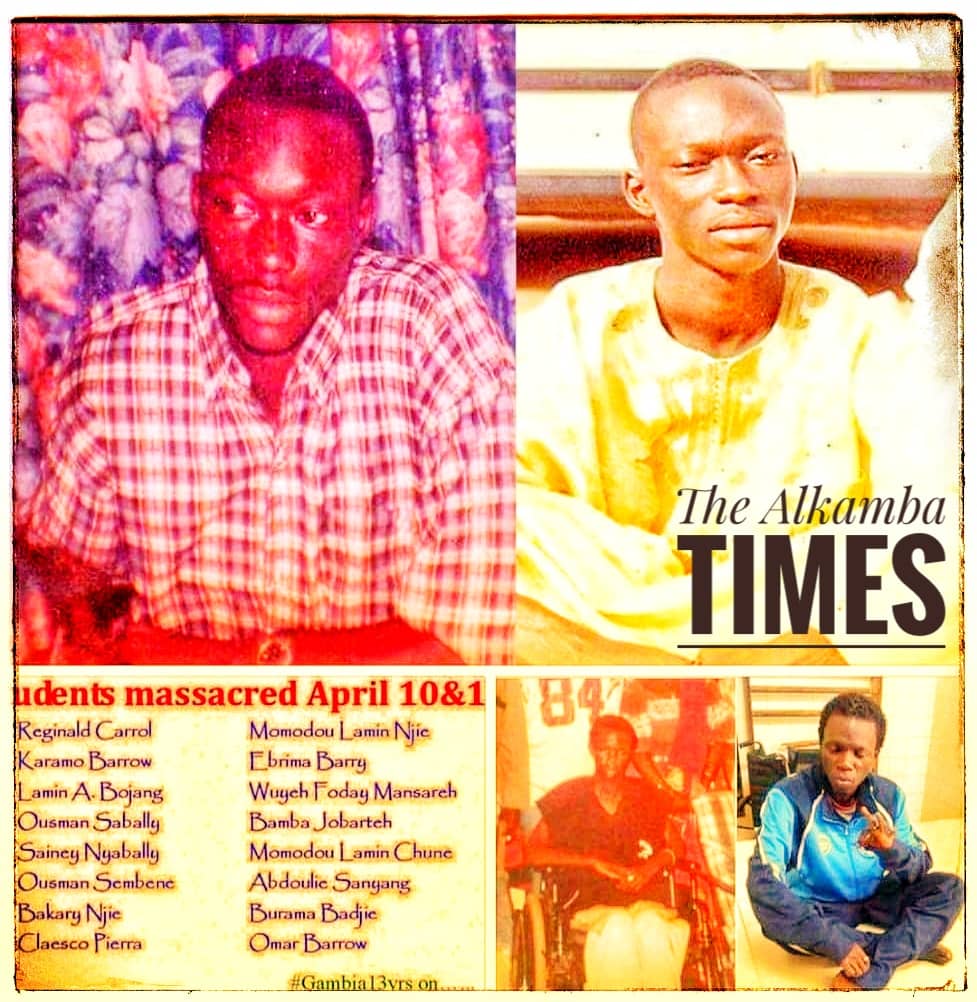
As the nation prepares to commemorate the April 10-11, 2000 student massacre, victims, survivors, and their families are intensifying calls for accountability, prosecutions, and full reparations for one of the darkest chapters in Gambia’s history under former dictator Yahya Jammeh.
More than 26 years after security forces opened fire on peaceful student protesters, those affected say justice remains elusive despite multiple official inquiries and recommendations.
In a strongly worded statement issued ahead of the anniversary, a collective of victims deplored the continued delay, declaring: “More than two decades after the April 10–11, 2000 student killings, victims and their families are still waiting for justice and full reparations.”
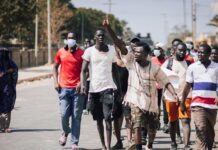
The protests began on April 10, 2000, when members of the Gambia Students Union (GAMSU) took to the streets in Kanifing and Serekunda. They were demonstrating against the alleged torture and killing of student Ebrima Barry by firefighters and the rape of a 13-year-old schoolgirl by a security officer—incidents they felt the Jammeh government had failed to address adequately.
What started as a peaceful march quickly turned deadly. Police Intervention Unit (PIU) officers, later reinforced by soldiers from the Gambia National Army, responded with tear gas and live ammunition. At least 14 people were killed, including students, a Red Cross volunteer, and a young child, while over 80 others were injured, many critically. Protests spread to rural areas on April 11, where further violence resulted in additional deaths and widespread arrests.
The Lartey Commission of Inquiry, established shortly after the events, concluded that PIU members used excessive force against unarmed students. It recommended accountability for those responsible, compensation for victims, and institutional reforms within the security services. These findings were later reaffirmed and expanded by the Truth, Reconciliation and Reparations Commission (TRRC), whose broader recommendations—including prosecutions—were officially accepted by the government following the return to democratic rule in 2017.
Despite these clear findings, the victims’ collective argues that political will has been lacking. They describe the 2000 massacre as the “initial test-case” of Jammeh’s public brutality against civilians, one that set a dangerous precedent for further repression throughout his 22-year rule.
“The April 10/11, 2000 massacre was the initial test-case group of civilians on whom Jammeh’s brutality was meted out publicly,” the statement noted. The lack of strong outrage and action at the time, they added, emboldened the regime to expand its violence against the broader population.
The group expressed disappointment that the Ministry of Justice and TRRC processes have not prioritized the “signed, sealed, and delivered” Lartey Report. They stressed that reparations are not merely an act of goodwill but a legal obligation under international standards.
“Justice delayed for over 25 years is justice denied,” the victims declared. “The findings are clear. The recommendations are clear. What remains missing is political will and urgent action.”
Since the 2017 democratic transition, victims have consistently pushed for perpetrators—including high-ranking officials implicated in ordering or overseeing the crackdown—to face prosecution. Yet, progress on trials related to the student massacre has been slow compared to other TRRC-recommended cases.
As April 10-11 approaches, the collective’s statement serves as a reminder that true national healing requires confronting past atrocities head-on. Many Gambians view the unresolved 2000 killings as a symbol of unfinished business in the country’s transition from dictatorship to democracy.
Advocates continue to urge the current government to act decisively on the TRRC recommendations, implement compensation schemes, and ensure institutional reforms prevent any recurrence of such violence. For the families still mourning lost children, siblings, and friends, the demand remains simple yet profound: justice must no longer be deferred.