By: Kebba Ansu Manneh
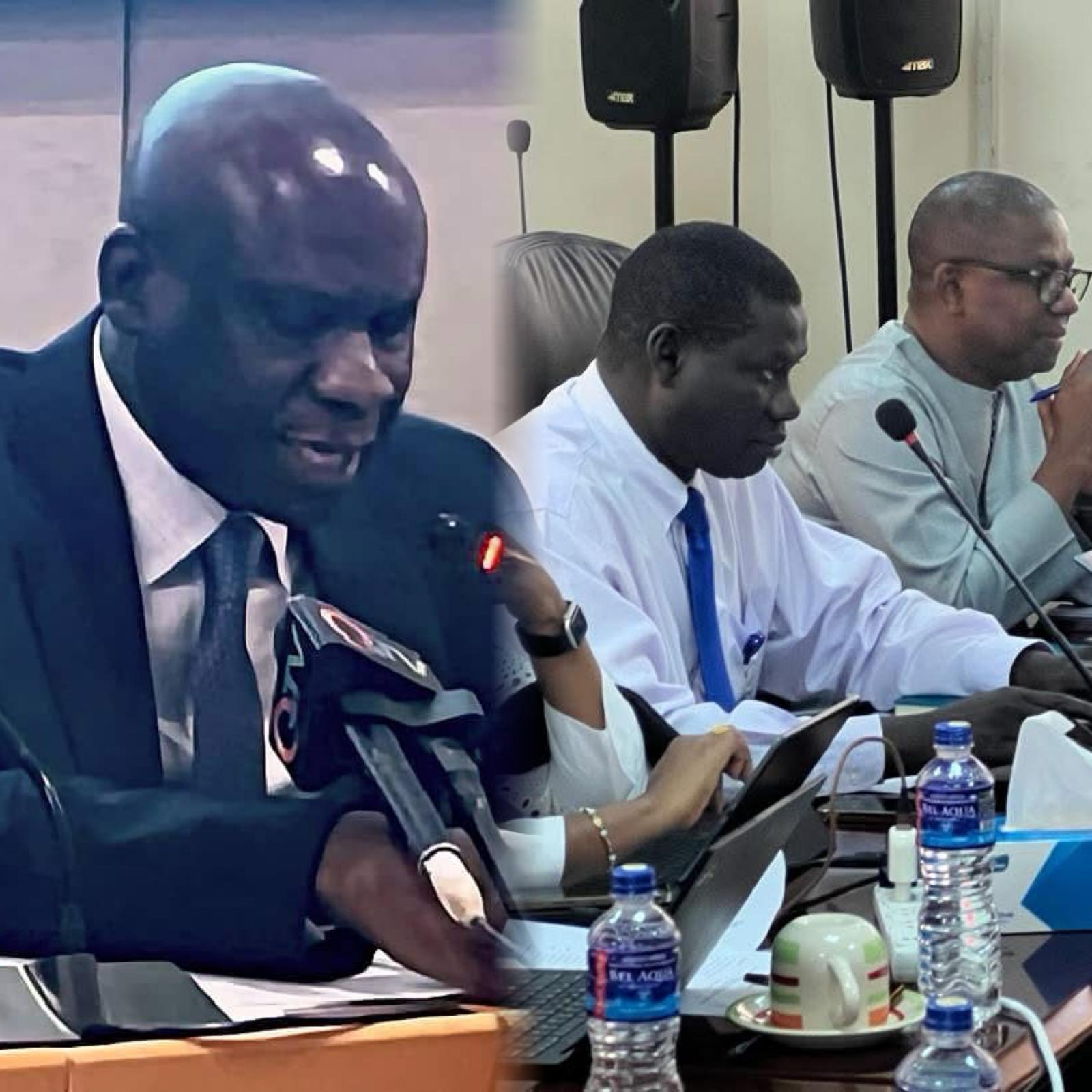
The Governor of the Central Bank of The Gambia (CBG), Buah Saidy, announced today that the country’s domestic debt has decreased to D45.6 billion (23.4% of GDP) in March 2025, down from D46.4 billion (27.0% of GDP) in 2024. The revelation came during a Monetary Policy Committee (MPC) press conference held at the Central Bank of The Gambia’s (CBG) conference room, where Saidy also highlighted the relative stability of the Dalasi exchange rate, reflecting improved market confidence and supply conditions.
Governor Saidy detailed the composition of the domestic debt, noting that short-term instruments, such as treasury bills and Sukuk Al Salaam bills, accounted for 49.2% of the total. Medium and long-term debt instruments represented 33.9% and 17.1%, respectively. However, the weighted average treasury bill rate rose from 11.3% in 2024 to 14.6% in March 2025. The interbank Dalasi market remained stable, with trade volumes increasing to D13.4 billion in Q1 2025 from D13.1 billion in Q4 2024, while the weighted average interest rate dipped slightly from 5.6% to 5.3%.
The banking sector demonstrated resilience, with commercial banks’ total assets growing by 7.2% to D107.6 billion and customer deposits rising by 1.5% to D67.5 billion between December 2024 and March 2025. The risk-weighted capital adequacy ratio stood at 28.4%, marginally lower than 28.5% in December 2024. The Dalasi’s exchange rate held steady, depreciating slightly against the US dollar (1.7%), British pound (0.2%), and CFA franc (0.5%), but appreciating by 1.2% against the Euro.
Saidy reported that the CBG’s international reserves reached US$508.54 million by May 2025, sufficient to cover 4.6 months of imports. The government’s fiscal position improved in Q1 2025, with the deficit (excluding grants) dropping to D2.7 billion (1.6% of GDP) from D4.6 billion (2.6% of GDP) a year earlier. Total revenue and grants rose by 14.5% to D8.8 billion, while expenditure increased marginally by 0.2% to D10.1 billion.
The balance of payments showed progress, with the current account deficit narrowing to US$13.2 million (0.6% of GDP) in Q1 2025 from US$21.1 million (0.9% of GDP) in Q4 2024, driven by robust tourism receipts, steady remittances, and reduced electricity imports. The goods account deficit also improved, falling to US$248.1 million (10.3% of GDP) from US$297.1 million (13.0% of GDP). Private remittances, primarily from the United States (26.3% of inflows), grew to US$207.9 million in Q1 2025, up from US$187.2 million in Q4 2024.
The Gambian economy is projected to grow by 6.5% in 2025, following a 5.3% expansion in 2024, supported by strong performances in services and industry. However, agriculture contracted by 1.1% in 2024 due to unfavorable weather. Despite the positive outlook, Saidy cautioned that global commodity price volatility, trade fragmentation, and climate risks pose challenges. Inflation eased, with food inflation at 8.8% and non-food inflation at 7.4%, but remains above the CBG’s medium-term target, necessitating cautious monetary policy.
The MPC decided to maintain the Monetary Policy Rate at 17.0%, the Required Reserve ratio at 13.0%, and the standing deposit and lending facility rates at 4.0% and 18.0%, respectively. The committee will continue to monitor domestic and global developments to inform future policy actions.
Governor Saidy emphasized the need for sustained reforms and fiscal prudence to enhance economic resilience amid global uncertainties, underscoring the CBG’s commitment to macroeconomic stability.