By Alieu Ceesay
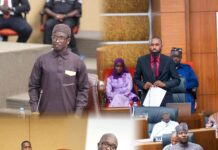
The National Assembly of The Gambia on Monday, June 23, 2025, convened for a spirited debate on President Adama Barrow’s State of the Nation Address (SONA), delivered on June 19 in the Parliament’s hallowed chambers in Banjul. The address highlighted the government’s achievements, ongoing challenges, and future plans to advance national interests, sparking diverse reactions from lawmakers who voiced their constituents’ concerns with fervor and conviction.
The debate saw National Assembly Members (NAMs) scrutinizing key aspects of the president’s speech, including The Gambia’s role on the global stage, domestic economic issues, and pressing international concerns. A focal point was President Barrow’s assertion that hosting the 15th Organization of Islamic Cooperation (OIC) Summit in 2024 was a success, elevating The Gambia’s international presence and culminating in his assumption of the OIC chairmanship. “The Gambia’s international presence has been magnified by the successful hosting of the 15th OIC Summit in 2024 and my assuming the Chairmanship of the Organisation,” Barrow stated.
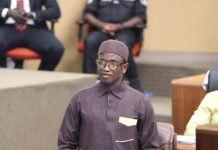
However, Assan Touray, NAM for Bakau Constituency, sharply contested this claim, labeling the summit a “failure” due to low attendance by member state leaders. “In my view, I would express this as a failure instead of a success because having member states in this OIC and the turnout of the Presidents that came and attended the OIC, to me, I will describe it as a failure,” Touray argued. His critique prompted calls for Vice President Momodou BS Jallow to justify the government’s portrayal of the event as a diplomatic triumph.
On the international front, Amadou Camara, representing Nianija Constituency, passionately advocated for an immediate ceasefire in Palestine, echoing the sentiments of many Gambians. Visibly moved, Camara lamented the suffering of Muslims, stating, “I feel sad seeing that our Muslim brothers are being tortured, are being killed based on what I have to call fake or framed international practice or politics that touches my heart.” His plea aligned with President Barrow’s SoNA remarks, expressing “grave concern over the recent escalation of Israeli attacks on Iran, resulting in the tragic loss of both military and civilian lives.” Barrow, as OIC Chairman, emphasized the importance of dialogue in resolving global conflicts, a stance that Camara urged the government to pursue actively.
Domestically, Camara raised alarms over the ongoing cement shortage, a crisis impacting the construction industry and drawing widespread public concern. He pressed the Trade Minister for urgent action to stabilize supply and prices, reflecting the economic frustrations of ordinary Gambians.
Meanwhile, Gibe Mballow, NAM for Upper Fuladu West, appealed for government intervention to lower fertilizer prices ahead of the rainy season, to support struggling farmers. “I would like to appeal to the government to reduce the price of fertilizer; last year, farmers bought at a price of D1150. So this year, let them reduce it to D900 or D800. I am speaking on behalf of poor farmers,” Mballow urged. Despite his critique, he acknowledged the Barrow administration’s progress in key sectors, citing improved road infrastructure, education, and healthcare as notable achievements.
The discussions underscored the National Assembly’s critical role in holding the government accountable while amplifying the voices of their constituents. From international diplomacy to local economic challenges, the NAMs’ engagement reflected a commitment to addressing the nation’s pressing issues. As The Gambia navigates complex domestic and global dynamics, the outcome of these debates will likely shape the government’s priorities and public perception of its leadership in the months ahead.