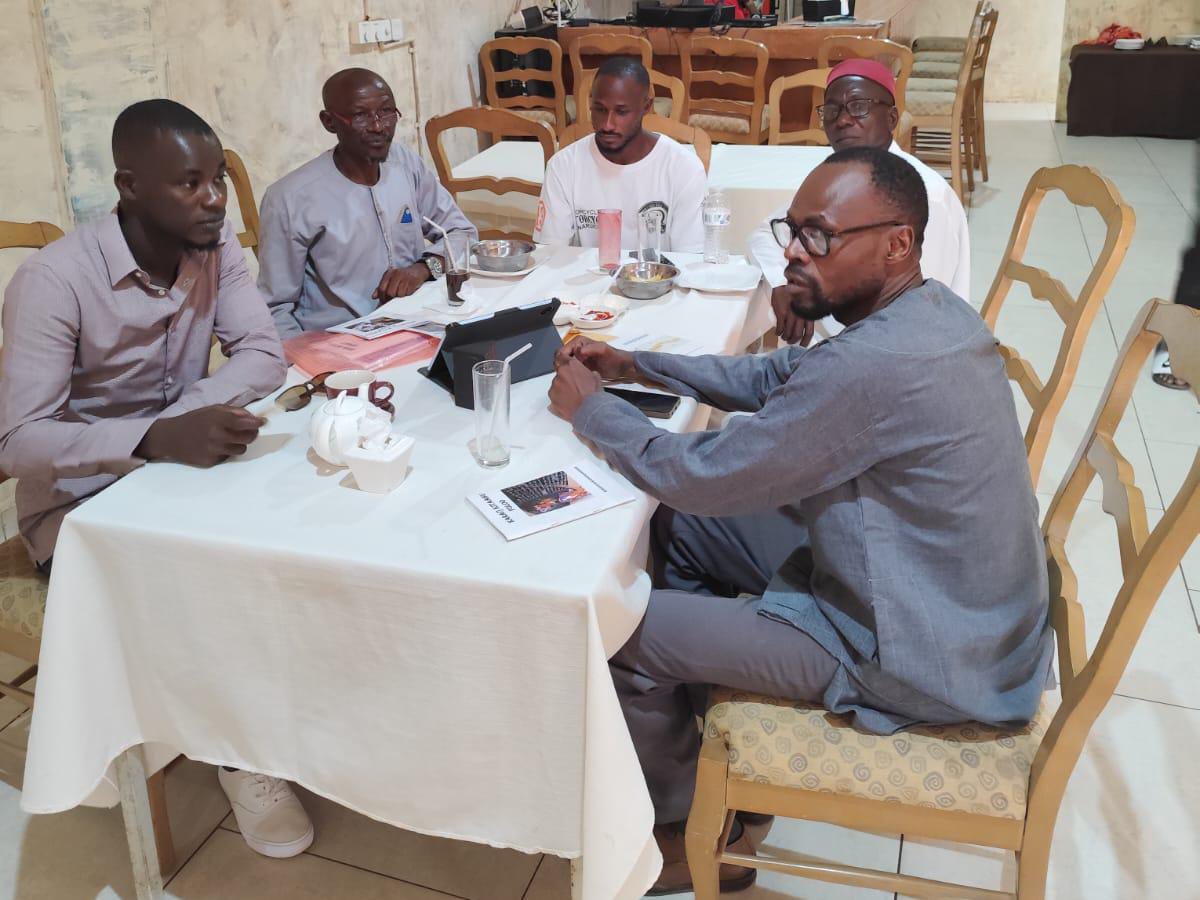
On July 27, 2025, Dr. Lang Fafa Dampha, Executive Director of the Pan-African Centre for Cultures and Languages (PACCL), convened a pivotal meeting at the Seafood Restaurant in Senegambia to advance the integration of indigenous languages into The Gambia’s education and technology sectors. The gathering included key stakeholders, such as Mr. Kitabu Jabang, Head of National Languages and Mandinka Instructor, and Mr. Kawsu Njie, Information and Technology Officer, as well as guests Mr. Kabiru Jammeh and Mr. Kemo Dampha. Absent were Mr. Mamudu Tarawally and Mrs. Kodu Jeng due to prior commitments.
Dr. Dampha opened by addressing a critical issue: The Gambia’s reliance on foreign languages for development sidelines its indigenous tongues, hindering authentic progress. He proposed institutionalizing languages like Mandinka, Wolof, Fulfulde, Jola, and Sarahuleh as mediums of instruction in early education to boost cognitive development and cultural identity while laying a foundation for learning global languages. He urged policy revisions to support this shift.
The meeting focused on three strategic pillars. First, Dr. Dampha called for the development of culturally relevant pedagogical materials in national languages, crafted by linguists, educators, and native speakers, to enhance engagement and learning outcomes. Second, he advocated for public campaigns, amplified by cultural figures and youth influencers, to promote the use of indigenous languages in governance, media, and commerce. Third, he proposed forming National Language Committees for major languages to oversee development, translation, and policy alignment with continental bodies, such as the African Academy of Languages (ACALAN).
A standout proposal was the “Gambian Language Boxes,” modular kits combining traditional and digital tools—primers, storybooks, games, and mobile-accessible content—to support language learning. A pilot program in bilingual regions was suggested to refine these kits before nationwide rollout. Capacity building was also emphasized, with plans for formal training of instructors and collaboration with regional institutions, such as Tanzania’s Kiswahili Council, to standardize curricula.
Mr. Jabang highlighted challenges in Mandinka instruction, noting a lack of standardized materials and digital content despite growing interest, particularly among diaspora communities. He proposed digitizing folktales and oral histories and developing mobile apps to address these gaps. Dr. Dampha envisioned a digital repository for language materials, leveraging AI for transcription and translation, though he cautioned that limited ICT infrastructure poses challenges.
Consensus was reached on the cultural significance of indigenous languages for identity and social cohesion. Action points included organizing a workshop to prioritize digitization, engaging government ministries to integrate languages into curricula, and forming a working group with PACCL’s language technology expert to design a pilot digital platform. Proposals for international partnerships to fund these efforts were also outlined.
This meeting marks a turning point for The Gambia’s linguistic heritage. By blending traditional knowledge with modern technology and policy reform, PACCL is positioning the nation as a leader in African language revitalization, fostering education, governance, and cultural pride.