By: Kebba Ansu Manneh
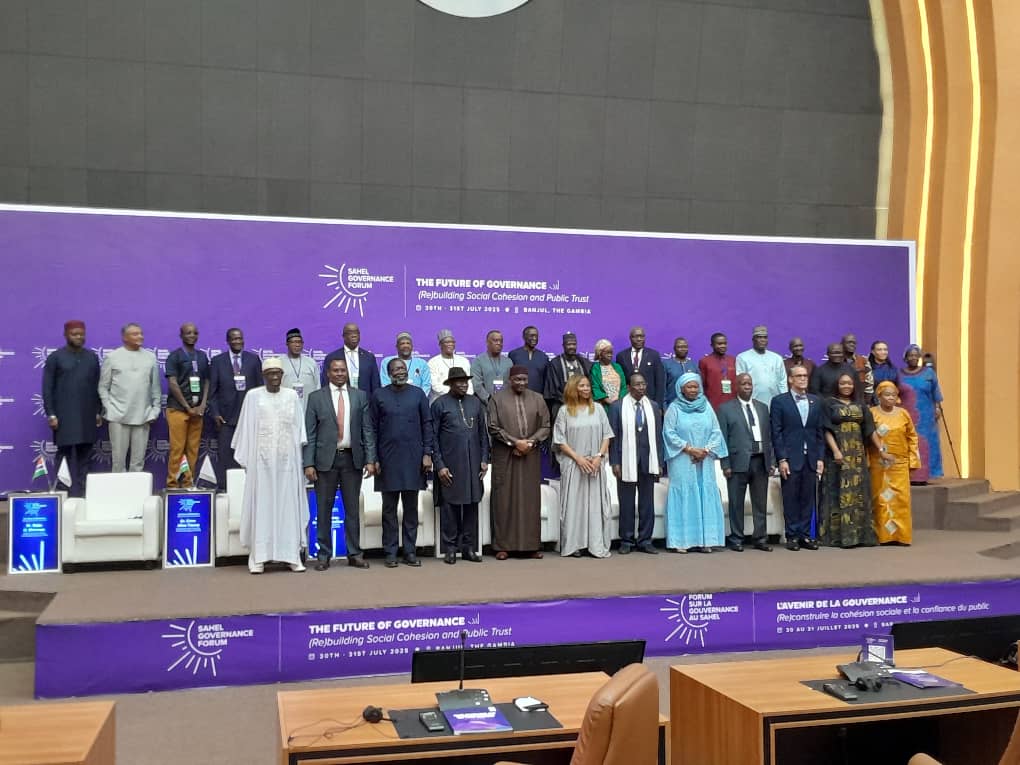
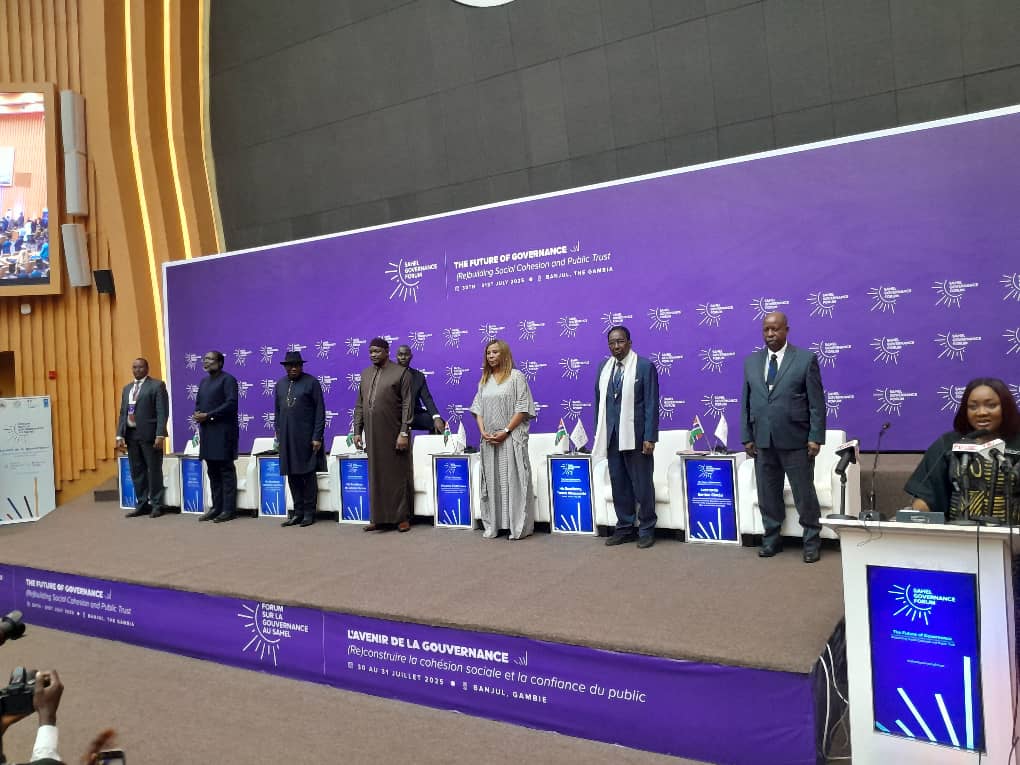
Gambian President Adama Barrow presided over the launch of the first Sahel Governance Forum today at the Sir Dawda Kairaba Jawara International Conference Centre in Banjul, marking a significant step toward addressing governance challenges and fostering sustainable development in the Sahel region. The forum, themed “The Future of Governance: Rebuilding Social Cohesion and Public Trust,” was organized by The Gambia in collaboration with the Goodluck Jonathan Foundation (GJF), the United Nations Office for West Africa and the Sahel (UNOWAS), the Office of the Special Coordinator for Development in the Sahel (OSCDS), and the United Nations Development Programme (UNDP).
The high-profile event drew prominent figures, including former Nigerian President Goodluck Jonathan, ECOWAS Commission President Dr. Omar Touray, UN Assistant Secretary-General and UNDP Regional Director for Africa H.E. Ahunna Eziakonwa, and UN Under Secretary-General and Special Coordinator for Development in the Sahel H.E. Abdoulaye Mar Dieye. The forum also served as the official launch platform for the inaugural “Future of Governance in the Sahel” report, aimed at reimagining governance frameworks for the region.
In his opening address, President Barrow warmly welcomed delegates, emphasizing The Gambia’s commitment to democratic governance, peace, and stability across Africa. “It is with great honor that I welcome our international guests to The Gambia for the inaugural edition of the Sahel Governance Forum,” Barrow said. “Your attendance affirms your commitment to the urgency of the numerous tasks before us in the Sahel.”
Barrow highlighted the Sahel’s vast potential, noting its rich human and natural resources, unique cultural heritage, and strategic importance as a gateway to Africa’s sustainable development and energy transition. However, he acknowledged that persistent challenges, including slow democratic progress and the withdrawal of some Sahel states from the Economic Community of West African States (ECOWAS), have hindered the region’s growth. “The Sahel is a region of immense promise,” he said. “Yet, its true value has been overshadowed by challenges that hamper peace, social cohesion, and development.”
The forum, according to Barrow, is not about dwelling on these challenges but confronting them with “courage, clarity, and collective resolve.” He stressed the need for home-grown, people-centered solutions that draw on past lessons to foster sustainable development. “This forum offers a unique opportunity to listen, dialogue, learn from one another, and co-create governance solutions that are nationally owned, inclusive, resilient, and people-oriented,” he added.
Barrow underscored the importance of solidarity, diverse partnerships, and tailored interventions to address the region’s complex issues. He pointed to The Gambia’s efforts, including the launch of the Green Recovery-Focused National Development Plan (2023-2027), known as YIRIWAA, which outlines a vision for a resilient, inclusive, and sustainable future. “At the heart of this vision lies a deep commitment to governance and peacebuilding, recognizing that without trust, justice, and inclusion, real development outcomes could be eroded or unsustainable,” he said.
The Gambian president also highlighted his government’s response to the Truth, Reconciliation and Reparations Commission (TRRC), established in 2018 to address past human rights abuses. Out of the TRRC’s 265 recommendations, the government accepted 263, with implementation already underway. “These actions reflect our resolve to confront the past with honesty and build a future grounded in justice, accountability, and reconciliation,” Barrow noted.
Other speakers, including Goodluck Jonathan, Dr. Omar Touray, H.E. Ahunna Eziakonwa, and H.E. Abdoulaye Mar Dieye, echoed the call for innovative governance solutions to rebuild public trust and social cohesion in the Sahel. They emphasized the forum’s role as a platform for governments, regional bodies, civil society, and development partners to collaborate on actionable strategies.
The Sahel Governance Forum is expected to foster dialogue and produce actionable outcomes to address the region’s pressing challenges, including political instability, insecurity, and economic disparities. Organizers hope the event will set a precedent for future collaborations, with the “Future of Governance in the Sahel” report serving as a roadmap for transformative change.
As the Sahel faces both persistent and emerging challenges, the forum’s focus on inclusive, sustainable, and nationally owned solutions signals a renewed commitment to unlocking the region’s potential. With leaders like President Barrow and international partners at the helm, the Sahel Governance Forum could mark a turning point in the region’s journey toward peace, stability, and prosperity.