By Fatou Dahaba
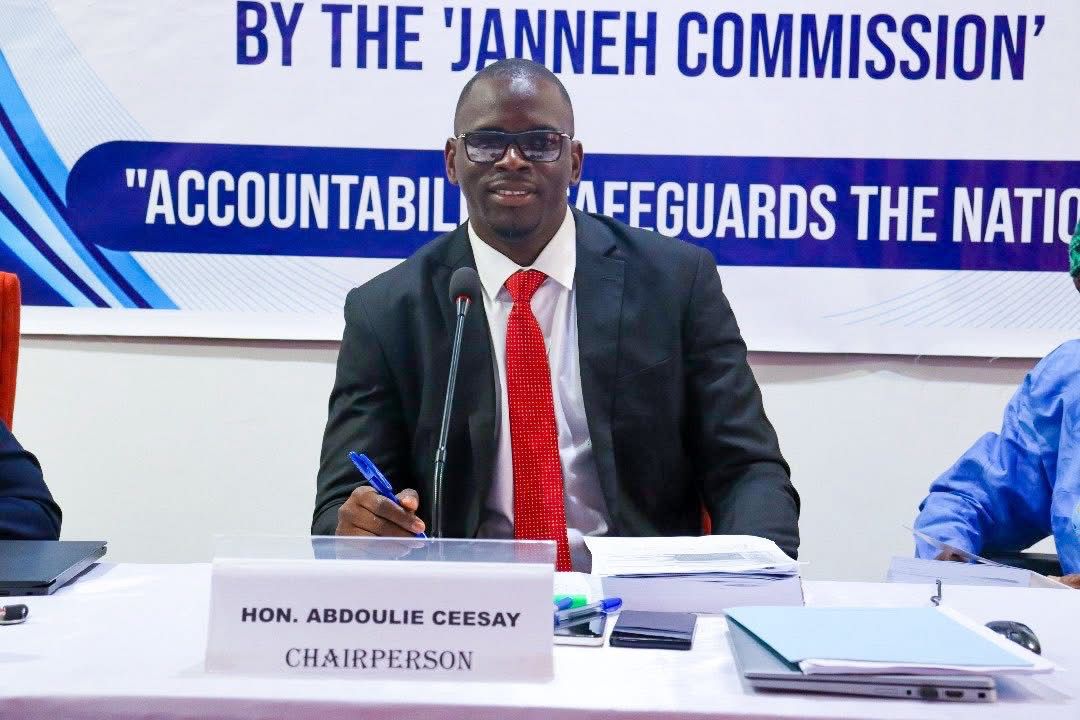
Abdoulie Ceesay, Chairperson of the National Assembly Special Select Committee on the Sale and Disposal of Assets identified by the Janneh Commission, has issued a stern warning to witnesses, emphasizing that any attempts to obstruct, delay, or undermine the committee’s inquiry will face severe consequences. The committee, tasked with investigating the disposal of assets linked to former President Yahya A.J.J. Jammeh, is determined to uphold transparency and accountability, with Ceesay underscoring the National Assembly’s constitutional authority to enforce compliance.
In a strongly worded statement, Ceesay expressed frustration over the lack of cooperation from specific individuals and institutions. He highlighted several issues hampering the inquiry, including unwarranted delays in submitting critical documents, non-attendance at scheduled hearings without justifiable reasons, inadequate preparation by witnesses, and evasive behavior during proceedings. “The Committee observes that certain individuals and institutions have failed to demonstrate the requisite level of cooperation or diligence that is commensurate with the profound national importance of this inquiry,” Ceesay stated.
The committee’s mandate stems from its establishment by the National Assembly to probe the sale and disposal of assets identified by the Janneh Commission, which investigated the financial activities of former President Jammeh. Ceesay emphasized that the inquiry is not only a legal obligation but also a moral and national imperative to serve the Gambian people’s interests. “Citizens expect transparency, accountability, and undiluted truth in this matter,” he said, calling on all summoned parties to approach the process with integrity and full cooperation.
Citing Section 109(3) of the Constitution, Ceesay reminded witnesses that the committee wields powers equivalent to those of the High Court. These include enforcing witness attendance, compelling document production, and taking necessary measures to fulfill its mandate. He warned that any actions or inactions intended to frustrate these powers would be considered contempt of the National Assembly, with serious repercussions.
To ensure the inquiry proceeds smoothly, Ceesay outlined the committee’s next steps for non-compliance. Individuals or institutions failing to comply with summonses will be deemed to be willfully obstructing the process. Such conduct could lead to formal referrals to the National Assembly for contempt proceedings, disciplinary actions, or potential prosecution under Gambian law. “Any individual or institution summoned by the committee shall comply fully with the summons issued,” Ceesay cautioned, adding that failure to do so would trigger the committee’s full legal authority.
The inquiry into the assets identified by the Janneh Commission is a critical step in addressing the financial legacy of Jammeh’s regime, which has long been a subject of public concern. The committee’s work aims to uncover the truth behind the disposal of these assets and ensure accountability for any irregularities. Ceesay reiterated the committee’s unwavering commitment to its mandate, stating, “This Committee is steadfast in its commitment to serving the paramount interests of the Gambian people. Our duty is not only a legal imperative but also a moral and national obligation.”
The public has closely followed the committee’s proceedings, with many Gambians hoping for clarity and justice regarding the handling of national assets. Ceesay’s warning signals a no-nonsense approach to ensuring the inquiry’s success, as the committee seeks to deliver on its promise of transparency. As the investigation continues, the National Assembly’s resolve to hold witnesses accountable will likely shape the outcome of this high-stakes probe.
With the committee empowered to enforce compliance and penalize obstruction, all eyes are on the summoned individuals and institutions to cooperate fully. The nation awaits the findings of this inquiry, which could have far-reaching implications for governance and accountability in The Gambia.