By Alieu Ceesay
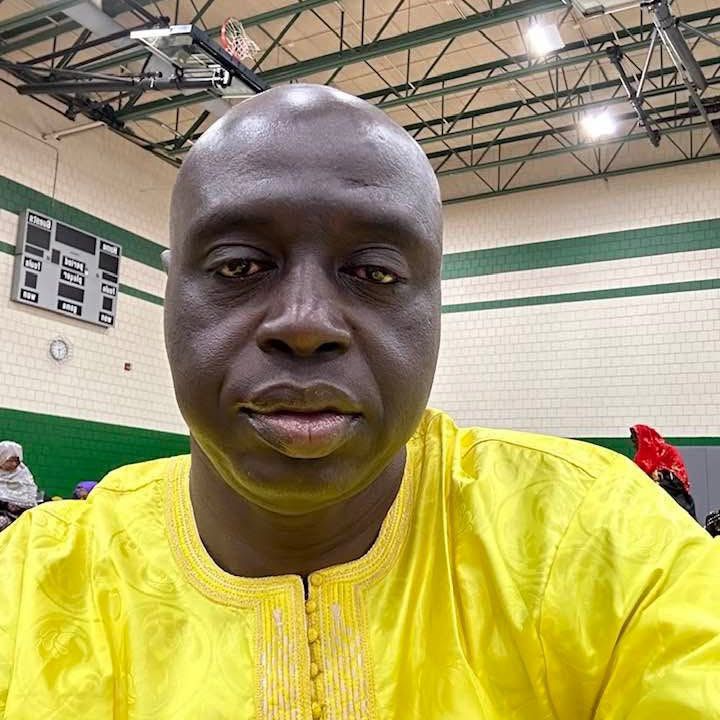
Foday Danjo, the former Chairman of the Basse Area Council (BSAC) from 2018 to 2023, testified via Zoom before the Local Government Commission on Tuesday, addressing allegations of financial mismanagement during his tenure. Currently residing in the United States, Danjo faced intense questioning from Lead Counsel Gomez regarding the council’s financial operations, particularly the handling of millions of dalasis in withdrawals and his awareness of the council’s financial manual.
Danjo’s testimony centered on the council’s bank accounts and expenditure processes. When asked about the number of bank accounts the BSAC maintained during his chairmanship, Danjo admitted he could not recall the exact number but believed there were three. This uncertainty set the tone for a probing session, as Counsel Gomez pressed him on his familiarity with the financial manual governing council operations.
Gomez read aloud Section 305 of the manual, which stipulates that expenditure authority is vested in the council through budget approval and that the finance director cannot make payments or accept charges without authorization from the chief executive, in line with monetary thresholds set by the council.
When asked if the BAC adhered to such thresholds, Danjo conceded that while thresholds existed, they were not consistently applied. This revelation prompted a sharp rebuke from Gomez, who highlighted that over 51 million dalasis were withdrawn under Danjo’s watch, allegedly by individuals he was responsible for supervising. “Millions and millions of dalasis were withdrawn by the people you are supposed to supervise, by the people you are supposed to give clearance for these withdrawals,” Gomez stated. “If your excuse is that you did not know at the time, that’s not an excuse. The law requires that you know. So it’s either you were part of them, or you were just not competent enough.”
Danjo’s response was conciliatory but vague. “Okay, I accept, however you say it,” he replied, offering little defense. He maintained that the withdrawn funds were allocated to council projects, though he provided no specific details to substantiate this claim during the testimony.
Gomez further challenged Danjo on his oversight responsibilities, noting that mayors and chairmen in other areas were well-versed in their councils’ financial authorities. “You hide behind the fact that the CEO and the finance director will sign the cheque,” Gomez said, emphasizing that cheque signings were the final step in a series of processes that Danjo, as Chairman, should have overseen. “There is no way that they should sign a cheque and withdraw a certain amount without the chairman or mayors either knowing during the time or having the possibility of knowing after it was signed,” he added.
When reminded of the oath he took as Chairman to monitor financial activities, Danjo disputed the expectation that he should have been aware of all withdrawals. “To say anytime for the withdrawals of the monies I should be aware, I disagree,” he said. “There are certain withdrawals of which I will be aware before it is done, for instance, the payment of salaries. Other expenditures that we discuss at council, I will be aware of them. But to say all withdrawals that have taken place from the bank before, during, or after, no, I disagree.”
Gomez pressed further, asking if Danjo was in a position to request bank statements to monitor the council’s accounts. Danjo confirmed he could request such statements through the CEO and that they would be provided. However, when confronted with the fact that Lamin Susso, a council official, had withdrawn over 51 million dalasis—purportedly for council use—Danjo claimed he was unaware of these transactions until they were brought to light by the commission. “I only knew that through this commission,” he admitted.
Counsel Gomez was unsparing in his critique, telling Danjo, “If you were doing your job as chairman or council, you would have realized that these withdrawals were not duly authorized.” Danjo, however, insisted, “I was doing my job accordingly,” though he offered no evidence to counter the allegations of oversight failures.
The testimony has raised serious questions about accountability and competence within the Basse Area Council during Danjo’s tenure. As the Local Government Commission continues its investigation, the spotlight remains on the mechanisms—or lack thereof—that allowed significant sums to be withdrawn without proper authorization. Danjo’s appearance marks a critical moment in the commission’s efforts to uncover the extent of financial irregularities in local governance, with further testimonies expected to shed light on the matter.