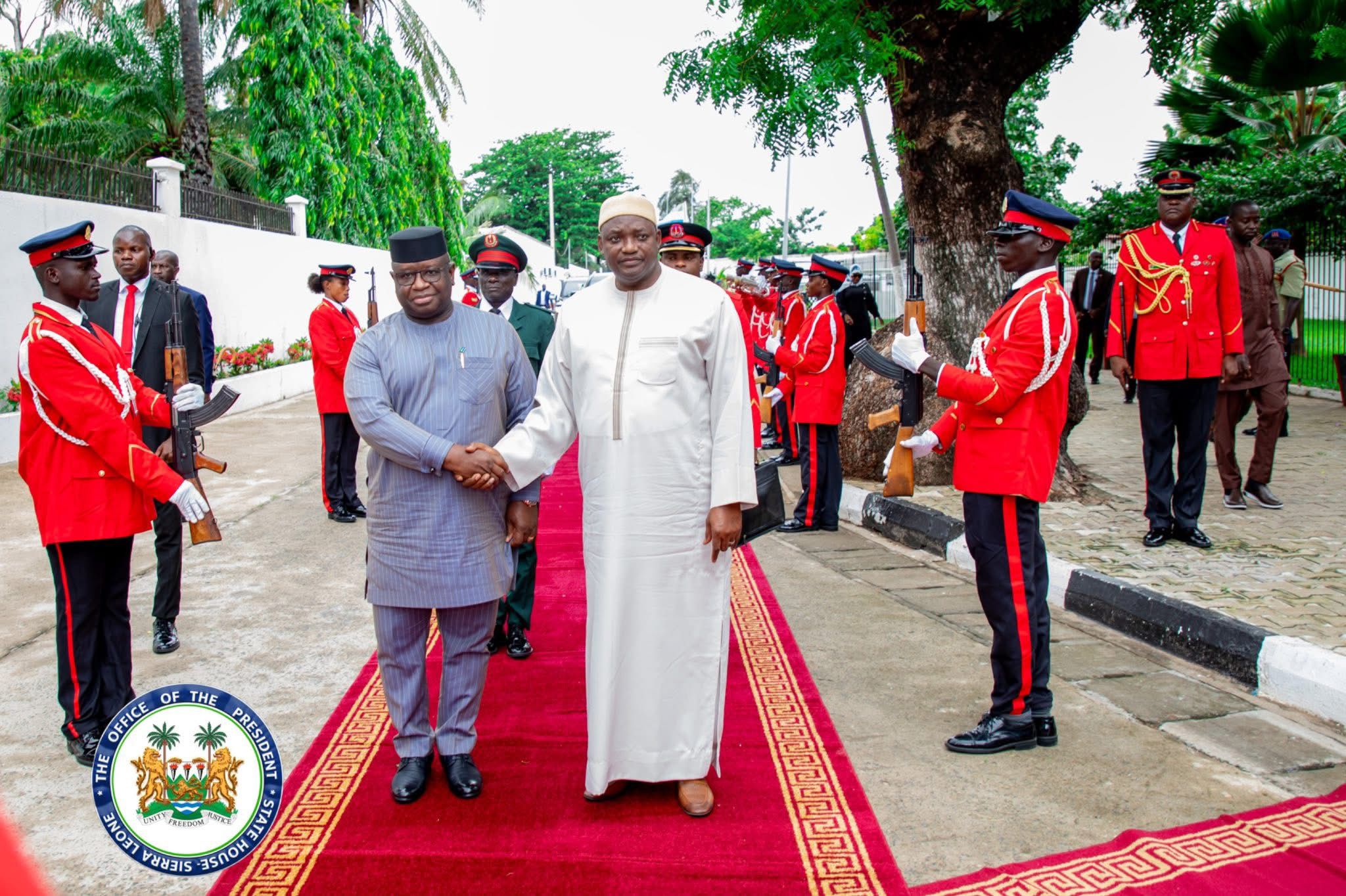
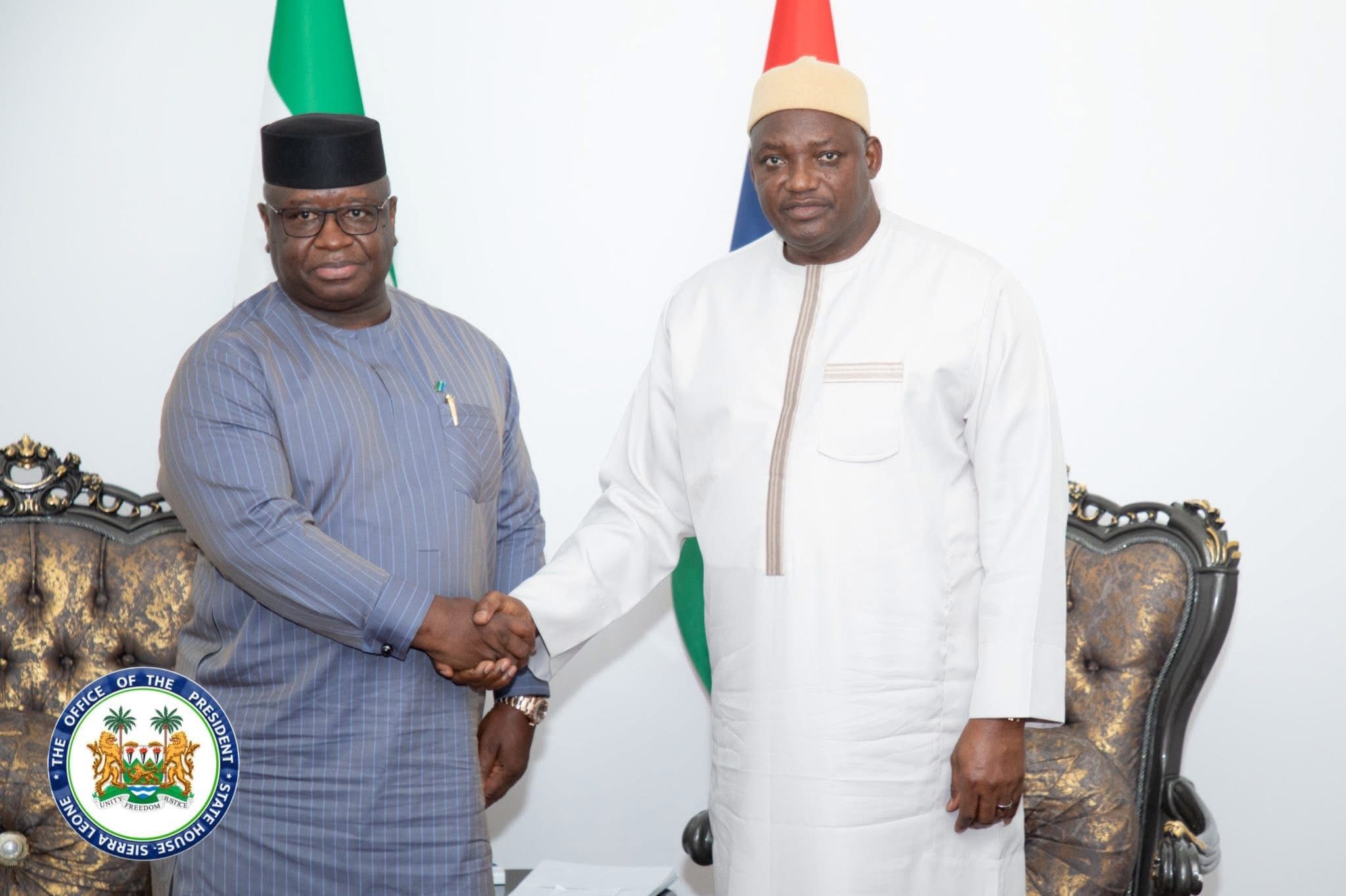
Sierra Leone’s President Julius Maada Bio, the current chairman of the Economic Community of West African States (ECOWAS), made an unexpected visit to The Gambia on Thursday to meet with President Adama Barrow. The closed-door meeting, which centered on Barrow’s controversial bid for a third term in office, ended without resolution, and a planned press conference and dinner were abruptly canceled, leaving speculation swirling in Banjul.
President Bio’s visit was not an official ECOWAS mission but a personal one, described by sources as a brotherly attempt to dissuade Barrow from pursuing a third term. A high-level diplomatic source with knowledge of the meeting revealed that even the ECOWAS representative in Banjul, who was at the State House, was excluded from the private discussions. “The meeting was strictly between Presidents Bio and Barrow,” the source said. “No one else, not even the ECOWAS representative, was allowed in the room.”
The discussions, which lasted several hours, reportedly focused on Barrow’s intention to extend his presidency beyond the two-term limit even though there is no term limit in the current Gambian constitution.
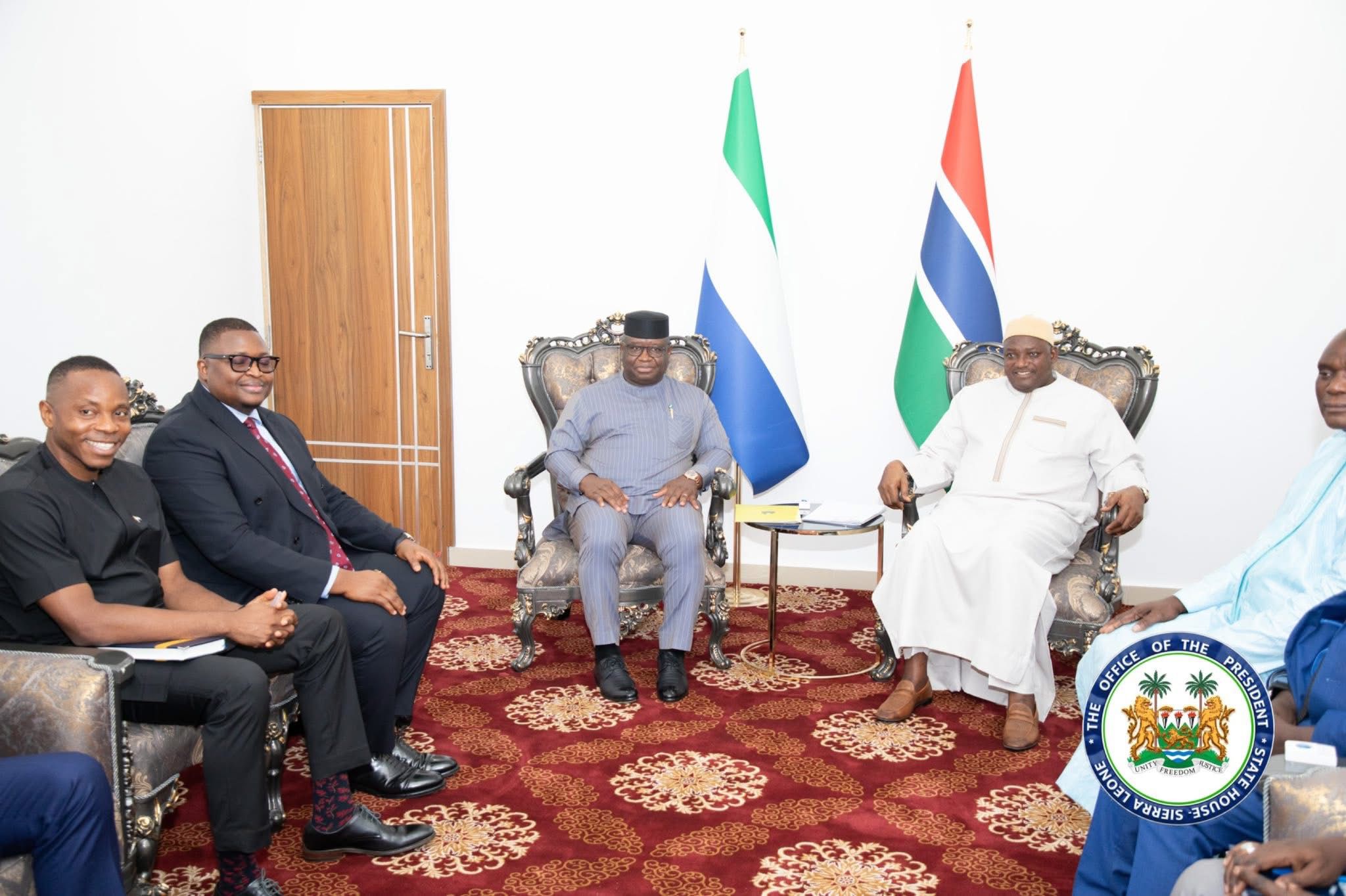
Sources close to the talks indicated that Bio, drawing on his experience as a regional leader, urged Barrow to reconsider his plans, citing potential risks to democratic stability and regional unity. However, insiders noted that Bio’s efforts failed to sway Barrow, who remained noncommittal on the issue.
Following the meeting, President Bio departed Banjul International Airport en route to Cape Verde for high-level talks, the details of which remain undisclosed. The sudden cancellation of a scheduled press conference and a state dinner caught journalists and observers off guard. No official explanation was provided, though local media speculated that the lack of progress in the talks may have prompted the abrupt change in plans. “The mood was tense,” one Gambian journalist who was at the presidency told TAT. “The cancellation suggests things didn’t go as hoped.”
Bio’s visit was initially framed as an opportunity to strengthen bilateral ties between Sierra Leone and The Gambia, with ECOWAS unity as a backdrop.
In a brief statement released later, Bio emphasized the “strong and diverse partnership” between the two nations. “As I carry on with my regional tour, I was pleased to visit my brother and colleague, President Adama Barrow of The Gambia,” he said. “We had meaningful discussions about our shared commitment to enhancing ECOWAS and working collaboratively to unite our region.” The statement, however, made no mention of the third-term discussions, leaving analysts to question the true outcome of the visit.
The Gambia’s political landscape has been increasingly polarized as Barrow’s administration navigates questions about his tenure. Critics argue that a third-term bid could undermine the democratic gains made since the ousting of former dictator Yahya Jammeh in 2017. Barrow, who first came to power as a coalition candidate promising democratic reforms, has faced growing scrutiny over moves perceived as consolidating power. Bio’s intervention, though well-intentioned, appears to have fallen short of altering Barrow’s trajectory.
The cancellation of the press conference has fueled further uncertainty, with authorities yet to confirm whether it will be rescheduled. For now, Bio’s departure to Cape Verde shifts focus to his next diplomatic engagement, while The Gambia grapples with the implications of Barrow’s ambitions. Regional observers note that ECOWAS, under Bio’s leadership, faces a delicate balancing act in promoting democratic norms while maintaining unity among member states.
As Barrow’s third-term bid continues to dominate headlines, the outcome of this high-stakes meeting—or lack thereof—may set the tone for The Gambia’s political future and ECOWAS’s role in safeguarding democratic principles across West Africa.