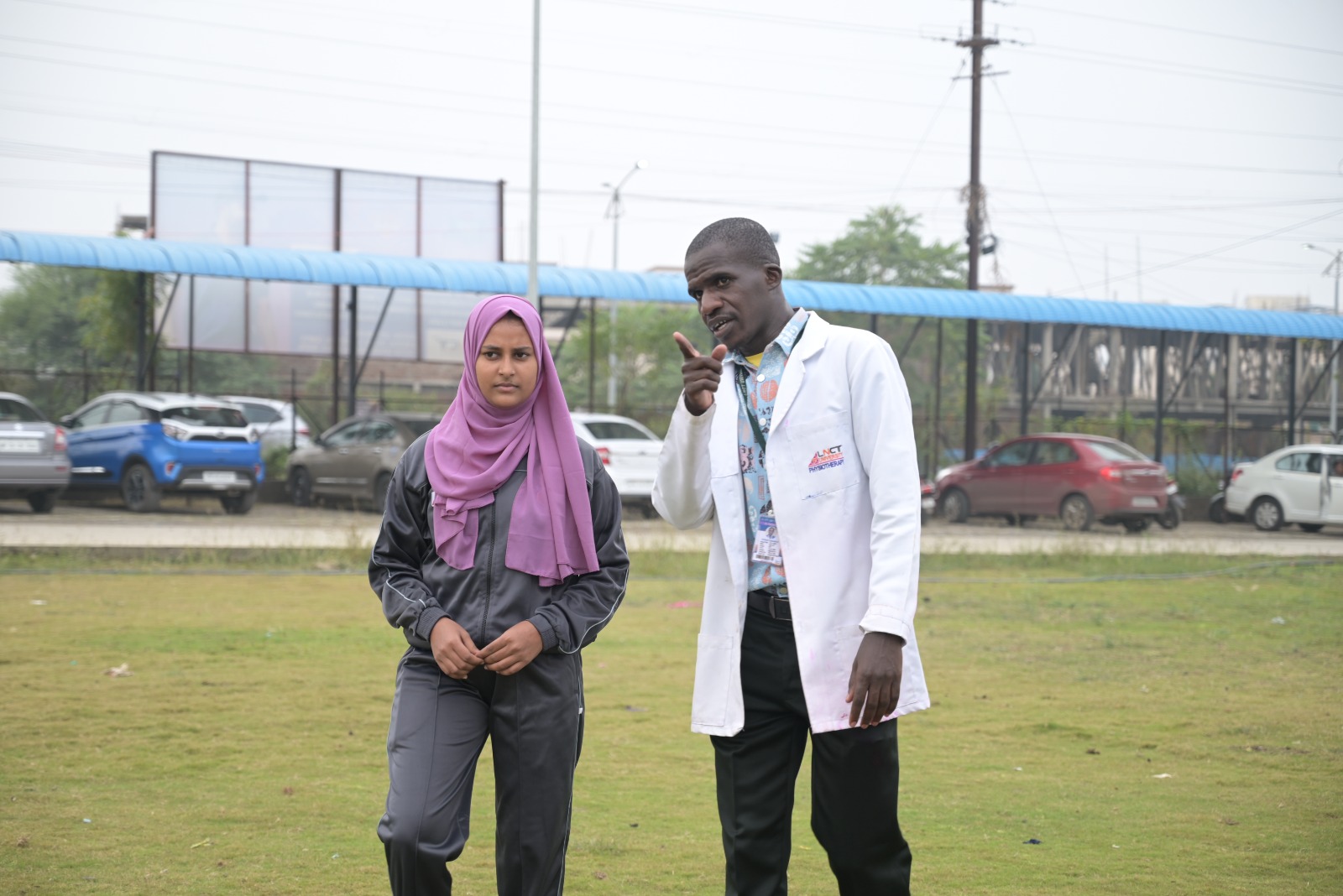
By Dr. Karamo B. Touray, PT, BPT (2025), FIFA Diploma in Football Medicine (2017), Disaster Preparedness & Risk Reduction (GRCS, 2014).
Strength, recovery, and performance enhancement stand as the three inseparable pillars that define the physical and clinical foundations of modern football. For female footballers, these components are more than mere training objectives; they are the cornerstones of health, resilience, and excellence on the pitch.
The ability to build and maintain muscle mass through structured strength training has been widely recognized in clinical sports medicine as an essential determinant of performance.
Resistance training not only enhances physical conditioning but also plays a vital role in preventing injuries, particularly those involving the anterior cruciate ligament (ACL), which remains a frequent concern in women’s football. Scientific studies have consistently shown that structured in-season strength programs, even when applied just twice per week, significantly improve both match performance and physical capacities in elite female athletes.
In human clinical sports medicine language, this means that properly executed resistance training helps athletes sprint faster, change direction with more stability, and sustain the physical demands of repeated accelerations and decelerations during competitive matches.
The competitive season, however, introduces a delicate challenge. While strength training is essential, it must be applied with caution.’
Training loads cannot remain as high as during pre-season phases, when the body is primed for building strength and hypertrophy. Instead, the focus should shift to maintaining those gains while prioritizing recovery. Sports medicine practitioners understand that excessive volume and intensity during congested fixture periods elevate the risk of fatigue and muscle damage, reducing readiness for match play. Evidence suggests that the timing of resistance sessions matters as much as their design.
Post-match resistance training performed forty-eight hours after competition can impair recovery of power, speed, and even perceptual freshness in female players compared to training at twenty-four hours or avoiding resistance altogether. Such findings highlight the importance of precise load management, where the physiotherapist and strength coach must coordinate closely with coaching staff to decide not only what kind of training to implement but exactly when to deliver it.
Another key aspect addressed in performance science is the influence of circadian rhythms on athletic output. Numerous controlled studies demonstrate that short-duration; high-intensity performance typically peaks in the late afternoon, between sixteen hundred and twenty hundred hours. Neuromuscular function, core body temperature, and alertness align during this window to create optimal conditions for strength and power expression.
Translating this into applied football medicine, afternoon gym sessions may be the most effective time to schedule demanding strength work, particularly when looking to enhance sprint capacity, vertical jump ability, and overall power. This does not mean, however, that every player will thrive under the same schedule. Chronotype plays an important role.
Morning types, often called larks, naturally show better tolerance to early training, while evening types, or owls, tend to reach peak performance later in the day. Recognizing these individual biological variations allows for more personalized conditioning plans, ensuring that training maximizes rather than suppresses performance potential.
From a clinical sports medicine standpoint, strength training in female football should always be considered a protective strategy as much as a performance enhancer. The high prevalence of lower limb injuries in women’s football, especially non-contact ACL tears, underscores the necessity of developing neuromuscular control, proprioception, and muscular balance.
A well-structured resistance program reduces injury risk by reinforcing joint stability, improving landing mechanics, and enhancing the body’s ability to tolerate high deceleration forces.
These protective adaptations are just as valuable as the performance benefits, since an injured player cannot contribute to her team regardless of technical skill or tactical understanding. Sports medicine professionals emphasize that prevention is performance, meaning that a squad with fewer injuries is inherently stronger across the season.
Recovery practices complete the performance cycle. Without sufficient restoration, strength gains cannot be consolidated, and players risk chronic fatigue, underperformance, or even overtraining syndromes. Recovery is not passive but a structured clinical process involving appropriate nutrition, hydration, sleep hygiene, and carefully dosed active recovery strategies.
Gym-based recovery sessions should respect muscle damage timelines and be guided by physiological markers such as perceived exertion, soreness scales, and heart rate variability.
Coaches and physiotherapists must appreciate that the goal of recovery is not only to restore but also to prepare the athlete for the next load. In this sense, recovery becomes an integral extension of training rather than an afterthought.
In the language of performance medicine, strength, recovery, and enhancement form a triad of constant interaction. Strength cannot be maximized without recovery, recovery is meaningless without the stimulus of strength training, and enhancement occurs only when both elements are harmonized within the competitive calendar. Periodization remains the primary organizational tool, where the training year is divided into cycles that alternate between building, maintaining, and tapering workloads.
For coaches, this demands a strategic vision; for physiotherapists, it requires clinical insight into the player’s tissue adaptation, fatigue markers, and injury risk profile.
Together, they must construct a framework where every session is purposeful and every recovery intervention aligns with the demands of competition.
Performance quotes from sports medicine literature remind us that timing is as decisive as effort. Research has concluded that “performance in short-duration maximal exercises exhibits diurnal fluctuations, peaking between sixteen hundred and twenty hundred hours.”
This insight, while scientific in origin, translates directly to practice: afternoon gym sessions may yield better returns for footballers, especially when programmed for power development. Another line of evidence emphasizes that “in-season strength training performed twice per week significantly enhances match running performance,” confirming that even modest but consistent inputs can generate tangible results. These statements are not simply academic—they are guiding principles for the field staff responsible for translating science into practice.
Ultimately, enhancing performance in female football is not about chasing constant gains but about balancing the competing demands of strength development, injury prevention, and recovery. It requires recognition of the female athlete’s unique physiological profile, sensitivity to match scheduling, and appreciation for circadian biology. Coaches must trust the physiotherapists’ clinical judgment, while physiotherapists must respect the tactical imperatives of the coaching staff.
When these perspectives converge, players benefit from a holistic program that safeguards their health while elevating their competitive performance. Strength provides the platform, recovery sustains the athlete, and enhancement is the natural product of a system built on clinical evidence and practical wisdom.
In this integrated model, every gym session, every recovery strategy, and every tactical decision contributes to the larger goal: preparing female footballers not only to play but to thrive. The science is clear, and the application is within reach. Strength, recovery, and performance enhancement are not abstract ideals—they are the clinical language of success in modern football.