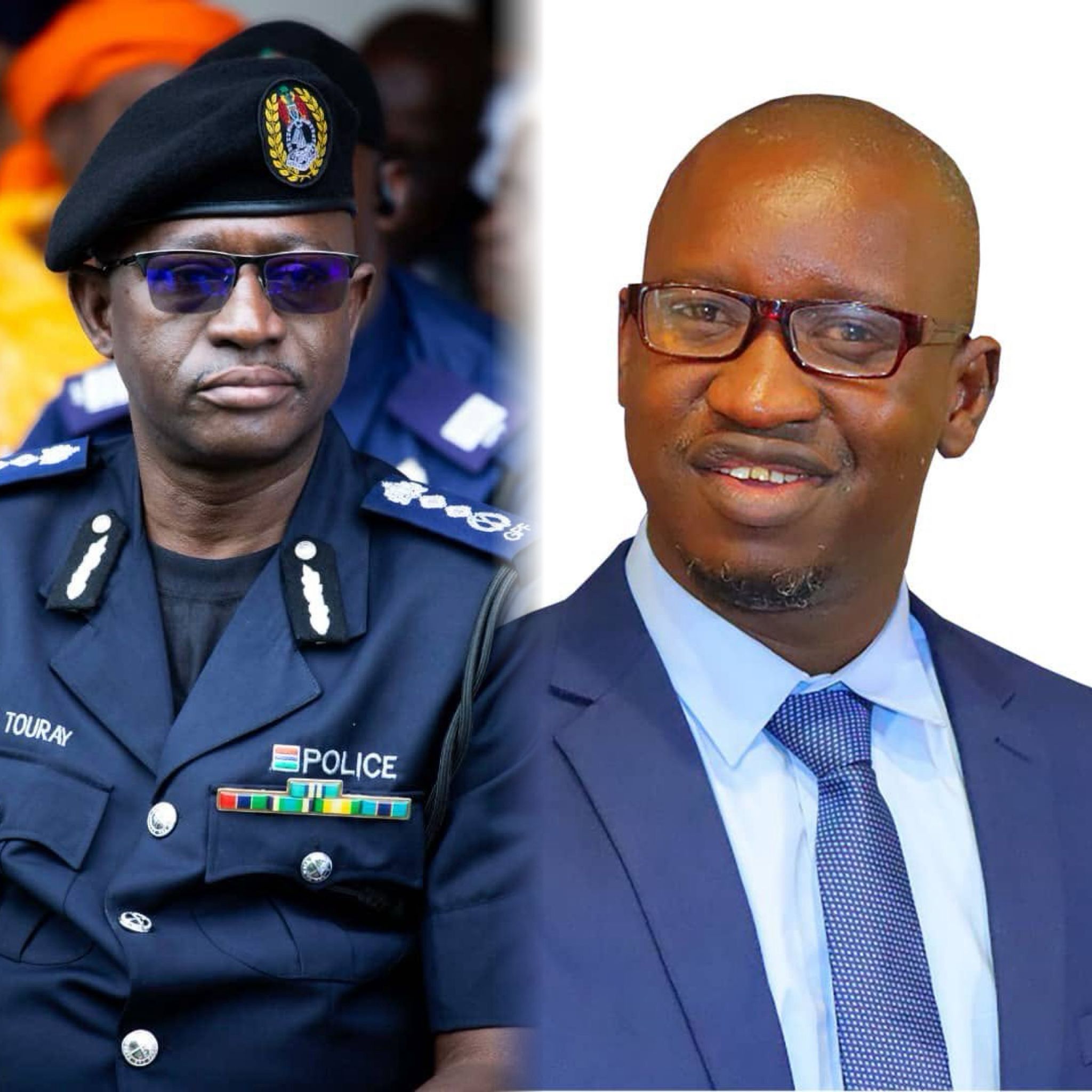
The Gambia Police Force (GPF) has sparked controversy with a recent statement warning serving officers and the public against commenting on security matters, specifically singling out Superintendent David Kujabi, a former Public Relations Officer, for his social media posts. The statement, issued by the GPF leadership, has drawn significant backlash, with many rallying in support of Kujabi, praising him as a dedicated officer advocating for peace and reform in the country’s security sector.
The GPF’s statement emphasized its openness to “suggestions, recommendations, and constructive criticism” regarding its mandate to maintain peace and security. It encouraged serving officers to channel their input through the Office of the Inspector General of Police (IGP) via proper internal procedures. However, the leadership expressed concern over what it described as “subjective” criticism that risks creating misunderstandings and encouraging unlawful behavior.
The statement specifically highlighted “unbecoming” conduct by serving officers, pointing to Kujabi’s posts titled “Are We Solving a Problem or Stoking a Fire that May Burn Us All” and “Conflict Sensitivity and Law Enforcement in The Gambia” as examples of inappropriate public commentary.
The GPF warned that such actions undermine public confidence and institutional integrity, advising officers to adhere to police ethics, loyalty, and respect for institutional processes. It cautioned that violations would face strict disciplinary measures, as public disagreements could compromise national peace and security.
Kujabi, a serving officer with a background in peace, conflict, and development studies, has been vocal about the need for conflict-sensitive and democratic policing.
In his post on “Conflict Sensitivity and Law Enforcement in The Gambia,” he critiqued the arrest and prosecution of 23 youths for staging a peaceful protest without a permit, as required by the Public Order Act. Drawing on the Conflict and Development Analysis (CDA) 2024 and the National Action Plan on Youth, Peace and Security (2025–2030), Kujabi argued that strict enforcement of the law without considering The Gambia’s fragile socio-political context risks exacerbating grievances and undermining peacebuilding efforts. “Tactful and preventive approaches to law enforcement” are essential, he wrote, emphasizing youth inclusion and democratic policing principles outlined in the GPF’s Community Policing Training Manual.
Public reaction to the GPF’s statement has been polarized, with significant support for Kujabi. Social media platforms, particularly Facebook, have been abuzz with comments defending his right to express his views.
Saul Minteh, a commentator, argued that Kujabi’s posts raise critical questions about whether policing methods are building peace or fueling tensions, calling them “opportunities for growth” rather than threats to stability. Bubacarr Nyang echoed this sentiment, asserting that Kujabi, as a citizen, has the right to voice opinions on national matters. Bala Musa Wally went further, stating that Kujabi’s suggestions should be seen as constructive guidance for peacebuilding, not as unbecoming conduct.
However, some supported the GPF’s stance. Alagie Malick argued that as a serving officer with access to internal channels, Kujabi should not air his views publicly, noting that the police often fail to uphold the laws they enforce. Pa Malick Saidy called for an independent body to regulate police operations, suggesting that political influence undermines accountability.
The backlash highlights broader tensions within The Gambia’s security sector, which is undergoing reforms aimed at modernizing and professionalizing policing.
Under IGP Seedy Mukhtar Touray, the GPF has emphasized human rights and community policing, with initiatives like the revision of the Police Act and the establishment of specialized units. Yet, incidents of alleged police misconduct, such as officers’ unprofessional behavior captured on video, have fueled public distrust.
Kujabi’s supporters view him as a patriot advocating for a more inclusive and sensitive approach to law enforcement. Alieu B. Jallow criticized the police for prioritizing their own interests over those of the public, urging them to uphold their oath to protect citizens. Famara Drammeh highlighted the irony of the GPF’s success in international peacekeeping, while struggling with domestic protests.
The controversy underscores the delicate balance between institutional discipline and freedom of expression within the GPF. As the force navigates its Security Sector Reform process, the public’s call for transparency and accountability grows louder.
Kujabi’s case may serve as a litmus test for how the GPF addresses dissent and engages with critical voices within its ranks. For now, the debate continues, with many hoping for a resolution that strengthens, rather than stifles, dialogue on Gambia’s path to peace and security.