By Fatou Dahaba
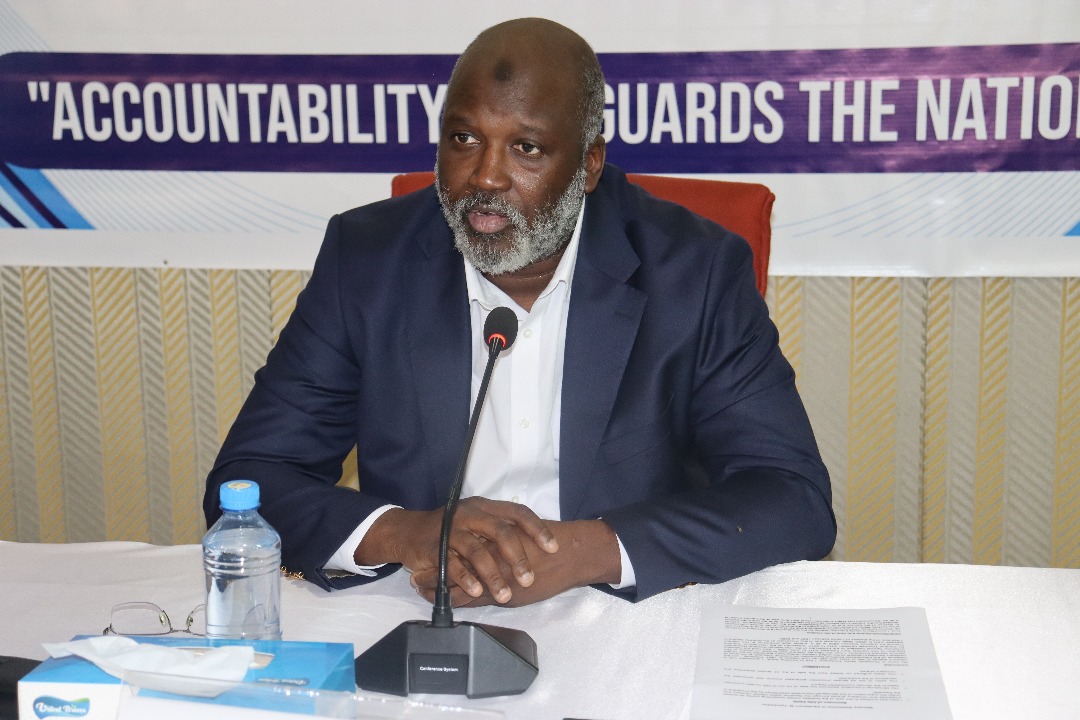
In a tense session before the National Assembly’s special select committee, former Attorney General and Minister of Justice Abubacarr M. Tambadou on Thursday described the removal of Alhaji Mamadi Kurang, the former secretary to the Janneh Commission, as a painful but necessary decision driven by irreconcilable internal conflicts, not personal animosity. The testimony, part of an ongoing investigation into the sale and disposal of assets identified as belonging to ex-President Yahya Jammeh, shed light on the behind-the-scenes tensions that plagued the commission established in 2017 to probe Jammeh’s financial dealings during his 22-year rule.
Tambadou, who served as Justice Minister under President Adama Barrow’s administration, appeared before the committee to address allegations of mismanagement and interference in the commission’s operations. The Janneh Commission, chaired by Justice Surahata Semega Janneh and including commissioners Bai Mass Saine and Abiosseh George, was tasked with recovering assets amassed through corruption, abuse of office, and illicit enrichment. Its findings led to the freezing and eventual auction of properties, vehicles, livestock, and other valuables, generating millions in dalasis for the state. However, the process has been scrutinized for alleged irregularities, including rushed sales and political pressures.
At the heart of Thursday’s hearing was Kurang’s dismissal in July 2018, which Tambadou framed as a last-resort measure to preserve the commission’s functionality. “This was one instance where I had to make a difficult decision, and I did. It was not personal at all,” Tambadou stated emphatically. He revealed deep-seated differences had emerged between Kurang, the lead counsel, Amie Bensouda, and the commissioners, rendering collaborative work impossible.
“The commissioners and lead counsel explicitly told me they could no longer work with him,” Tambadou recounted, emphasizing that frustrations had boiled over into outright dysfunction.
The catalyst, Tambadou explained, was a letter from Kurang addressed to the president and copied to him, containing serious allegations against the lead counsel. Upon reviewing the claims, Tambadou deemed them unsubstantiated and concluded that Kurang’s continued presence would poison the work environment. “I knew it was impossible for him to continue,” he said. Tambadou summoned Kurang to his office to address the matter directly for a private discussion.
However, Kurang failed to provide evidence backing his accusations, further solidifying the decision to relieve him of duties. Shortly after, Ramatoulie Sarr, then Deputy Permanent Secretary at the Justice Ministry, was appointed as Kurang’s replacement, stepping in as assistant secretary before assuming the full role.
Lead Counsel Lamin M. Dibba, grilling Tambadou on the dismissal’s origins, suggested it stemmed from Kurang’s refusal to comply with cabinet directives, particularly regarding asset disposals. Dibba probed whether the move was linked to strained relations between Kurang and the President’s office, including the Office of the Secretary General. Tambadou pushed back, questioning the timeline: “If the reason for his sacking was based on his relationship with the President’s office, then I’m wondering why he wasn’t sacked sooner after the relationship went south.” This exchange highlighted broader concerns about the commission’s autonomy, with critics arguing that government interference undermined its independence.
The hearing also delved into the controversial sale of Jammeh’s tractors, a key asset recovered by the commission. Tambadou stated he had no recollection of discussing the tractors’ auction with the commission. “To the best of my recollection, I did not approach the commission; even if I did, it would have been based on a request,” he testified. Kurang, in his earlier appearance before the committee, had alleged receiving a call from former Cabinet Secretary Mr. Ceesay instructing him to halt the sales. Kurang claimed he responded that he was answerable only to the commissioners, but minutes later, Ceesay arrived with an orderly to enforce the suspension.
A letter from the former Cabinet Secretary to Kurang, entered into evidence, read: “I write to convey to you the decision for the scheduled auctioning of the former president’s tractors to be suspended until further notice. We would be grateful if this were treated with urgency. Thanks for the usual cooperation.”
The document underscored executive involvement in what should have been an independent process. Under Dibba’s questioning, Tambadou condemned the intervention as “ill-advised” and expressed surprise that it was presented as an official decision. “I would be extremely surprised if it came in the form of a decision,” he said, adding that the commission “should work independently without government interference.”