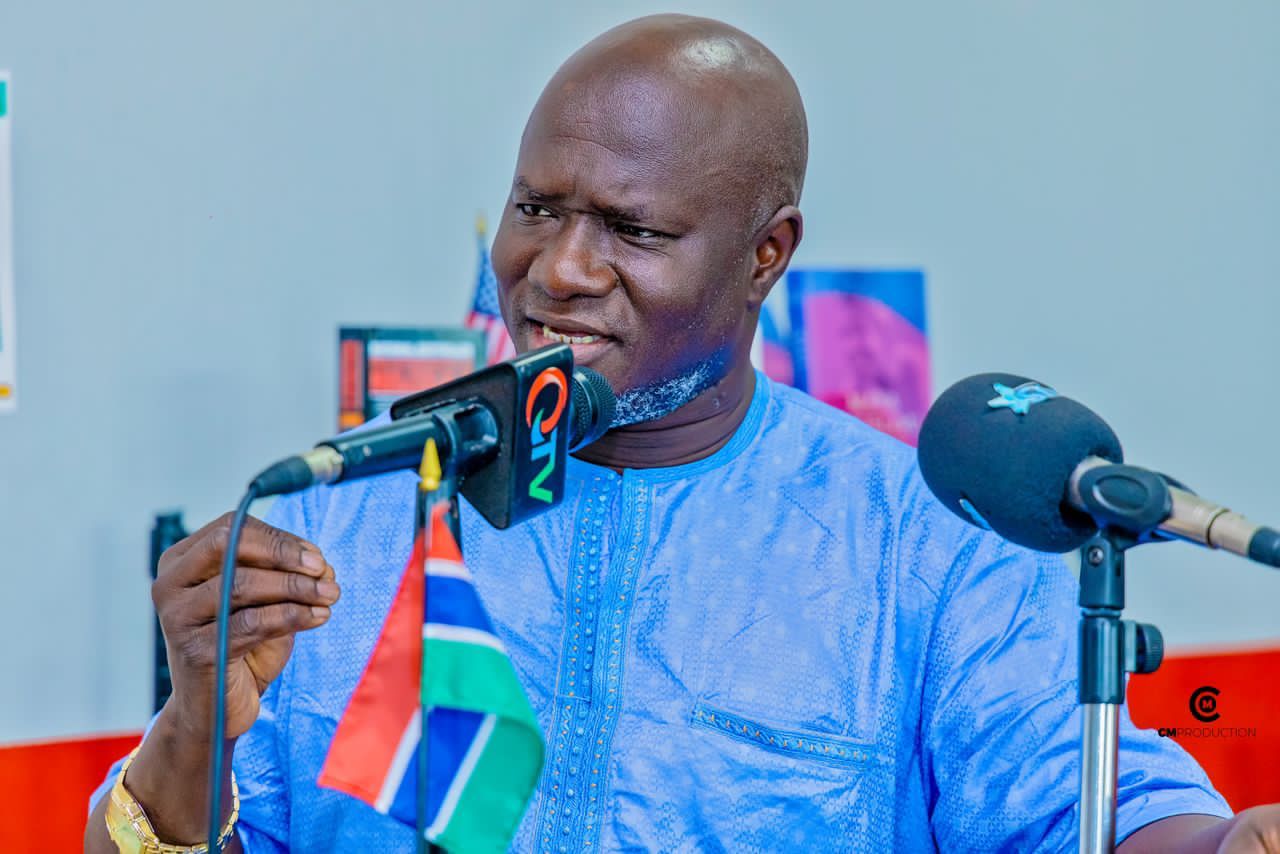
Madi Jobarteh, founder and executive director of the Edward Francis Small Center for Rights and Justice, has issued a scathing critique of The Gambia’s governance, identifying corruption and poor service delivery as the nation’s most pressing crises, not security threats. In a powerful statement, Jobarteh called for urgent reforms, warning that the government’s reliance on force to suppress dissent risks plunging the country into instability.
Jobarteh emphasized that the greatest threats to The Gambia’s peace are not violent crime, terrorism, or drugs, but systemic corruption and the failure to provide basic services. “Corruption bleeds the country of resources meant for the public good, leaving hospitals without medicines, schools without textbooks, and roads riddled with potholes,” he said. He highlighted how inflated government contracts and mismanaged funds enrich officials while ordinary Gambians struggle to afford essentials like rice, electricity, and healthcare.
This pervasive corruption, Jobarteh argued, erodes public trust in institutions. “When people see officials face no consequences for theft and abuse of power, they lose faith and feel compelled to act,” he warned, noting that this breeds resentment and could spark unrest.
Compounding the issue is the dire state of public services. Jobarteh pointed to unreliable and costly electricity, inconsistent and unsafe water supply, and poorly maintained roads as evidence of governance failure. “Gambians are forced to pay more for erratic, poor-quality services,” he said, while public officials enjoy lavish salaries and benefits. “Citizens work, pay taxes, and surrender their rights to leaders who fail to deliver the essential services that justify a government’s existence.”
Instead of addressing these failures, Jobarteh criticized the government for treating citizens as security threats. He cited recent police actions to clear alleged encroachments, which demolished homes and businesses, as an example of misplaced priorities. “These encroachments arose because the government failed to plan towns or enforce laws consistently,” he said. “Using police to suppress citizens for government failures is not governance—it’s repression.”
Jobarteh stressed that security forces are meant to protect, not silence, citizens. “The police cannot fix broken electricity grids or stock hospitals with medicines. Those are the responsibilities of policymakers and technocrats,” he said, urging a focus on systemic reforms over punitive measures.
Calling for a government that serves rather than rules over its people, Jobarteh outlined a path forward: prosecuting corrupt officials, investing in infrastructure and public services, empowering citizen participation, strengthening independent institutions like the National Audit Office, and reforming the police to prioritize public safety over political defense.
“The Gambia’s crisis is one of governance, not security,” Jobarteh concluded. “A nation cannot be built on fear and repression—it must be built on justice, accountability, and dignity.” He warned that suppressing dissent will not silence the truth but amplify the demand for change. “Power belongs to the people,” he affirmed, urging leaders to honor their social contract and deliver development, not private wealth, for Gambians.