By Sainabou Sambou
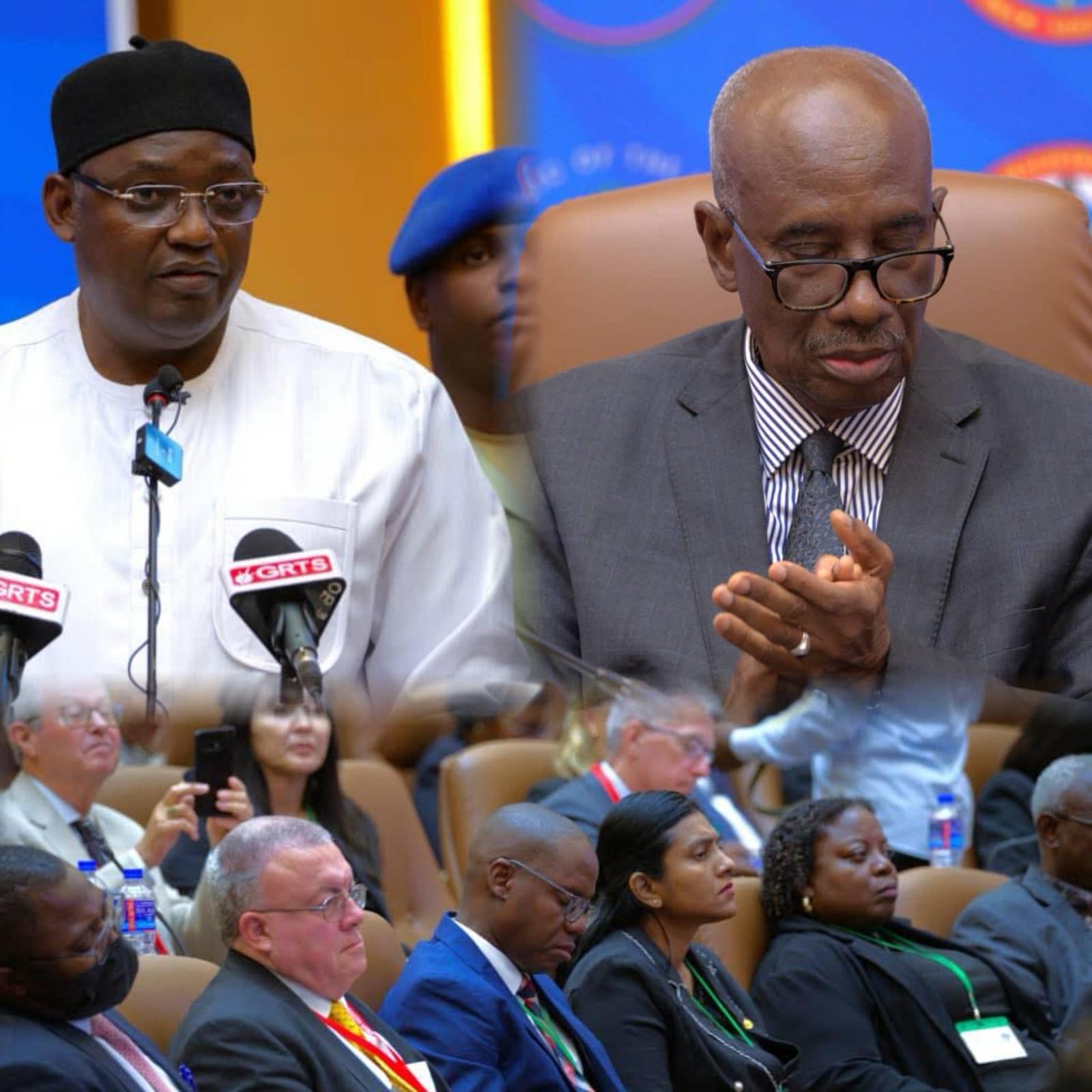
The Gambia’s President, Adama Barrow, on Monday at Sir Dawda International Conference Center in Bijilo, declared open the 20th Triennial Conference of the Commonwealth Magistrates’ and Judges’ Association (CMJA), urging judiciaries across the Commonwealth to embrace innovation without abandoning the core principles of justice and judicial independence.
Speaking before over 300 delegates from 43 jurisdictions gathered in Banjul under the theme “Innovations in Judicial Practice: Embracing Change for a Better Future,” Barrow said the meeting marks a historic milestone for The Gambia as the first time the country is hosting the global judicial forum.
“The task at hand is to embrace innovation while preserving the timeless values of justice, impartiality, and adherence to due process,” Barrow said. “This conference provides an opportunity to exchange experiences, share best practices, and devise ways of transforming judicial systems to be more adaptive, innovative, and functional.”
Barrow highlighted recent Gambian reforms aimed at strengthening the rule of law, including the establishment of an independent National Human Rights Commission in 2020 (now accredited with Grade A status), the creation of an Anti-Corruption Commission, and legislation such as the Access to Information Act, Torture Act, and Persons with Disability Act. He reminded delegates of The Gambia’s ongoing transitional justice process following 22 years of dictatorship that ended in 2017.
The president stressed that modernization, such as using digital tools and artificial intelligence, offers opportunities to improve efficiency and access to justice, but warned against undermining judicial values. “Innovation is not an end in itself but a means to ensure that justice is timely, fair, and accessible, especially for the vulnerable and marginalised,” he said.
Chief Justice Hassan B. Jallow welcomed the delegates and thanked CMJA, local organisers, and government ministries for bringing the event to fruition.
“Justice, peace, and progress remain inextricably linked,” Jallow said. “There cannot be sustained peace without quality justice; there cannot be development without the peace founded on justice.”
Jallow praised Barrow’s administration for respecting judicial independence during The Gambia’s democratic transition and for improving conditions for judicial officers, including new pension benefits. He urged governments to invest in justice as a cornerstone of national development.
CMJA President Lynne Leitch read a congratulatory letter from King Charles III, the association’s patron, before emphasising the importance of judicial independence in an era of rapid technological change. Citing Canadian courts’ guidelines on artificial intelligence, Leitch noted that while AI can support courts, “judges must maintain exclusive responsibility for their decisions.”
She described innovations from remote hearings to paperless workflows as essential for maintaining public confidence and access to justice. “Innovation is what we undertake to make improvements in how we serve the public, to be more effective and to become more efficient,” Leitch said.
Delegates from across the Commonwealth will spend the week sharing strategies on technology, transparency, and accountability in the judiciary. The conference will also explore the delicate balance between embracing modernisation and upholding long-standing legal principles.
The Banjul gathering is expected to produce resolutions that will shape judicial practice across the Commonwealth for years to come.