By Sainabou Sambou
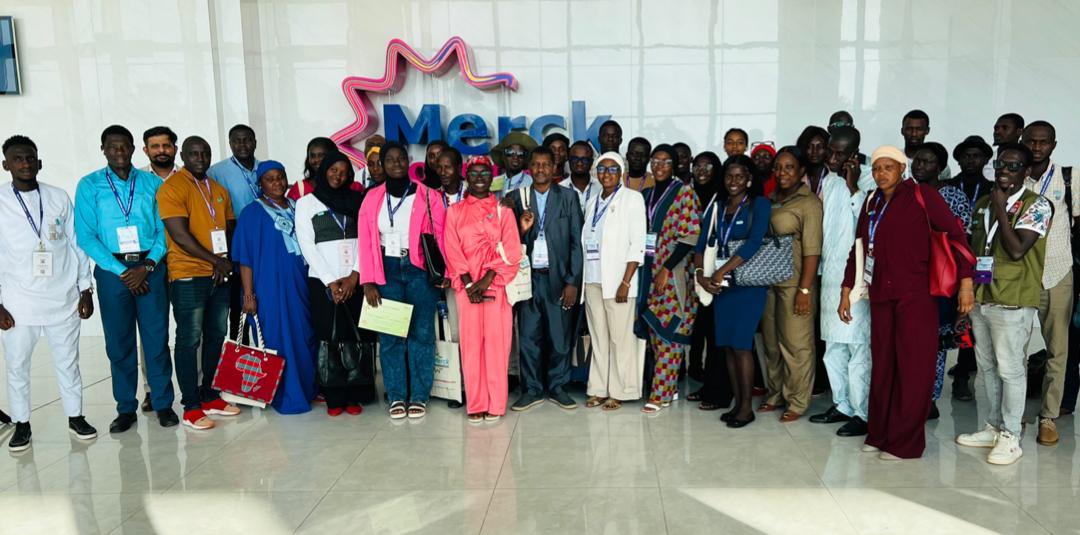
In a groundbreaking effort to shatter the silence around reproductive health, Gambian journalists gathered on Wednesday for specialized media training on infertility awareness, prevention, and the pervasive stigma tied to non-communicable diseases like diabetes and hypertension. Organized by Merck Foundation in partnership with The Gambia Government and the Gambia Press Union (GPU), the one-day workshop at the Sir Dawda Kairaba International Conference Center equipped over 100 media practitioners, health experts, and advocates with tools to amplify accurate public messaging on these often-taboo topics.
GPU President Isatou Keita opened the session with a passionate call to action, hailing the training as a “rare and timely opportunity” for journalists to sharpen their expertise. “Most of us have the passion to do the work, but we often lack the technical understanding of issues like infertility, diabetes, and Female Genital Mutilation (FGM),” Keita declared. She positioned media professionals as vital intermediaries “at the intersection between policymakers and the public,” warning that shallow reporting widens the chasm of misunderstanding.
“Our role is enshrined in the Constitution to serve as the voice of the voiceless,” Keita emphasized. “Many in rural areas rely solely on us for information. If we fail to grasp these key issues, we fail those who depend on us most.”
The day’s presentations delivered stark revelations. Dr. Musa Marenah, an obstetrician-gynecologist and Programme Manager for Reproductive, Maternal, Neonatal, and Child Health at the Ministry of Health, spotlighted Africa’s infertility epidemic, revealing that infections drive up to 85% of cases among women seeking care in sub-Saharan facilities—far exceeding the global average of 33%.
“Cultural beliefs, traditional practices, and limited healthcare access have worsened preventable infertility,” Marenah explained. He pinpointed sexually transmitted infections like chlamydia and gonorrhea as culprits, often asymptomatic in women, leading to severe complications such as pelvic inflammatory disease and ectopic pregnancies.
Urging immediate action, Marenah advocated safe sexual practices: regular checkups, condom use, and avoiding shared needles. “Untreated infections cause long-term damage to reproductive organs in both men and women,” he cautioned, stressing that early intervention could avert lifelong heartache.
Complementing Marenah’s insights, Dr. Dennis Darliri from Ghana provided a global and local context, citing World Health Organization data that show 17.5% of adults worldwide grapple with infertility. In The Gambia, the prevalence stands at 14.3%, with 33.9% of primary cases (no prior pregnancies) and 59.1% of secondary cases (issues after previous births). Causes span tubal blockages, ovulation disorders, lifestyle factors, and infections—affecting men and women equally.
Darliri zeroed in on Gambian society’s deep-seated stigma, where childless couples face emotional turmoil, marital strife, and gender-based blame. “In our communities, marriage triggers immediate expectations of children,” he said. “Delayed conception unfairly targets women, even when men are equally responsible.” He connected this to broader ills like child marriage, labeling it a “human rights violation and public health crisis.” Early unions expose girls to premature sexual activity and childbirth, heightening pregnancy risks.
Supported by the Merck Foundation and the Gambia Government—under the patronage of First Lady Fatoumatta Bah-Barrow—the training empowers journalists as “key messengers” to dismantle myths and champion prevention. Participants left with actionable strategies: crafting stigma-busting stories, interviewing experts, and promoting screenings for diabetes, hypertension, and reproductive health.