By: Kebba Ansu Manneh
Tensions escalated in Kangmanka village as the District Chief of Foni Jarrol, Seefoo Ebrima Solo Sanyang, summoned four aggrieved villagers on Monday for allegedly blocking a truckload of firewood linked to illegal tree felling by the village Alkalo, Abdou Bajinka. The incident highlights deepening disputes over community forest resources, with accusations of unchecked environmental destruction and official complicity.
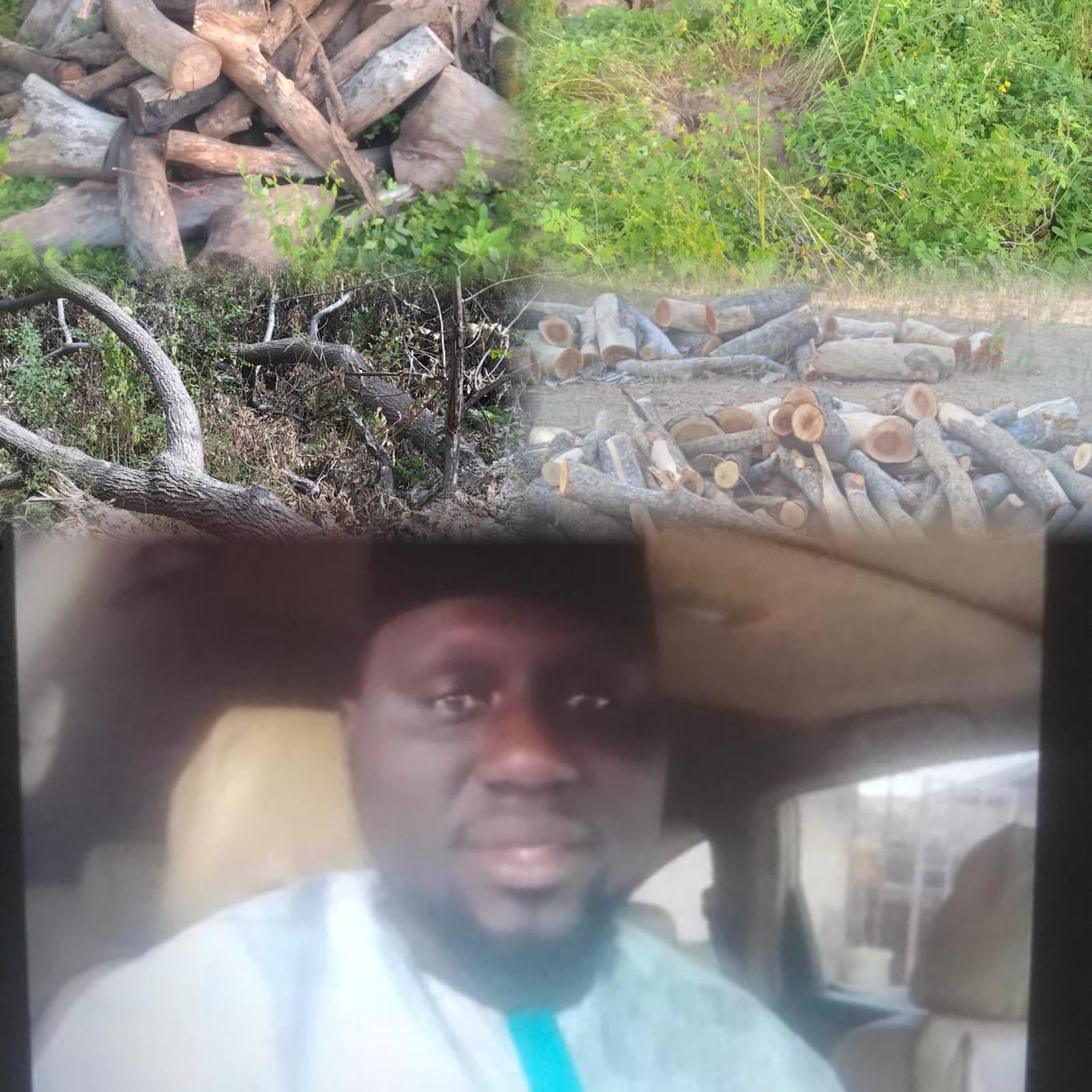
Impeccable sources close to the District Chief’s office confirmed to TAT that Seefoo Sanyang issued a summons to at least four natives of Kangmanka following their participation in intercepting the truck on Sunday, October 26, 2025. The villagers claim that the firewood originated from eight trees, including three endangered mahogany specimens, which were felled and sold without community approval or revenue sharing.
An anonymous villager, speaking exclusively to TAT, described the blockade as a direct response to the Alkalo’s alleged ongoing exploitation. The youths stopped the truck from leaving because it was carrying remnants of illegally cut trees. The Alkalo cut and sold them without paying a dime into the village coffers,” the source said. He noted that the action stemmed from frustration over prior unaddressed complaints.
Sainey Camara, one of the summoned youths, recounted the confrontation at the Chief’s compound in Kanlagi. “It’s true we were summoned by Seefoo Bakary Sanyang, who accused us of intercepting the truckload of firewood. When we arrived, we met him with the Station Officer of Kanlagi and some security personnel,” Camara told TAT.
After brief greetings, the Chief ordered most of the accompanying Kangmanka youths to leave, retaining only four: Sainey Camara, Lamin Bajinka, Nyansumana Sambou, and Ousman Dampha. “There was pull and push between us before he informed us that he would send a letter to the village officially authorizing the removal of the firewood. If anyone interferes, they would be detained in his cell for three days,” Camara added.
This is not the first clash. In December 2024, villagers accused Alkalo Abdou Bajinka of illegally felling and selling the eight trees, including the mahoganies, from the community forest. The matter sparked a fight, reported to the Kanlagi Police Station, but no resolution was reached. The villagers then escalated it to Seefoo Sanyang, who convened a meeting and promised action. To date, no funds from the sale have been recovered, and no prosecution has been initiated.
“We intercepted and offloaded the truck because, as concerned villagers, this is fair to the community. The Alkalo sold trees belonging to everyone without contributing to the village account. We cannot allow further damage, even if the Seefoo backs him,” Camara asserted.
Complicating matters, a local forestry department officer had warned the Alkalo against selling the firewood, citing the unresolved issue of tree felling. However, weeks later, the officer was transferred to the North Bank Region (NBR), leaving the case in the Chief’s hands. Camara alleged that Seefoo is now flexing authority despite knowing the Alkalo’s actions were wrongful.
The mahogany trees are classified as endangered in The Gambia, raising broader environmental concerns. Villagers view the Chief’s intervention as shielding the Alkalo rather than upholding conservation laws.
Camara called for urgent intervention from the Ministry of Environment, Department of Forestry, and other stakeholders. “Our only crime before the Seefoo is our uncompromising stance against authorities involved in environmental destruction, including cutting down endangered mahoganies,” he said.
The blockade underscores growing distrust in local leadership. Kangmanka, a rural community in Foni Jarrol, relies on its forests for sustenance and income. Illegal logging not only depletes resources but also erodes communal trust, as revenues bypass village development funds.
Attempts to reach Alkalo Abdou Bajinka for comment were unsuccessful. However, TAT contacted Seefoo Ebrima Solo Sanyang by telephone. He abruptly stated, “I do not take any telephone calls from journalists, much less for interviews,” before warning the reporter not to call again and hanging up.
This refusal fuels speculation of bias. Critics argue that without independent oversight, such disputes risk escalating into broader conflicts that could involve national authorities.
The incident occurred amid The Gambia’s efforts to promote sustainable forestry in accordance with international protocols for endangered species. Mahogany felling without permits is a violation of national laws, yet enforcement appears to be lax in remote districts like Foni Jarrol.
Villagers remain defiant, vowing to protect their forest. “We know the risks, but silence would mean complicity in destruction,” another youth anonymously shared.
As the authorized letter for firewood removal looms, Kangmanka braces for potential arrests. Stakeholders urge dialogue to resolve the standoff, recover alleged illicit proceeds, and prosecute those responsible for the violations, thereby restoring faith in local governance.
The summons and blockade expose fractures in rural authority structures, where personal ties may override environmental and communal interests. For now, four villagers stand summoned, symbolizing a community’s fight against perceived injustice.