By Alieu Ceesay and Momodou Gagigo
In a move that has reignited old scars and sparked fervent debate across The Gambia, former President Yahya Jammeh announced his long-awaited return from exile in Equatorial Guinea, setting November 2025 as the date to reclaim his place in the nation he once ruled with an iron fist.
After nine years abroad, Jammeh’s declaration – delivered via a WhatsApp audio message to hundreds of cheering supporters in his home village of Kanilai – promises a “peaceful” homecoming. Yet, as excitement builds among loyalists, the government has fired back with stark warnings: his right to return is unquestioned, but so is his accountability for decades of alleged atrocities.
Jammeh, who seized power in a 1994 military coup and governed for 22 years, fled Banjul in January 2017 after refusing to concede the 2016 presidential election to a coalition led by the current President Adama Barrow. His regime was synonymous with brutality: enforced disappearances, torture, extrajudicial killings, and sexual violence, as documented by the Truth, Reconciliation and Reparations Commission (TRRC). Thousands suffered under what human rights groups called a “reign of terror,” leaving a legacy of trauma that still haunts the tiny West African nation.
“I’ve missed my country,” Jammeh declared in the October 26 audio, his voice crackling over loudspeakers in Kanilai as crowds erupted in chants of “The real president is back!” He claimed a 2017 Memorandum of Understanding (MoU), brokered by ECOWAS, the African Union, and the UN, guaranteed his safe return without preconditions – a six-month window he now invokes.
“Nobody can prevent me from coming in,” he insisted, vowing to resume life on his farms and guide national development. Supporters, mobilized under his faction of the Alliance for Patriotic Reorientation and Construction (APRC), have already sprung into action: Kanilai was scrubbed clean last Saturday in anticipation, with party interim leader Momodou Yafaye Tamba coordinating logistics and notifying Barrow’s office of the plans.
But the government’s response has been swift and unyielding. In a press release dated October 28, the Barrow administration affirmed Jammeh’s constitutional right to return – a privilege enshrined in Gambian law and international norms.
“This right does not shield anyone from responsibility for serious crimes,” it stated, citing TRRC findings that implicate Jammeh in murder, rape, and economic plunder. Upon arrival, he faces immediate arrest, detention, and prosecution, potentially before a hybrid ECOWAS court recently approved to try him and his aides.
Officials dismissed the MoU claims as baseless, noting that no such document exists with their signatures and that ECOWAS’s 2017 intervention was a diplomatic push for peace, not a grant of immunity.
President Barrow, speaking to supporters on November 13, went further: Jammeh’s return requires his explicit authorization. ” I am the Commander in Chief of the Gambia Armed Forces,” Barrow declared, apparently reminding ex-President Jammeh that he is in charge and control.
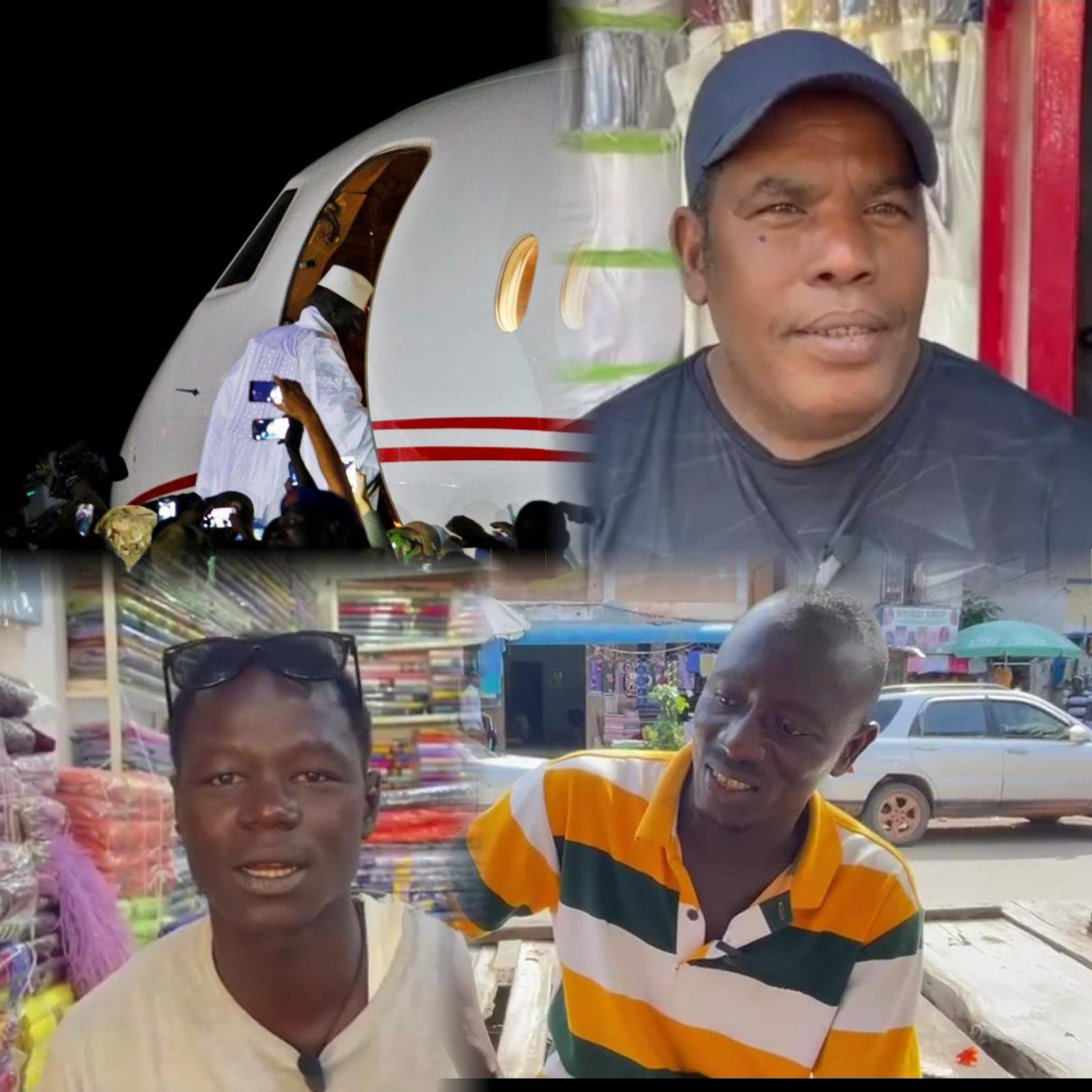
On the streets of Banjul, reactions mirror the nation’s deep divide. At his wax textile shop overlooking the bustling capital, Muhammad Juwara, 52, voiced unbridled optimism. “We want him back – it’s his human right,” he told The Alkamba Times, eyes fixed on the Atlantic horizon. Citing youth unemployment and deadly “backway” migrations to Europe, where he learned just yesterday of two young relatives drowning, Juwara argued Jammeh could revive the economy. “Let him return as a former president, not to contest, but to advise Barrow. He boosted agriculture and infrastructure; we need that wisdom now.”
Nearby, Rara Hydara, a 45-year-old trader, tempered enthusiasm with pragmatism. “If he has a valid passport, no one stops a citizen from home,” she said, acknowledging Jammeh’s mixed legacy of roads built alongside graves dug. “He did good and bad – when he returns, let justice call him to answer.” Yet skepticism lingers: “I’m doubtful. Flights require authorization; one wrong step, and he’s grounded.” Hydara’s words echo broader concerns, including the need for airport security to be bolstered amid fears of unrest.
Jammeh’s backers remain defiant. Muhammad Mbaye, a Kanilai resident, stressed procedure: “He’s Gambian; he has every right. But those 2017 circumstances demand he follow channels – no shortcuts.” The APRC’s “No Alliance” faction has rallied, granting pardons to defectors and framing the return as redemption.
Victims’ advocates, however, cry foul. Muhammed Sandeng, son of slain activist Ebrima Solo Sandeng, warned on November 2 that an unaccountable return would “re-traumatize survivors and betray our democracy.”
ECOWAS has issued no formal statement, leaving the regional body – once pivotal in ousting Jammeh – conspicuously silent as November draws to a close.
Analysts call it a “litmus test” for Barrow’s administration: Can justice prevail without chaos? As supporters chant in Kanilai and protesters brace in Banjul, The Gambia teeters on a knife-edge. Jammeh can come back, but at what cost? For now, the ex-dictator’s homesickness clashes with a nation’s unresolved quest for closure.