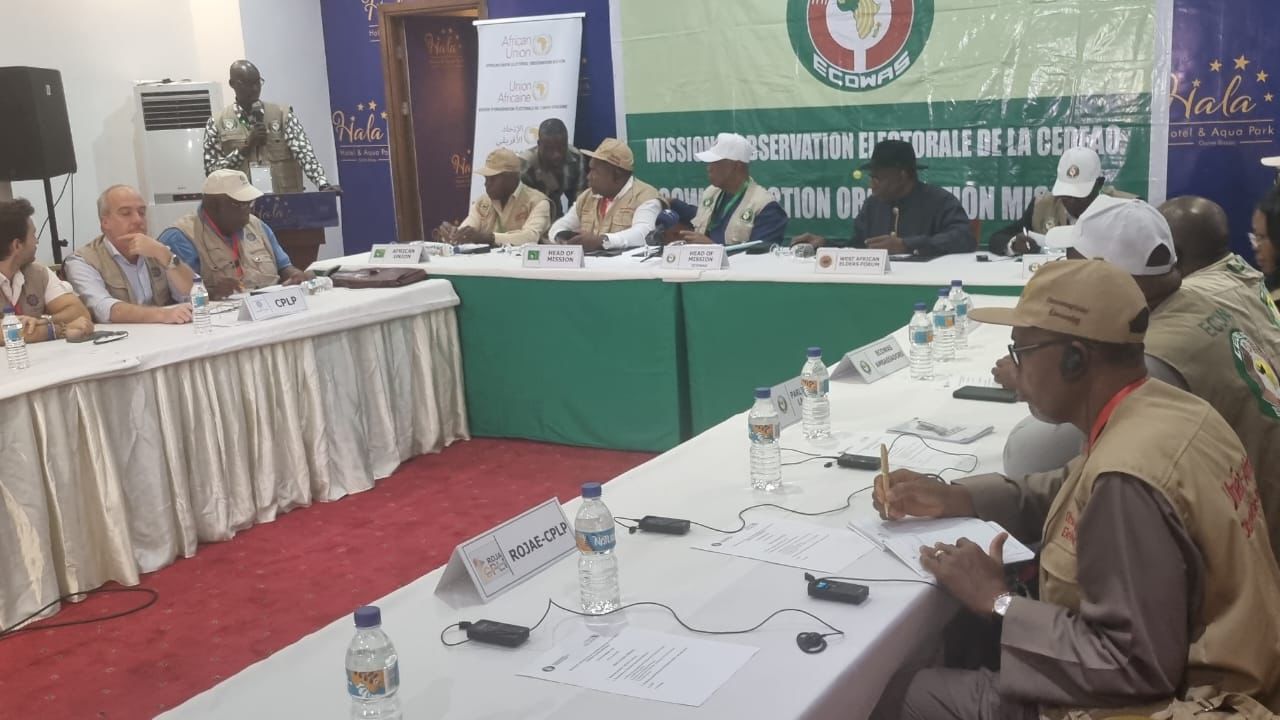
With just hours to go before Guinea-Bissau’s crucial presidential and legislative elections on Sunday 23 November, the country’s leading candidates have committed to a peaceful and orderly electoral process following separate meetings with the ECOWAS Election Observation Mission.
Incumbent President Umaro Sissoco Embaló, who is seeking a second five-year term, told the mission’s head, Ambassador Baba Kamara, during an audience at the State House on Friday that he would fully respect the outcome of the vote. In a separate engagement, Geraldo Martins, representative of opposition candidate Fernando Dias – backed by a faction of the Party for Social Renewal (PRS) – made an identical pledge.
Ambassador Kamara welcomed the commitments and appealed to all 12 presidential candidates and their supporters to demonstrate “patriotism, political tolerance and to eschew violence” in order to consolidate democracy in Guinea-Bissau and the wider region.
The elections mark a historic first: the African Party for the Independence of Guinea and Cape Verde (PAIGC), the liberation movement that led the country to independence in 1973, will not field its own candidate after the Supreme Court, acting as Constitutional Court, excluded the PAI-Terra Ranka coalition – which includes PAIGC and won an absolute majority in the 2023 parliamentary elections – from both races. The coalition has thrown its weight behind Fernando Dias.
Also in the presidential race is former President José Mário Vaz, running under the COLIDE-GB coalition.
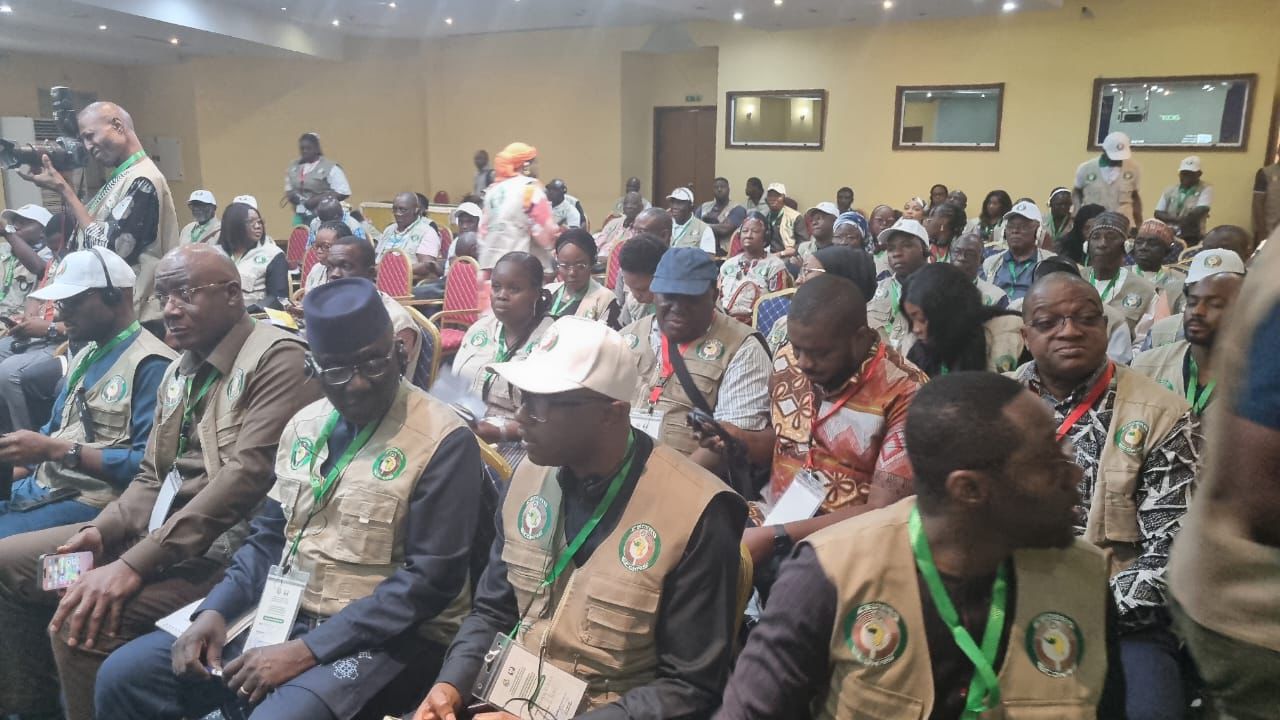
ECOWAS has deployed 135 observers (15 medium-term and 120 short-term) across Guinea-Bissau’s eight regions and 37 sectors, including the capital Bissau. At a pre-deployment briefing, observers observed a minute’s silence in honour of independence hero Amílcar Cabral. ECOWAS Commissioner for Political Affairs, Peace and Security, Ambassador Abdel-Fatau Musah, reminded the team of Guinea-Bissau’s unique armed struggle against Portuguese colonialism and urged strict neutrality.
Nearly one million voters (966,152) from an estimated population of 2.2 million are expected to cast ballots at 3,728 polling stations at home and abroad. Security personnel voted on 20 November, and the official campaign period ended at midnight on 21 November.
Amid lingering political fragility in the semi-presidential system – marked by repeated tensions between the presidency, prime minister and a suspended parliament – ECOWAS maintains a Stabilisation Support Mission (ESSMG) in the country.
The National Electoral Commission has up to ten days to announce official results. A candidate needs an absolute majority (50% + 1 vote) to win outright; otherwise a run-off between the top two will be held three weeks later.
ECOWAS will release a preliminary declaration two days after polling, followed by a comprehensive final report.