By Sainabou Sambou
In the face of overfishing, foreign industrial fleets, and fishmeal factories depleting marine resources, a homegrown initiative is emerging as a beacon of hope for sustainable protein production in The Gambia. Revive Gambia, a company launched in 2023, is scaling up its aquaculture operations to help meet rising demand for fish while easing pressure on the country’s wild stocks.
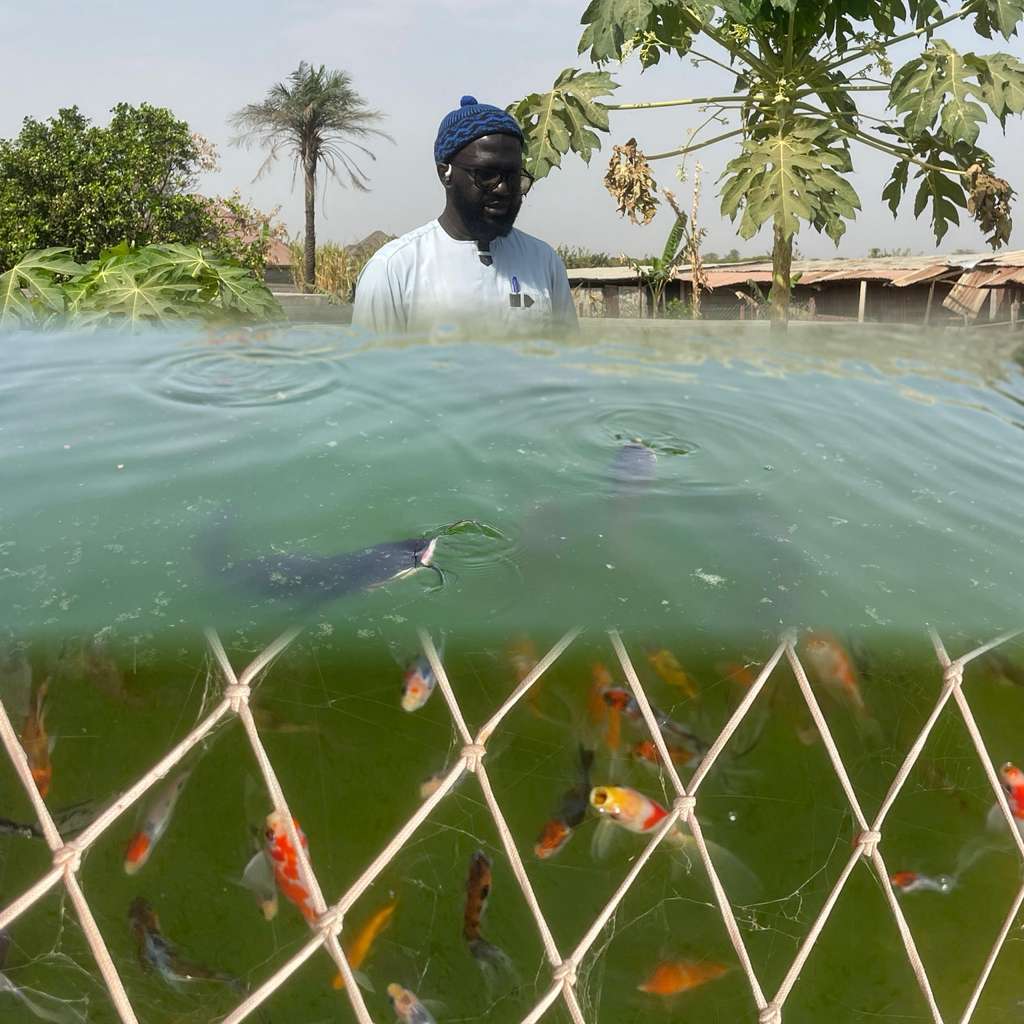
Co-owned by Habib Bah, who handles financing, and Ebrima Nyang, who oversees daily farm operations, Revive Gambia is tackling a pressing national challenge. The Gambia’s population has surged in recent decades, with estimates placing it at around 2.8 million and annual growth rates hovering between 2.3% and 2.4%. This demographic boom has intensified demand for fish—a dietary staple for many households—while natural marine supplies have dwindled due to overexploitation.
“When I was younger, the population was much smaller. Now it has multiplied several times,” Habib Bah recalled. “This growth has increased demand for fish while natural supplies continue to decline.” He pointed out that the strain on marine fisheries has hit fishermen hard, threatening livelihoods across the value chain. “Everybody is struggling,” he said, emphasizing that fish farming offers a practical supplement to wild-caught supplies.
Reports from organizations such as Amnesty International and environmental groups have highlighted the severe impacts of overfishing in The Gambia, including competition from foreign vessels and the diversion of small pelagic fish for export fishmeal production. These practices have contributed to declining catches, higher local prices, and risks to food security in a nation where fish provide essential protein.
Habib and Nyang recognized the urgency early on. Before launching full operations, they traveled to Nigeria for specialized aquaculture training. There, they mastered key skills: constructing and managing fish tanks, administering medications at various growth stages, hatching and producing fingerlings, and monitoring fish health.
“We began constructing the concrete tanks before we left,” Habib explained. Upon returning, they implemented the techniques learned abroad and ramped up production.
The farm specializes in catfish and tilapia—species chosen for their popularity and commercial viability in The Gambia. “Catfish is very popular in the market,” Habib noted, with many households consuming it regularly. Tilapia was readily available when sourcing initial stock, making it a logical addition.
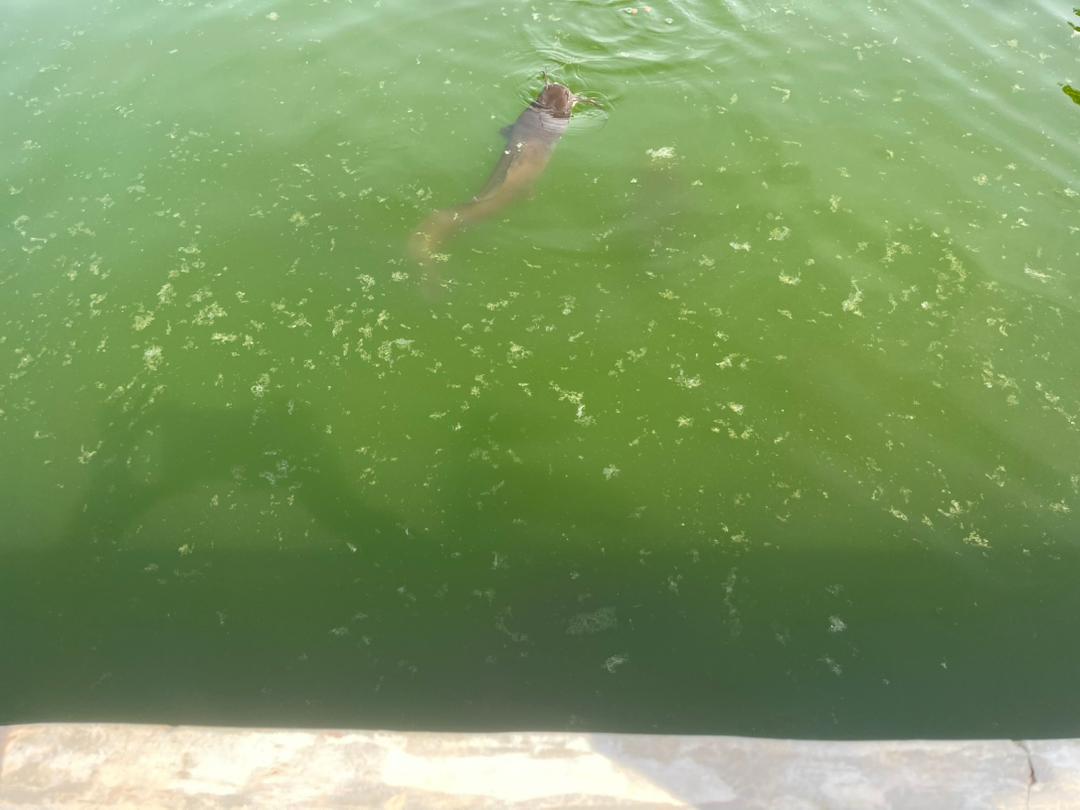
A key strength of Revive Gambia is its closed production cycle. Instead of relying on external suppliers for fingerlings, the farm hatches its own fry and grows them to market size. “We hatch our own fry and grow them to table size,” Habib said. This vertical integration cuts costs, reduces dependency, and boosts profitability. Fish typically reach harvest weight—over one kilogram—in about six months.
The operation features 11 concrete tanks of varying dimensions, with larger ones measuring roughly 18 by 7 or 8 meters and smaller ones about 7 by 4 meters. Professionals were hired to build them leak-proof. “Building tanks for water is not straightforward,” Habib said. “You need experts to make sure everything is sealed properly.”
Water management is innovative and sustainable. A solar-powered pumping system draws water into the tanks during the day, with reserves sustaining operations at night. Excess water drains into a system that irrigates nearby crops, such as bananas and plantains, while ducks also benefit from the runoff. “We are trying to create an ecosystem where nothing is wasted,” Habib said.
Feed remains the biggest expense, with the farm importing 15-kilogram bags from Senegal, Benin, and Nigeria at around 5,500 dalasi each. The long-term goal is to produce local feed to lower costs, even if it supplements rather than replaces imports. “Established feed producers have years of research behind their products,” he acknowledged, but local efforts could still make a difference.
Disease prevention draws directly from their Nigerian training. Medications are administered at specific stages, and staff closely monitor fish behavior. “When fish are not behaving normally, we know something is wrong,” Habib explained. Treatments include anti-stress solutions, with some sourced locally and others imported.
Climate factors influence operations: extreme heat can alter water color and fish activity, while cooler weather slows growth as fish eat less. The drainage system handles rainwater to prevent overflows, and fresh water is added weekly to maintain clarity and for monitoring.
Sales emphasize fairness, with fish sold by the kilogram rather than by the piece. Retail prices range from 450 to 500 dalasi per kilogram, while wholesalers pay about 400 dalasi per kilogram. A single hatch can yield up to 30,000 fingerlings; even with 10-15% mortality, harvests reach around 25,000 fish, ensuring profitability.
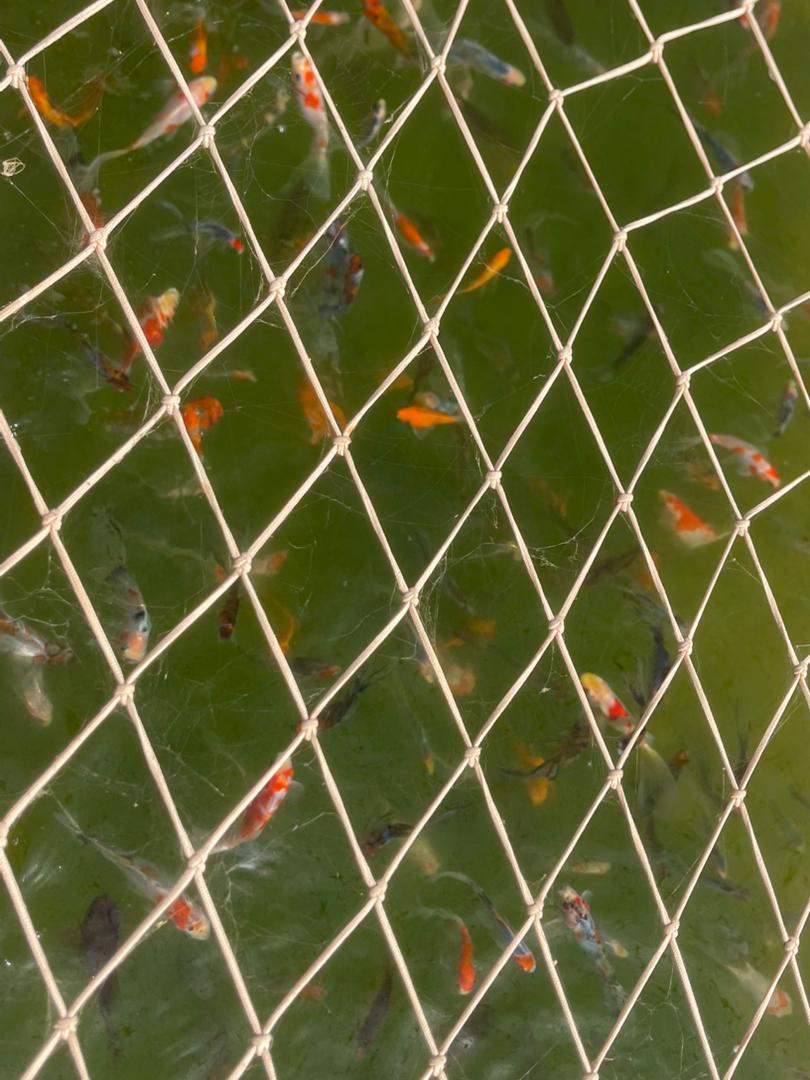
Customers span local households, resellers, and the Gambian diaspora, with some exports even reaching the United States.
The farm employs four trained workers on monthly salaries. Habib views the sector as nascent in The Gambia—”We are almost like pioneers”—and challenges such as affordable feed and expert guidance persist. Yet he sees vast potential, including for training and consultancy.
Expansion plans include adding plastic tanks and tarpaulin-lined earthen ponds for more natural environments. Habib urges newcomers to start modestly: “You don’t need to begin big. You can start with one or two tanks, even with 50 or 100 fish, and grow gradually.”
In a country grappling with depleted wild fisheries and growing food needs, Revive Gambia’s efforts highlight the role of aquaculture in sustainable development. As Habib emphasized, fish farming is not just profitable—it’s essential for long-term food security in The Gambia.