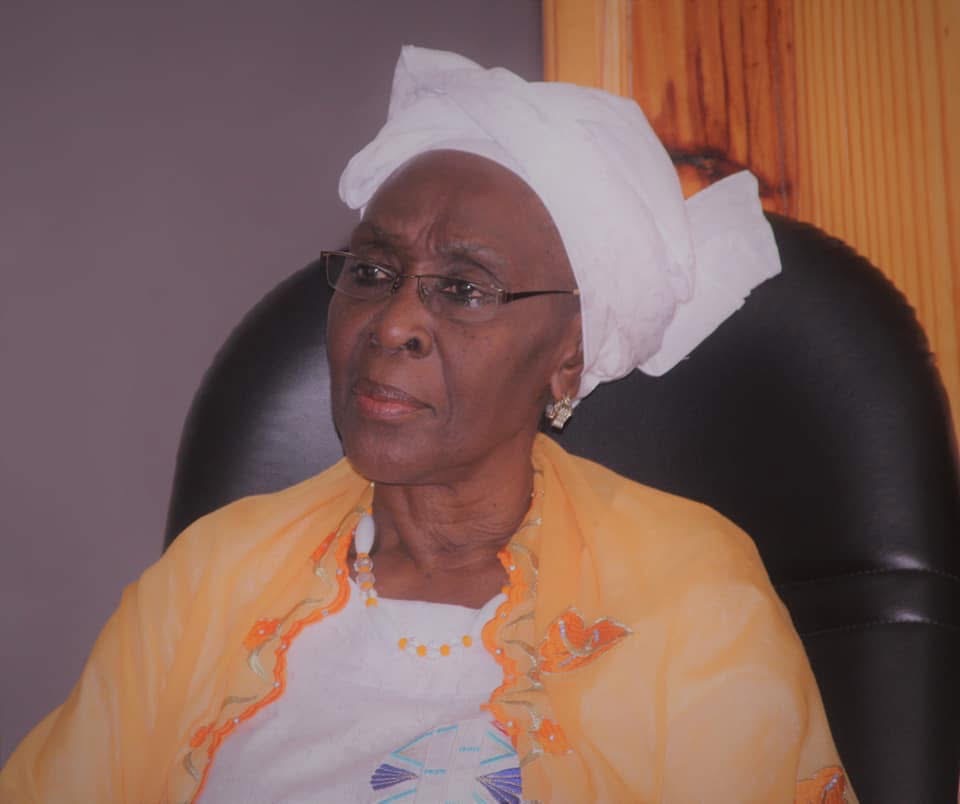
On this International Women’s Day, The Alkamba Times proudly honours Mrs. Amie Joof-Cole — affectionately known as Amie Joof and “Mummy” to generations of mentees — as one of The Gambia’s most influential trailblazers in ethical journalism, women’s rights advocacy, media reform, and constitutional democracy.
A veteran broadcaster who began her career in 1971 at Radio Gambia (now GRTS), Mrs. Joof-Cole has spent more than five decades using media as a powerful instrument for social change, human rights, and gender equality. Shaped by the storytelling traditions and unwavering moral compass of her family — her grandmother Aja Fatou Jallow, mother Aja Suntu Camara, and father Alhagi Kebba Modi Joof — she entered journalism driven by conviction rather than ambition.
During the relatively open years under President Sir Dawda Jawara and the subsequent repressive regime of Yahya Jammeh after the 1994 coup, she produced educational radio programmes that spotlighted the realities of women, children, and marginalised communities. Beyond the newsroom, she led the National Women’s Council, GAMCOTRAP, and the Gambia Family Planning Association, experiences that reinforced her belief that ethical journalism and human rights advocacy are inseparable.
Her most prominent recent contribution came as a Commissioner on the 2018–2020 National Constitutional Review Commission (CRC), where she chaired the Media, Public Education and Communication Technical Committee. Nationwide and diaspora consultations revealed deep public yearning for dignity, accountability, inclusion, stronger checks on executive power, media freedom, term limits, and explicit gender-equality provisions. Women, youth, and persons with disabilities in rural areas were especially vocal about access to justice, political participation, and socioeconomic rights. These citizen voices directly informed the draft constitution’s emphasis on fundamental rights, non-discrimination clauses, and mechanisms to advance women’s representation.
Through her leadership of FAMEDEV (Inter-African Network for Women, Media, Gender and Development) and as the West and Central Africa coordinator for the Global Media Monitoring Project (GMMP), Mrs. Joof-Cole has consistently raised the profile of women in African media at forums such as the UN Commission on the Status of Women. While more women now hold senior editorial roles and cover hard-news beats, the 2025 GMMP report reveals stubborn structural barriers: male-dominated ownership, online harassment, declining female representation in digital news, and the persistent under-representation of women as authoritative sources — especially in politics, economics, and governance. Globally, women constitute only about 26% of people quoted or featured in the news, with gender-based violence receiving scant coverage.
Mrs. Joof-Cole views journalism, election communication, constitutional reform, and gender advocacy as mutually reinforcing pillars of democratic resilience. Intentional inclusion through legal safeguards, visibility, political will, and civic education, she argues, is essential to increasing women’s participation in Gambian governance and public life.
Reflecting on the CRC process, she emphasises several enduring lessons: learn from past mistakes; prioritise wide, structured citizen consultations; ensure inclusive policy-making that amplifies the voices of women, youth, persons with disabilities, and other vulnerable groups; and fiercely defend media independence as the guardian of constitutional rights. Constitutional reform, she stresses, is not a one-time event but an ongoing journey of civic engagement and vigilance.
To young Gambian women and girls facing cultural, professional, or systemic obstacles in media, activism, law, or public service, her message on this International Women’s Day is direct and empowering:
“Your voice and your presence are important and necessary. Invest in your education, build solidarity networks, protect your integrity, seek mentors, mentor others, and let professional excellence be your watchword. Challenges can be overcome through perseverance, commitment, and professionalism. Be yourself and pave your own path!”
Rooted in the values of her childhood village of Bakau and the African philosophy of Ubuntu — “I am because we all are” — Mrs. Joof-Cole draws constant inspiration from the resilience of Gambian women: market vendors, journalists, lawyers, activists, educators, health workers, and mothers. Having witnessed both democratic openings and authoritarian repression, she remains optimistic that The Gambia’s democratic journey is a work in progress.
“Women and young people are redefining leadership and civic engagement by pushing boundaries,” she says. “I see ordinary citizens demanding accountability and young women stepping confidently into roles once denied them. A gender-just, democratic Gambia and Africa is achievable — but rights secured today must be defended tomorrow. It is the duty of every generation to renew and protect them.”
In celebrating Mrs. Amie Joof-Cole today, The Gambia recognises not only an extraordinary individual legacy but the collective strength, determination, and vision of Gambian women across generations who continue to shape a more equitable and inclusive future.