By: Sanna Sanneh
Politics is a way of bettering the lives of the masses, and the young people have an important role to play in this game of strategy. I feel enthralled when I see young people taking active roles in politics. It was my hope that these young politicians would bring more positive energy and vibrancy to our national discourse and effect transformative change in our polity. Like many young Gambians, my expectation was that these young political actors would inspire national cohesion and prudence in the management of our scarce public resources and spur monumental growth.
Realistically, what we are all witnessing now in public resource management is far removed from our expectations. Accountability in public institutions is almost non-existent. If not, what have we been satisfactorily getting from audit and media reports about prevalent public-sector corruption? To better rationalize it all, we can poignantly ask: Are these young politicians in public offices playing the ball of national unity and growth, or are they merely preoccupied with self-seeking political ambitions?
It could be true that our politics has not been that tranquil, but such intense rivalry and animosity among opposition political groupings is arguably uncommon. What was supposed to be the politics of national development has now been reduced to what I would call “my way or no other way”. Probably, the most dangerous tendency is the blind loyalty that these political operators enjoy from their unsuspecting and ever-willing followers. A kind of cultism where, when one tries to scrutinize their preferred leader on public resource management or anything of that sort, one would be sure to be called names.
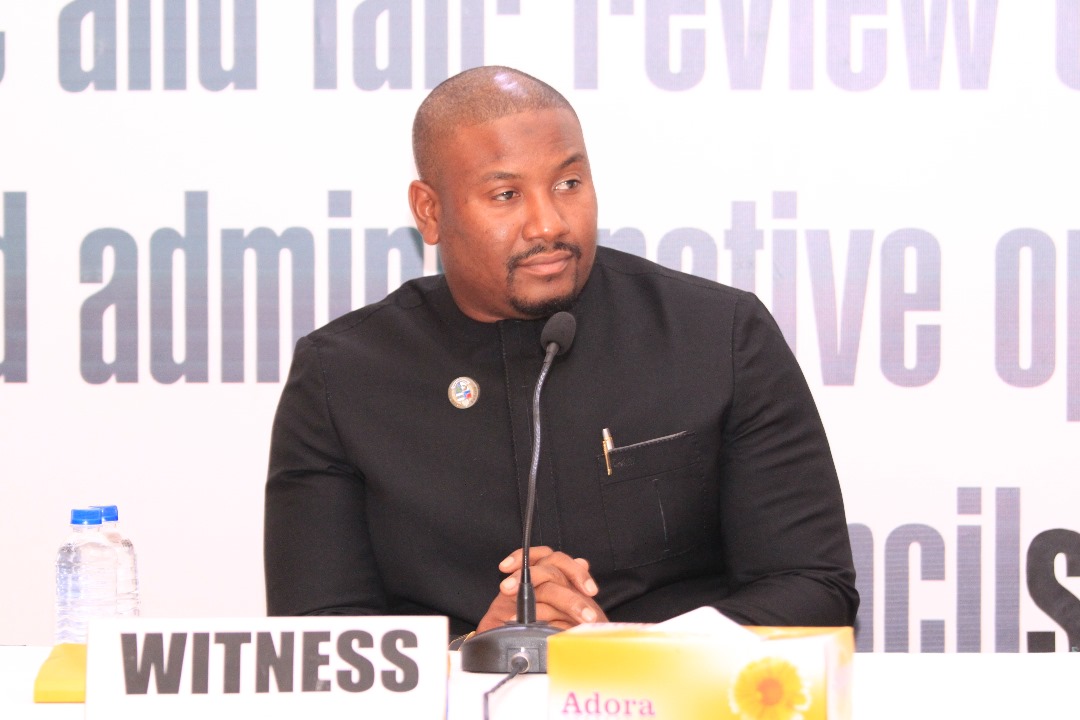
Demeaning people to silence has effectively rendered criticism counterproductive in our political sphere. My concerns are not based on personality, but on accountability and transparency in public leadership. For example, during his appearance before the local government commission, the response the sitting KMC mayor, Ahmed Talib Bensouda, gave regarding the monetary deposits into his personal account was deeply troubling and reminiscent of an attempt to escape responsibility. How can someone publicly deny receiving payments that were deposited directly into a personal account? If he truly did not receive the money, then who was withdrawing funds from the personal account in question? The moment such legitimate questions are raised, political disciples quickly label you with all manner of names. A political gimmick aimed to silence critical voices, leaving the substantial matter unaddressed. The phenomenon that has become a political stratagem across the political divide in The Gambia.
The same happened when the LG-Commission’s Lead Counsel Patrick Gomez questioned the same mayor about the €3 million EU-backed environmental transformation and waste management program aimed at improving conditions at the Bakoteh dumpsite. The mayor’s explanations were far from convincing, yet once again, raising concerns automatically attracted insults and name-calling against concerned Gambians. Just see how the writer Saffiah Joof is being abused online for simply asking legitimate questions. Sibi Jeng went toxic using sexually connotative words against Miss Joof, and 48 hours have gone by but no shred of public condemnation from the Unite Movement.
The pattern continues when questions were raised about the source of funding for the pickup vehicles and motorbikes recently distributed by the Talib-led Movement. These are reasonable questions that any citizen who cares about transparency and responsible leadership should ask. Yet instead of providing answers, critics and concerned Gambians are attacked and stereotyped. Ironically, some of the harshest reactions regarding group stereotyping have even come from people you share the same clan with. For example, someone (name withheld) engaged me in joining the Unite Movement, claiming he knew the KMC mayor, telling me every good thing under the sky about him. Since he was claiming to be very close to the mayor, I decided to simply probe that he asks the mayor about the source of funding for the pickup vehicles and the motorbikes recently distributed by the Unite Movement. Guess what, he went all ballistic on me! He became so agitated and claimed, “What our other supporters are saying is true, you people are…, you hate this man”. I could only laugh because such reactions reveal a narrow and emotional way of thinking rather than a willingness to engage with important national issues. Supporting a political figure should never mean shielding them from scrutiny or tagging every critic with a badge of tribalist honor. After all, you call your group Unite Movement for Change. What does change really mean to a fledgling political grouping?
Those who constantly weaponize and instrumentalize tribal accusations against others should first reflect on their own contradictions. Many of the same people loudly accusing President Adama Barrow of corruption and tribalism, yet become defensive the moment similar questions are directed or redirected at their preferred political figure. Accountability cannot be selective. Our collective concern should not be about tribe, politics, or personalities; it should be about prudent economic management and safeguarding the meager public resources for the well-being of all Gambians.
Corruption is obnoxious; it severely retards growth and development. Imagine our health and education sectors are collapsing inwardly, and hundreds of our young people are perishing in the high Seas. It is high time we interrogated ourselves as a nation and as a people. This interrogation should not be selective. We cannot be yelling President Barrow’s name on a daily basis, accusing him of corruption,, while at the same time teaming up to replace him with people of similar questionable traits. That does not make sense at all. Thus, let us reflect thoroughly and set sentiments aside. There is a nation called The Gambia that we all share, and building it requires honesty and hard work. We must do this in the interest of the present and future generations of Gambians.