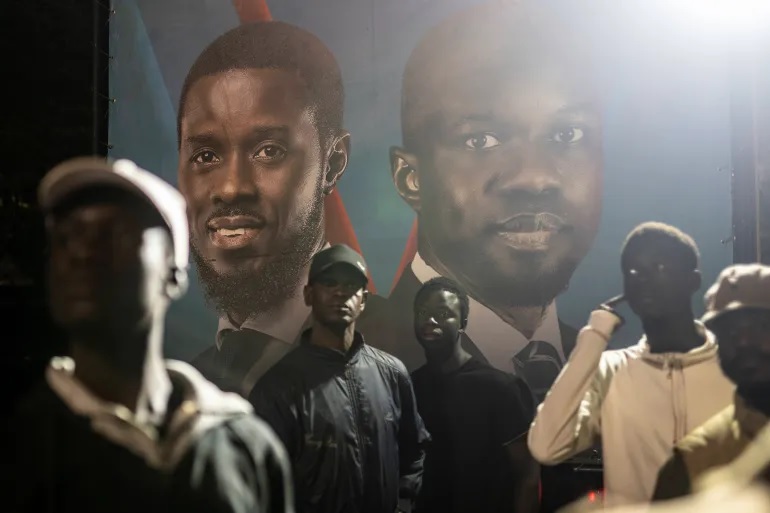
In a stunning political rupture that has sent shockwaves through Senegal and the wider West African region, President Bassirou Diomaye Faye has dismissed Prime Minister Ousmane Sonko and his entire government.
The dramatic move, announced on Friday, marks the end of a once-powerful alliance that propelled both men to victory in the historic 2024 presidential and legislative elections. The sacking represents a major turning point in Senegal’s young democracy and the most significant fracture within the ruling PASTEF movement since taking power.
According to political observers, tensions between President Faye and his former close ally had been simmering for months. Sources close to the presidency indicate that Faye increasingly sought to assert his authority by bolstering the Diomaye President Coalition, aiming to break free from what insiders described as PASTEF’s overwhelming influence over state institutions.
The final blow reportedly came after Sonko’s increasingly sharp public criticisms. In recent weeks, the firebrand politician questioned aspects of the president’s handling of political funds and the pace of fulfilling campaign promises. The breaking point occurred during Wednesday’s Cabinet meeting, when Sonko launched a scathing attack on Senegal’s justice system, calling it “lenient toward the rich and ruthless toward the poor.”
Hours after his dismissal, the now-former prime minister took to Facebook, posting a calm and cryptic message: “Alhamdouliah. Tonight I’ll sleep soundly at Cité Keur Gorgeous,” referring to his residence in Dakar.
In an official statement, PASTEF said it had “taken note” of the president’s decision. The party reaffirmed its “total and unwavering commitment to preserving the Project and the ideals for which the Senegalese people voted” in the March and November 2024 elections. The party is now preparing for its crucial Congress scheduled for June 6, 2026.
The dismissal has left many Senegalese citizens surprised and divided. While some view it as a necessary assertion of presidential authority, others see it as a worrying sign of instability within the reformist movement that had promised a new era of governance, transparency, and social justice.
As Senegal grapples with this unexpected political earthquake, questions remain about who will succeed Sonko as prime minister and how this power shift will reshape the country’s political landscape in the coming months.