By Abdoulie John
Nearly a decade after the Extraordinary African Chambers delivered a historic verdict against former Chadian dictator Hissène Habré, victims of his brutal regime continue to wait for meaningful justice and reparations, a leading campaigner has warned.
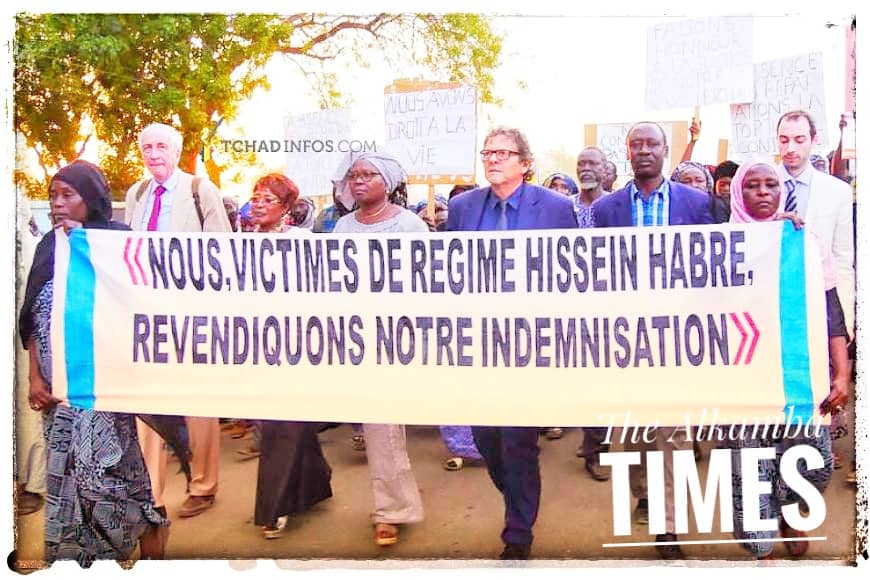
Reed Brody, the American human rights lawyer widely credited with helping bring Habré to justice, expressed deep frustration over the persistent delays and apparent government resistance in Chad.
Speaking to The Alkamba Times, Brody highlighted multiple layers of failure that have left thousands of victims without closure.
“The Chadian government has been the primary obstacle—dragging its feet on reparations for years,” Brody said. Even the limited 2024 distribution of roughly €15 million, awarded after eight years of waiting, was marred by irregularities that authorities have failed to address. Each victim received approximately €1,400, a fraction of what the courts had ordered.
In 2016, judges in Senegal sentenced Habré to life imprisonment for crimes against humanity, war crimes, and torture committed during his rule from 1982 to 1990. The case marked the first time one African country’s courts tried and convicted the former leader of another for international crimes.
Yet implementation has stalled. The African Union created a trust fund to mobilize additional reparations, but nearly 10 years later, it has still not become operational. Symbolic measures ordered by Chadian courts—including the construction of a memorial and the conversion of the former political police headquarters into a museum—remain unfulfilled.
Brody expressed particular alarm at what he sees as a deliberate reversal in Chad. “The country is actively moving in the opposite direction, working to rehabilitate Habré’s memory rather than honor his victims,” he said.
He cited his own expulsion from Chad in October 2024 as evidence. Brody had traveled to promote his book, To Catch a Dictator, and to attend a conference on accountability, only for authorities to order him out as the event was about to begin.
“That expulsion tells you everything you need to know about where things stand,” Brody added.
“When a government expels someone for attending a conference about accountability, it is signaling that it wants to erase, not implement.”
The activist, a prominent member of the International Commission of Jurists, warned that the African Union itself appears indifferent to following through on what was hailed as a landmark success for African justice.
As victims’ hopes for full reparations and recognition fade, Brody’s remarks underscore a growing fear that the Habré precedent—once a beacon of accountability—risks becoming a symbol of unfulfilled promises.