By Momodou Gagigo
The National Human Rights Commission (NHRC) has recorded measurable progress in implementing the government’s White Paper on Truth, Reconciliation and Reparations Commission (TRRC) recommendations, even as it painted a grim picture of overcrowding, poor sanitation, and inadequate healthcare in the country’s prisons and police detention facilities.
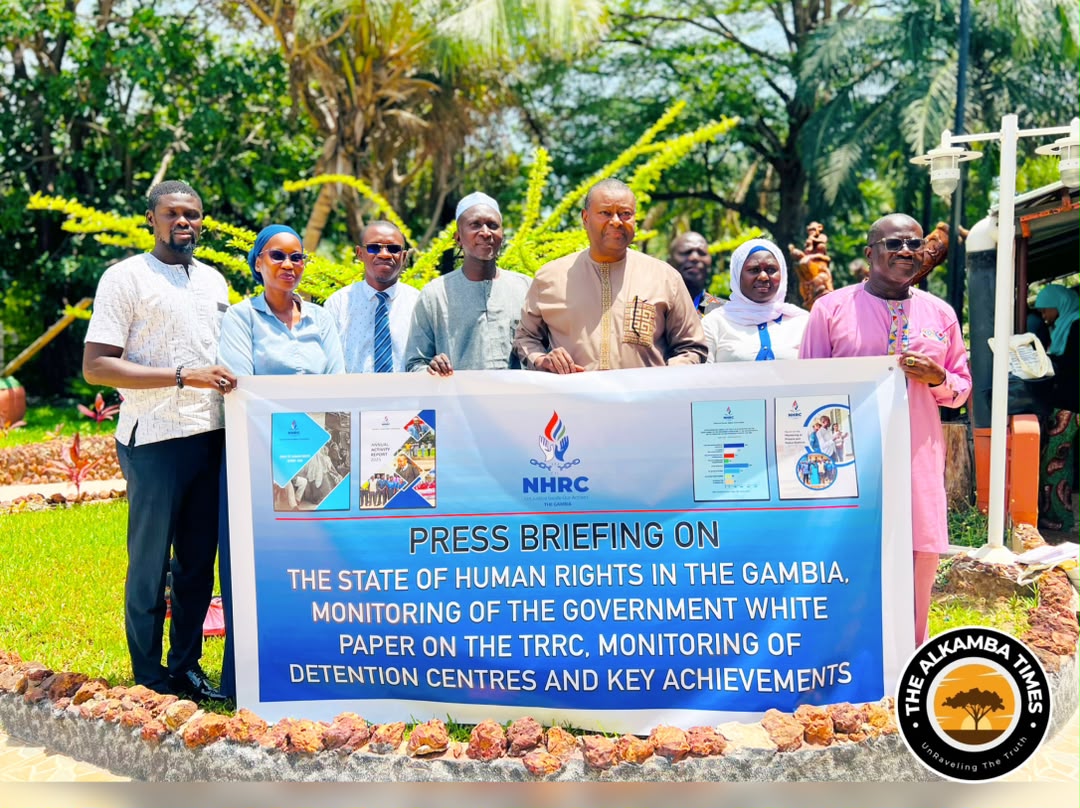
The findings were unveiled on Tuesday during a press briefing at the Senegambia Beach Hotel, where the Commission released its latest reports covering human rights developments, TRRC implementation, and monitoring of detention centers between June and December 2025.
According to the NHRC, the government’s Implementation Plan excludes 25 amnesty-related recommendations outlined in the White Paper.
Additionally, 34 activities listed under Theme 22 are described as voluntary government initiatives not directly tied to specific TRRC recommendations. Despite these gaps, overall implementation advanced during the period. Fully implemented activities rose from 60 to 65, while unstarted activities fell from 101 to 84. Ongoing activities increased from 143 to 155, signalling broader momentum.
Key milestones highlighted include the enactment of the Criminal Offenses Act 2025 and the Criminal Procedure Act 2025, as well as the operationalization of the Reparations Commission. The NHRC described these steps as vital for advancing justice, accountability, and reparations for victims of past human rights abuses.
NHRC Chairperson Emmanuel Daniel Joof emphasized the Commission’s independent mandate while underscoring its constructive approach.
“Our role is to hold all duty bearers accountable, while at the same time working constructively with the Government, the National Assembly, the judiciary, civil society and development partners to strengthen respect for human rights,” Joof said. “We are not here to prosecute the Government, nor are we the mouthpiece of the Government.”
The Commission, however, warned that stronger coordination, sustained funding, and rigorous monitoring are essential to accelerate the remaining TRRC recommendations.
A separate monitoring report on detention facilities revealed systemic challenges. Many prisons suffer from severe overcrowding, deplorable sanitation, crumbling infrastructure, insufficient medical care, and limited rehabilitation programs. Mile 2 Central Prison and Janjanbureh Prison were specifically cited for acute overcrowding. The report also flagged shortages of medical personnel and medicines, poor record-keeping, weak inter-agency coordination, and lengthy pretrial delays that keep many inmates behind bars for extended periods without trial.
Prison officers themselves face tough working conditions, including staff shortages, inadequate training, low pay, and poor welfare support. At police stations, conditions are equally concerning: overcrowded, poorly ventilated cells; erratic water and electricity supplies; inconsistent record-keeping; delayed bail processes; and restricted access to legal counsel. Many stations lack child-friendly or gender-sensitive facilities and trained Child Welfare and Gender Officers, heightening risks for women, children, and survivors of sexual and gender-based violence.
To remedy these issues, the NHRC urged the government to boost funding, renovate facilities, enhance healthcare and rehabilitation services, and improve remuneration and training for officers. It called on the Gambia Prison Service to upgrade medical care, modernize documentation, expand educational and vocational programs, and improve food quality. For the police, recommendations include upgrading cells, establishing proper welfare spaces, standardizing records, and ensuring timely access to bail, lawyers, and family visits.
The Commission also appealed to the judiciary and justice sector actors to expedite cases involving remand prisoners, strengthen coordination, and expand legal aid.
“Implementing these recommendations will help improve respect for human rights, strengthen accountability, and align detention facilities with national laws and international standards,” the NHRC stated.