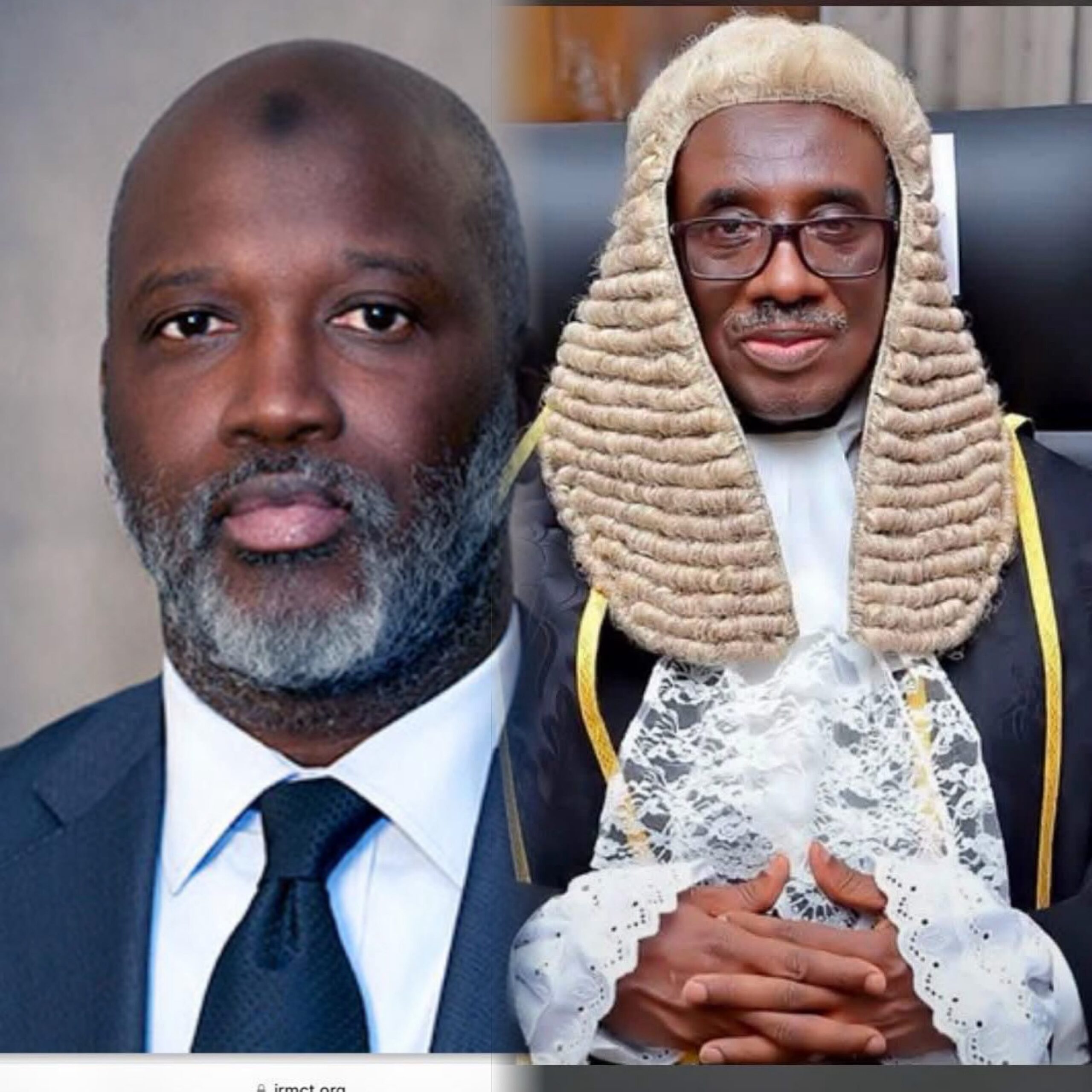
By ABUBACARR M. TAMBADOU
I joined the United Nations International Criminal Tribunal for Rwanda (ICTR) in 2003, only a few months after Justice Jallow’s appointment by the UNSC as the first African chief prosecutor of an international criminal tribunal. We were both new at the Tribunal. Notwithstanding, Justice Jallow and his kind and loving wife, Mrs Fatou Jaye Jallow, opened their doors to me from day one and treated me like a member of the family. Between 2003 and 2016 when Justice Jallow completed his mandate and returned home to The Gambia, I had lunch at his house every Sunday without fail. In fact, Mrs Jallow would not serve lunch until I arrived even when I was late.
At the ICTR, I was one of about 100 international prosecutors from all over the world working in the Office of the Prosecutor under Justice Jallow. In 2010, the UNSC established the International Residual Mechanism for Criminal Tribunals (IRMCT) to succeed the ICTY and the ICTR, and Justice Jallow was appointed as its first Prosecutor. In this new role as Prosecutor of both the ICTR and the IRMCT simultaneously, Justice Jallow designated me as his Special Assistant for the IRMCT, a position that I held until I also returned home to serve as Attorney General in 2017. As his Special Assistant for six years, I acted as the chief of staff of his office and shadowed him: traveling with him around the world; preparing his reports and briefings to the UNSC; drafting his public statements and lectures for international audiences etc. Consequently, I worked the longest and closest to him outside the country.
During the entire period that I spent with Justice Jallow both at his house and at work for almost a decade and half, I was privileged to have a unique insight into his private and professional life. I had the privilege to observe him closely, to learn, to hear his personal and professional views about many things, to watch his interactions with others including his local staff at his residence, international audiences, diplomats, his professional peers and with his own children. He is a man with many facets: with so much faith that nothing fazed him; he is honest, kind, generous, cultured, conservative, peaceful and extremely perceptive. But Justice Jallow’s humility stands out and one particular instance illustrates this more than any other for me: that someone of his stature, so revered in the international justice community, a powerful chief prosecutor of an international criminal tribunal, and an accomplished jurist, would take his precious time to reply to a handwritten letter from a six-year-old son of another Gambian was profoundly touching. But that was Justice Jallow. He drew inspiration from his upbringing in a deeply conservative religious family, and from his political mentor, Alhaji Sir Dawda Kairaba Jawara. The many stories he shared with me about growing up in Bansang and Sir Dawda’s own humility left me in no doubt that Justice Jallow values humility above everything else and he practiced it.
Professionally, he is a well-respected scholar, jurist and practitioner of international law and a passionate advocate for human rights and international justice. His international peers showed him deference and respect, recognized his scholarship and leadership in various ways including through several awards. I could not have been more honoured and prouder as a Gambian by his side.
That was why at a time when our country was in the international spotlight during the 2016 political impasse, and we were at the dawn of a new Gambia, I knew that he was the one who could inspire confidence, restore credibility, stability and international respectability to the battered image of our judicial system. He was the right man at that time and his appointment as Chief Justice was the first of a deliberate policy to Gambianize our judiciary. As I said to my brother Sheriff and to Mr Antouman Gaye at the time, I would do everything to ensure that our newly elected President, His Excellency Adama Barrow, would be sworn-in, again, on home soil by a Gambian Chief Justice, and not a foreign Chief justice, not anymore. And no Gambian lawyer deserved that honour more than Justice Jallow based on his track record in public service, legal scholarship and international recognition. Looking back, I couldn’t be prouder of that decision.
Over the years that I spent with Justice Jallow, I learned many good things as well as bad things from him. Yes, you heard me, bad things, and I’m sure you cannot wait to hear about the bad things. I will share just one example: typically, the ordinary Gambian is hyper-sensitive to any perception of “yabateh”, ie, disrespect. We are quick to see “yabateh” in other people’s words or actions. It is very common to hear Gambians say “ki dafa yabateh” or “ki daf ma buga yap” usually as a prelude to a more serious reaction or escalation. And of course, not reacting to a situation of “yabateh” is considered “nyaka faida” or a sign of personal weakness. I obviously counted myself among Gambians who shared this philosophy about “yabateh”. But Justice Jallow was different. On many occasions, I saw him turn this perceived weakness into strength. I saw how his unconventional Gambian approach to “yabateh” disarmed and embarrassed many, and he did so by simply being more respectful in an apparently “yabateh” situation. Initially, as a typical Gambian who was raised in a society that confronts “yabateh” head-on, I struggled to understand Justice Jallow’s approach. Having been by his side for so long and seen firsthand the positive impact of his approach to “yabateh”, I also started to emulate him as if I was preparing myself for life as Attorney General when I would receive my own doses of “yabateh” in abundance especially in this age of social media.
So, while it was a bad thing to approach “yabateh” in Justice Jallow’s manner and style in the context of Gambian cultural conventions, I am glad that I embraced his approach. It has built my character and made me more resilient in the face of adversity. So even when it was a bad thing that I learned from Justice Jallow, it turned out to be good for me in the end.
Finally, I want to conclude by sharing with you one of Justice Jallow’s most impressive achievements at the ICTR and perhaps, in my own view, his most enduring legacy in international law and justice. Among his many accomplishments as Prosecutor of the ICTR, Justice Jallow transformed the Tribunal into an efficient machinery that propelled trials at a much faster rate than at any previous time while also ensuring the highest standards of fair trial rights for the accused, and justice for the victims of the 1994 Rwandan genocide. This was a difficult balancing act but Justice Jallow found the right prosecutorial strategy that struck this balance to the satisfaction of many in the international justice community.
As part of his prosecutorial strategy, Justice Jallow sought judicial notice of the fact of the 1994 Rwandan genocide. Such a conclusion would streamline the trials, dispense of the prosecution’s evidentiary burden of proving the fact of genocide in every case against each accused, and ensure shorter trial periods. Justice Jallow’s application came after several trials involving over two dozen accused persons were completed or underway with hundreds of witnesses giving first-hand accounts of the events leading to and during the genocide. The Trial Chamber, the first instance court, rejected his application. In his unusual but occasionally stubborn personality, Justice Jallow launched an appeal against the decision of the Trial Chamber. In June 2006, the appeals chamber of the ICTR gave its verdict: “The Appeals Chamber agrees with the Prosecution: the fact that genocide occurred in Rwanda in 1994 should have been recognized by the trial chamber as a fact of common knowledge…There is no reasonable basis for anyone to dispute that during 1994, there was a campaign of mass killing intended to destroy, in whole or at least in very large part, Rwanda’s Tutsi population. That campaign was to a terrible degree successful; although exact numbers may never be known, the great majority of Tutsis were murdered, and many others were raped or otherwise harmed. These basic facts were broadly known even at the time of the Tribunals establishment… The fact of the Rwandan genocide is a part of world history, a fact as certain as any other, a classic instance of a fact of common knowledge”.
And so it was that for the first time in the history of war crimes trials, a court took judicial notice of the commission of an international crime. It is even more astounding when one considers that this conclusion was reached on the crime of genocide, the crime of crimes, and the proof of which requires a special mental element unique to genocide. It was a great accomplishment by Justice Jallow and one that will forever be attributed to him, to his legal legacy, his vision and his pioneering role in the development of international criminal law.