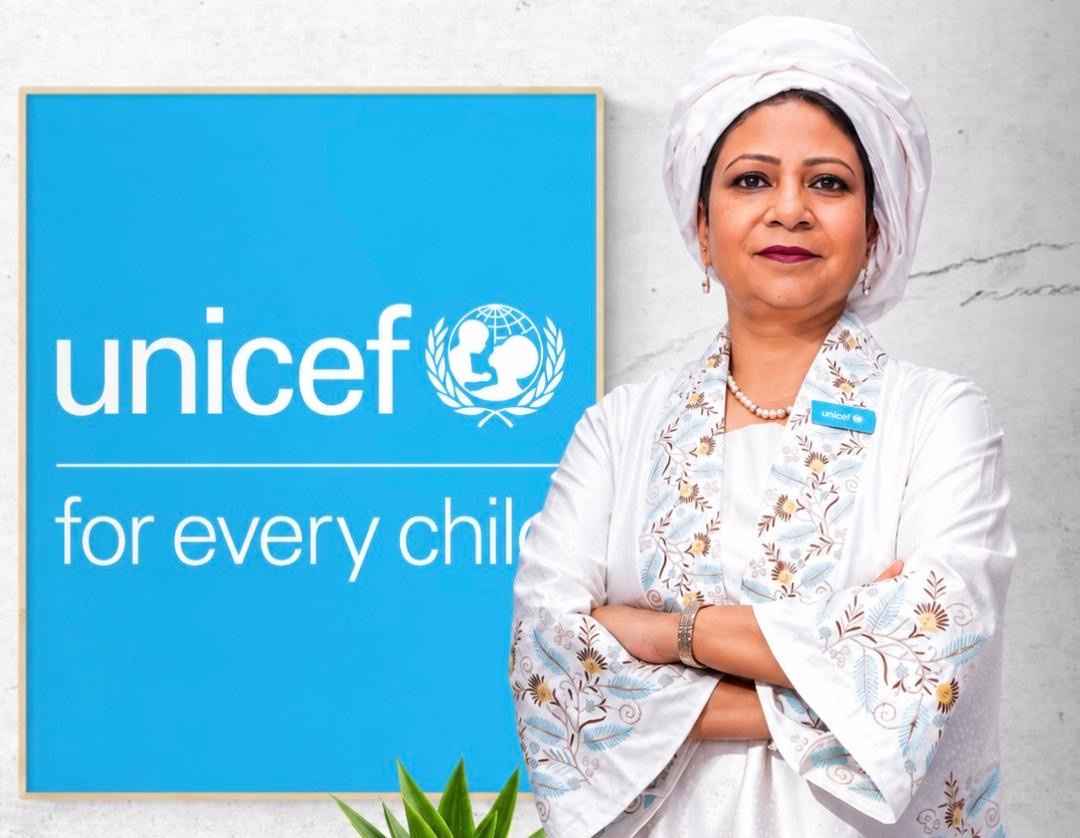
Every girl in The Gambia deserves a childhood and the freedom to learn, lead and decide her own future, the UNICEF Representative in The Gambia said on the eve of International Day of the Girl, warning that child marriage continues to cut that freedom short.
Ms. Nafisa Binte Shafique issued the call under the global theme “End child marriage and invest in girls’ rights,” shaped through consultations with girls and girl-led networks. She said the theme is their demand and that UNICEF stands with them.
Globally, a girl is married roughly every three seconds, with the highest rates in sub-Saharan Africa. An estimated 68 million child marriages have been averted over the past 25 years through investment in girls’ education, legal reform and social protection. Progress is possible, she said, and The Gambia proves it.
More girls are in school than ever before, and girls made up the majority of those who earned the grades to continue after this year’s senior secondary examinations. UNICEF congratulated every one of them. The results also carried a warning: fewer than one in ten candidates reached the five credits, including English and Mathematics, required for university. “Our girls are ready. Our schools must now rise to meet them,” Shafique said.
The Gambia has not looked away from child marriage. The Children’s Act of 2005 prohibits it, and the 2016 Amendment introduced severe penalties for anyone who arranges, conducts or fails to report one. The share of women aged 20 to 24 who were married before 18 fell from 30.4 percent in 2013 to 23.1 percent in the 2019–20 Demographic and Health Survey. Shafique attributed the decline to advocacy by communities, religious leaders and girls themselves, working with the Government and its partners.
Progress on paper is not yet progress in every home. Nearly one in four young women was still married as a child. The burden falls unevenly: 17 percent in urban areas versus 43 percent in rural areas; below 8 percent in Banjul versus more than 54 percent in Kuntaur. “A girl’s future should never be decided by the village she is born in,” she said.
Education offers the clearest protection. Almost half of women with no schooling were married as children, compared with fewer than one in ten of those who reached secondary education or higher. For a Gambian girl, a classroom is both a place of learning and a place of protection.
UNICEF called for action in five areas: financing girls’ transition into secondary and tertiary education, because every extra year in a classroom is a year she is not a bride; expanding social protection so that no family sees a daughter’s marriage as the way through hardship; strengthening the social service workforce so that a girl at risk is reached before the ceremony; providing adolescent-friendly health services, including mental health support, that girls can use without shame; and enforcing the law already on the books. “A law that is not applied protects no one,” Shafique said. These choices are affordable and cost a fraction of what the nation loses when a girl’s potential is cut short.
She addressed parents, religious and traditional leaders, teachers, Government, development partners, and boys and young men directly. A daughter’s education is not a delay to her future but her future, she told parents. When leaders say a girl belongs in a classroom and not in a marriage, communities listen. Teachers see warning signs first and should speak up. Government should enforce the law and put girls in the national budget. Partners should direct resources to the regions where girls are most at risk. Boys and young men should stand beside their sisters and classmates and refuse to accept that a girl’s worth is measured by marriage.
To the girls of The Gambia, Shafique said they have already stated what they want: safe schools, health services they can trust, an end to child marriage, and a seat at the table where decisions about their lives are made. “We have heard you. Be bold. Stay in school. Lead. You are already changing this country.”
UNICEF, she concluded, stands with every girl in The Gambia and will walk this road until each one is safe, educated, and free to decide her own future.