By Sainabou Sambou
Ministers from West and Central Africa have been urged to move beyond resolutions and demonstrate stronger political commitment by taking concrete steps to address maritime challenges and unlock the region’s economic potential.
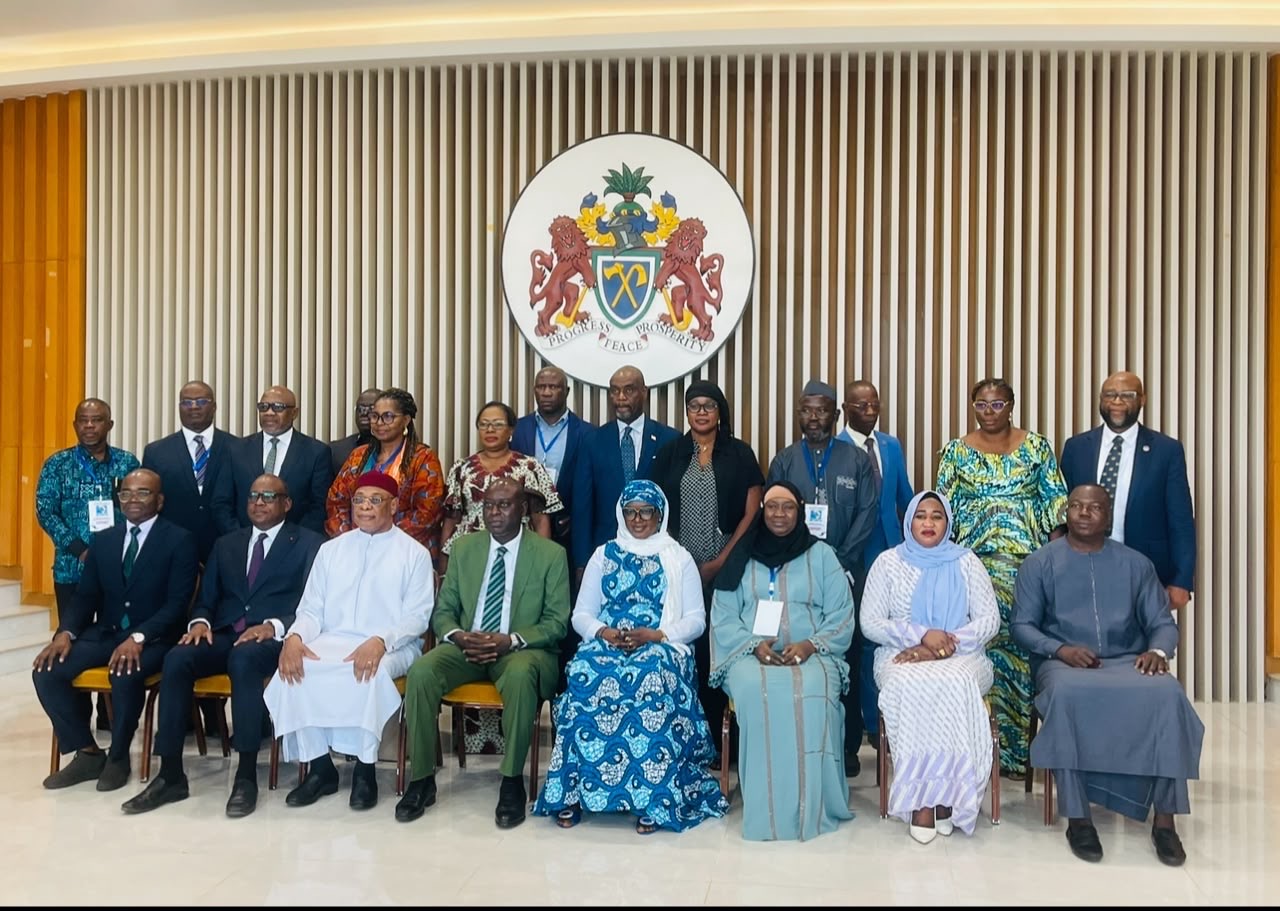
The Maritime Organization of West and Central Africa (MOWCA) made the call during the 12th Ordinary Session of the Bureau of Ministers, held in Banjul, The Gambia. The gathering brought together ministers, senior government officials, ambassadors, and representatives of partner organizations to discuss the future of maritime cooperation across the region.
MOWCA Secretary-General Dr. Paul Adalikwu said the organization had reached a defining moment in responding to the maritime industry’s evolving demands and advancing Africa’s economic integration. He noted that while West and Central Africa have enormous maritime potential, stronger political will is needed to turn existing policies and commitments into practical programs and measurable results.
“The time has come to move from resolutions to implementation, from intentions to investments, and from fragmented national efforts to stronger regional cooperation,” Dr. Adalikwu said. He identified maritime safety and security, institutional transformation, blue economy development, the implementation of organizational decisions, and financial sustainability as key priorities requiring urgent attention.
He called on member states to provide stronger political and financial support to MOWCA, stressing that the organization cannot effectively fulfill its mandate without adequate resources and institutional capacity. He also highlighted the need to strengthen regional cooperation in tackling piracy, maritime crime, illegal fishing, and other threats to maritime activities. In addition, he urged support for the proposed transformation of MOWCA into a broader African Maritime Organization as part of efforts to advance continental maritime integration.
The Gambia’s Minister of Works and Infrastructure, Ebrima Sillah, who chairs the Bureau of Ministers, reaffirmed the country’s commitment to advancing MOWCA’s objectives and strengthening regional maritime cooperation. Speaking on behalf of President Adama Barrow, the Government, and the people of The Gambia, Sillah welcomed delegates to Banjul and thanked member states for their continued support.
He recalled that The Gambia was entrusted with the chairmanship of MOWCA for the 2026–2027 biennium during the organization’s 19th Ordinary Session of the General Assembly, held in Banjul on 19 February 2026. Sillah described the 12th session as an important opportunity to translate General Assembly resolutions into concrete institutional, financial, and operational actions.
Among the major issues scheduled for consideration was the operationalization of the Regional Maritime Development Bank, which is expected to support investments in port infrastructure, fleet renewal, and maritime commerce across West and Central Africa. He stated that the meeting was also expected to examine the report of the Special Committee of Experts alongside updated technical and legal documents prepared by consultants YFARM Juris Law.
Sillah further emphasized the need to strengthen MOWCA’s human and financial resources, noting that the organization’s effectiveness depends on its institutional capacity and financial sustainability. Member states were to consider their 2027 contributions under the Regional Maritime Fund mechanism. On the proposed transformation of MOWCA into the African Maritime Organization, he called for strategic planning and close cooperation with the African Union Commission to ensure the transition strengthens existing regional structures rather than duplicating their responsibilities.
He revealed that the meeting was also considering preparations for the first MOWCA Heads of State Summit, expected to elevate maritime governance, blue economy development, and maritime security issues to the highest political level. The Republic of Côte d’Ivoire has offered to host the proposed summit. Sillah stressed the importance of institutional coordination and implementing MOWCA’s 2026 work program, particularly to advance maritime safety, security, and inland waterways development. He urged delegates to engage in constructive, action-oriented discussions, saying the decisions taken would shape the organization’s future ahead of its 28th Ordinary Session of the General Assembly, scheduled to take place in Dakar, Senegal, next year.
Senegal’s Minister of Transport and Infrastructure, Amy Mara, expressed support for the Regional Maritime Fund, noting that her country already operates a maritime financing mechanism under the West African Economic and Monetary Union (WAEMU). She stressed that the proposed MOWCA fund must align with existing regional mechanisms to avoid financial duplication and protect port competitiveness.
Regarding the proposed Regional Maritime Development Bank, Senegal described it as an important instrument for financing port infrastructure, developing African shipping fleets, supporting private investment, and creating employment opportunities for young people. She emphasized the need for a viable economic model and strong governance arrangements to ensure the bank’s long-term sustainability. She reaffirmed Senegal’s willingness to share technical expertise and support efforts to strengthen regional maritime cooperation.