By Aja Beyai
The law governing how The Gambia collects, measures and reports its official statistics is 20 years old and no longer fit for purpose, the Gambia Bureau of Statistics (GBoS) declared on Wednesday.
Speaking at the National Statistics User-Producer Forum, Deputy Statistician-General Alieu Saho, representing the Statistician-General, said the Statistics Act of 2005 was written long before smartphones, big data and artificial intelligence. He called for its urgent review and modernization so that a revised law can be in place next year.
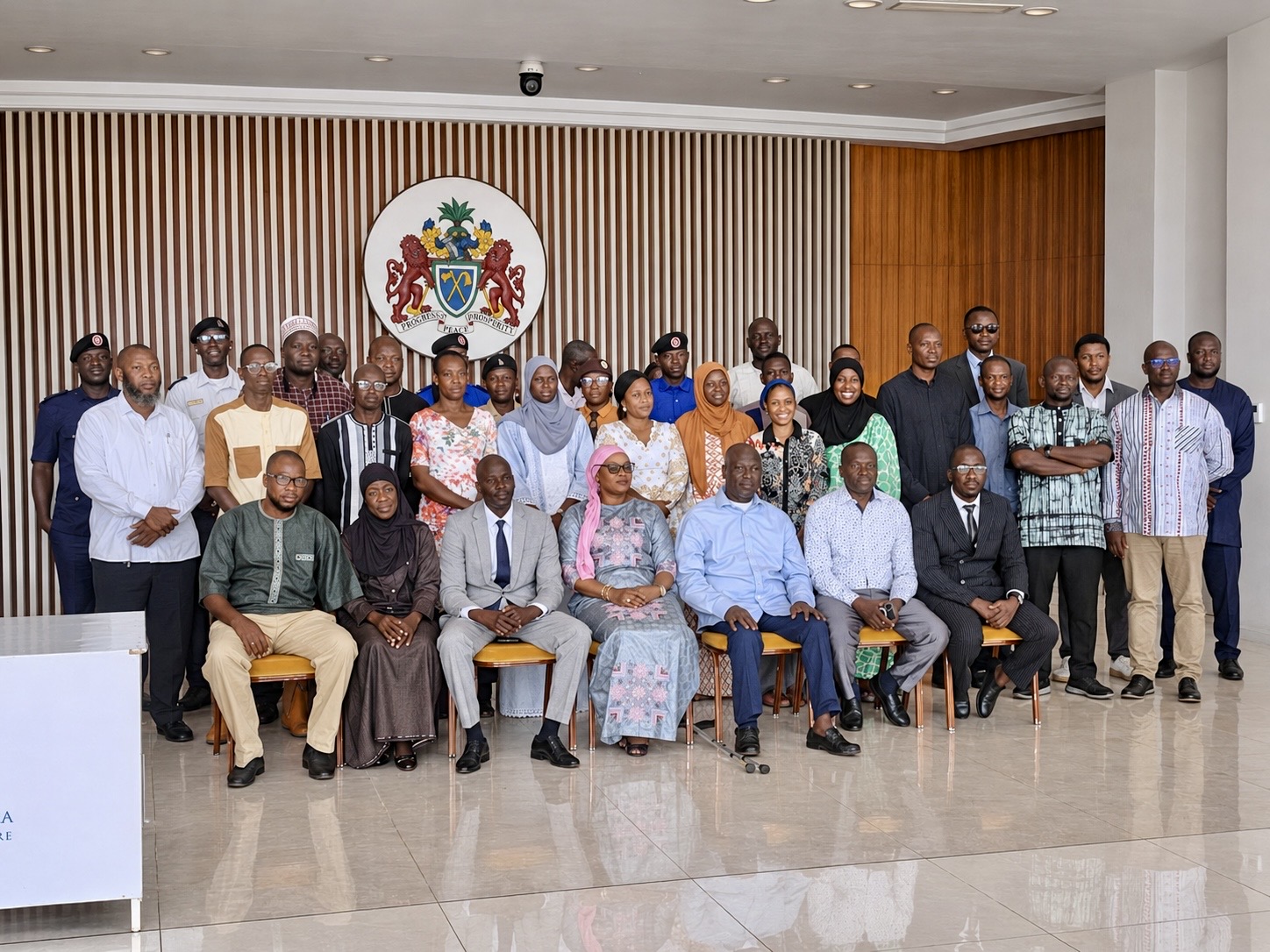
The two-day forum, which opened on African Statistics Day, brought together statisticians, government officials, business leaders and development partners. This year’s continental theme is “Institutionalizing Water and Sanitation Statistics for Sustainable and Climate Resilient Development in Africa.”
Saho acknowledged progress in digitalization, staff training and data sharing, but stressed that these advances rest on an outdated legal framework. The 2005 Act was designed for a largely paper-based system. Today, ministries, hospitals, schools, the tax authority, immigration and the police generate vast amounts of data, much of it on digital devices. Without a modern law, he said, there is no clear obligation to share information, no common standards, and inadequate safeguards for quality.
“The effective functioning of the National Statistical System depends on cooperation between the institutions that produce statistics and those that use them,” Saho stated. He urged stronger sectoral coordination, better use of administrative data, and routine sharing of reliable statistics.
Sarata Konateh, Chief Executive Officer of the Gambia Chamber of Commerce and Industry and a member of the National Statistics Council, argued that legal reform alone is not enough. Sustainable financing remains a critical challenge. She warned that The Gambia cannot continue to rely primarily on development partners to count its own people and measure its own progress.
“Statistics require adequate and predictable domestic resources,” Konateh said. She pledged that the National Statistics Council would continue pressing the Government and the Ministry of Finance for increased and stable budgetary allocations to GBoS and the wider statistical system. She also called for full implementation of the National Strategy for the Development of Statistics III (NSDS III), which runs from 2024 to 2028 and aims to strengthen governance, coordination and institutional capacity.
The African Statistics Day theme underscores the practical stakes. Reliable water and sanitation statistics determine whether communities in Basse have clean drinking water, whether floods in Bakau displace families, whether a new borehole in Kuntaur is functioning, and whether public funds reach the places that need them. Without institutionalized, regularly produced data, climate-resilient development remains little more than a slogan, officials said.
Saho thanked development partners, particularly the World Bank through the HISWACA Project, for supporting statistical capacity building, institutional strengthening, and graduate programs in data science, statistics, and demography. These initiatives are training the next generation of Gambian statisticians. Yet Konateh and others insisted that training cannot substitute for consistent national budget support.
The forum continues on Thursday. The decisive test, Saho indicated, will come in 2026: whether The Gambia enacts a new Statistics Act that recognizes artificial intelligence, digital data flows and modern coordination requirements. Such a law would provide the legal foundation for a 21st-century statistical system. Without it, the country will keep trying to manage a modern economy and climate challenges with a 2005 statute, while relying on external partners to tell its own story.