By: Sainabou Sambou
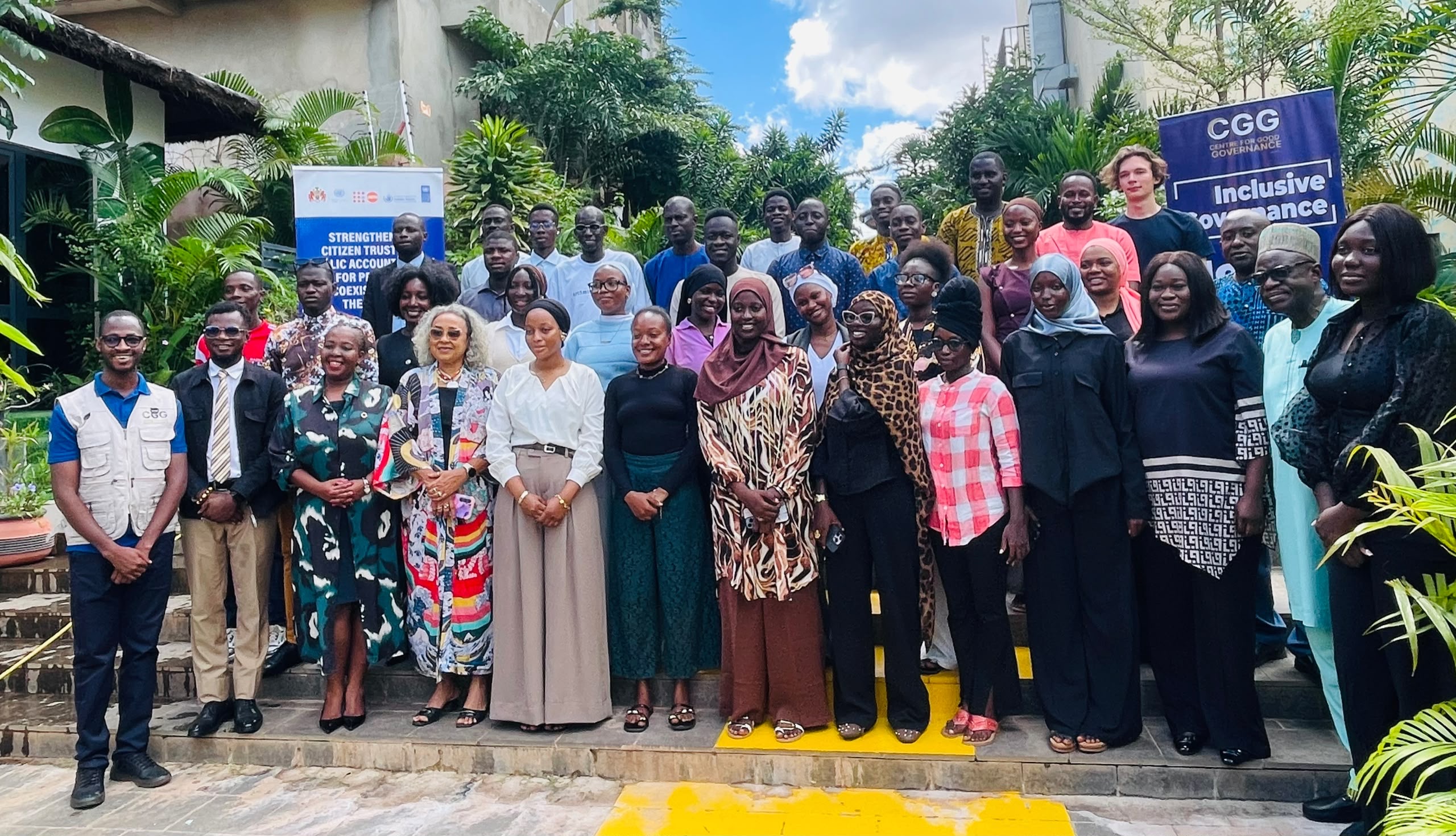
The Center for Good Governance (CGG), working with the United Nations Development Programme (UNDP), UNFPA and the Office of the High Commissioner for Human Rights (OHCHR), on Tuesday opened a two-day training for 30 members of the National Youth Parliament on The Gambia’s Access to Information Act 2021.
The session, held under the project “Strengthening Citizen Trust and Public Accountability for Peaceful Coexistence in The Gambia,” is intended to help participants understand the law and apply it in their constituencies.
Alasana Sowe, executive director of CGG, told the opening ceremony that access to information is a fundamental democratic right that allows citizens to take part in public affairs and hold officials accountable. He said the 2021 Act was an important step for Gambian democracy, but that the law would matter only if people knew how to use it. He urged the youth parliamentarians to use the training to strengthen youth participation, support evidence-based advocacy, and promote transparency in their communities, noting that young people worldwide are increasingly leading demands for accountable governance.
Bai Emil Touray, representing the Information Commission, said access to information is essential to democracy and good governance, and that citizens need to know both their rights and the procedures for requesting records from public bodies. He noted that the right is not absolute, because exemption provisions cover certain categories of information.
Touray said the Commission, with support from the UN system, has been running public sensitization on the Access to Information Act and the Personal Data Protection and Privacy Act, which was enacted in September 2025. He described the two laws as closely linked and said public employees and other stakeholders need stronger capacity to implement them. He also expressed hope that the National Youth Parliament would use the training to inform young people, including on access to reproductive health services, and called on participants to pass the knowledge on to peers who were not present.
Yadicon Njie Eribo, chairperson of TANGO, said access to information is a practical tool for civil society organizations engaged in evidence-based advocacy, monitoring of public institutions and efforts to ensure citizens’ concerns shape national development. She recalled that civil society had pressed for the legal framework and argued that adoption of the law was only a starting point. Citizens, public institutions, civil society, the media and young people, she said, must now use it.
Eribo asked the youth parliamentarians to return to their communities as advocates for transparency, accountability and responsible citizenship, and stressed the need for credible information ahead of the coming electoral period so that young people can separate facts from misinformation and disinformation.
Jabou Sisawo, Speaker of the National Youth Parliament, said the training should help young people understand, take part in and influence decisions that affect their communities and the country. Without reliable information, she said, meaningful participation is difficult, and weak transparency erodes accountability and public trust. She rejected the idea that young people are only future leaders, arguing that they already contribute to national development and engage decision-makers. The 30 participants, she said, should act as multipliers by carrying the training into constituencies, schools and youth networks. She urged them to verify information before sharing it, especially where misinformation can undermine peaceful coexistence, and to use information not only to criticize institutions but also to understand problems and help find solutions.
UNDP Resident Representative Mandisa Mashologu said young people have a central role in voicing the aspirations of Gambian youth and advancing accountable governance. She noted that more than four in every ten Gambians are aged 15 to 35, making youth participation essential to the country’s development.
Mashologu highlighted the National Youth Parliament’s regional consultations ahead of its 2026 sittings, saying they had strengthened youth representation. She encouraged participants to focus on budget oversight and on ways young people can influence resource allocation so that investment in youth increases. With elections approaching, she said credible information, public trust in electoral institutions, and efforts to counter misinformation and hate speech would be critical to peaceful polls, and that young people would be at the forefront of that work.
She also called for greater accountability in development financing at a time when global resources are constrained. She urged UN agencies and partners to coordinate so that efforts are not duplicated, and resources have maximum impact.