By: Alieu Ceesay
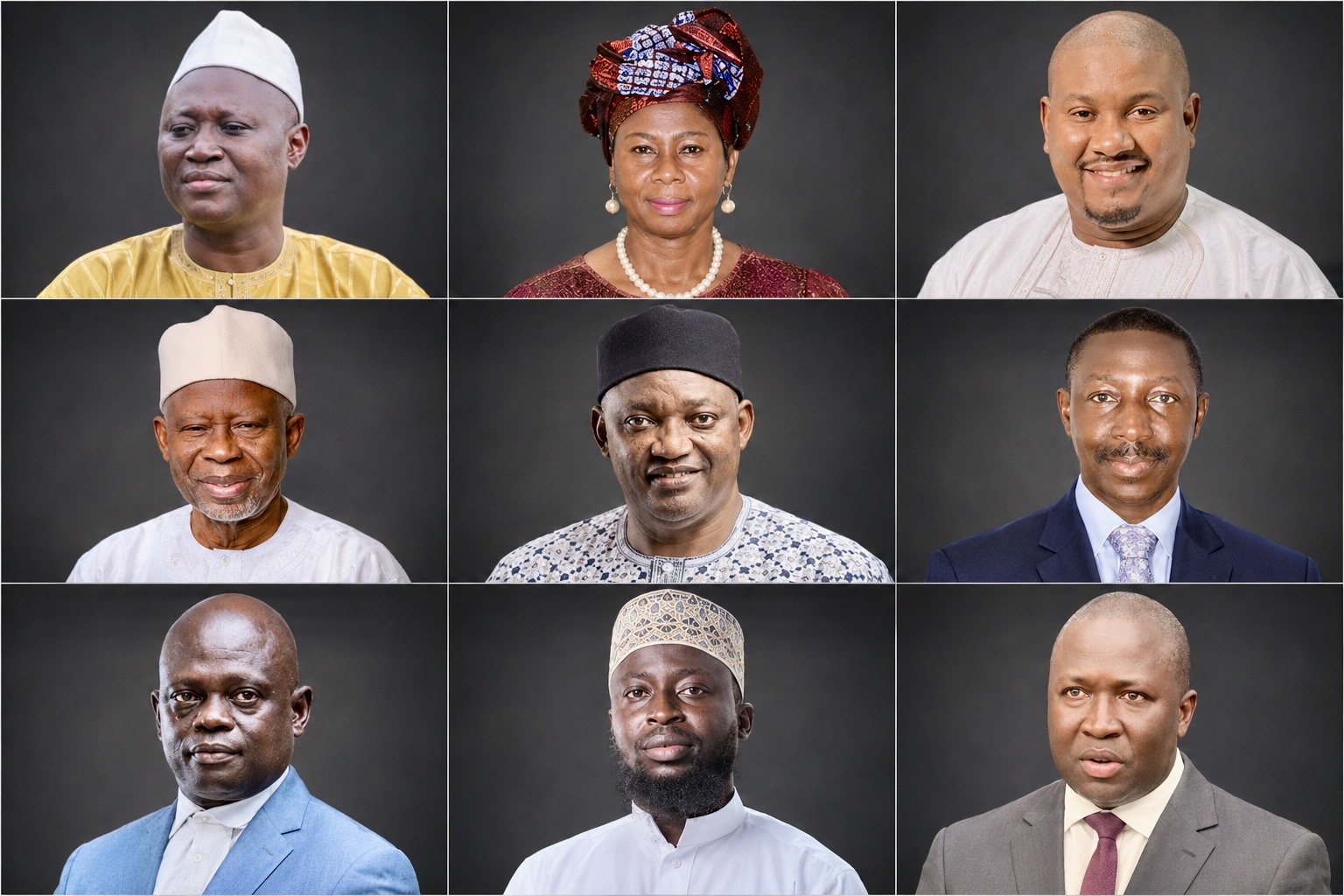
The Independent Electoral Commission (IEC) on Saturday closed the nomination window for The Gambia’s December 5, 2026 presidential election and confirmed a final list of nine candidates. The process, which opened on November 3, saw eleven aspirants withdraw and seven nominations rejected, leaving a field that mixes the incumbent, veteran opposition figures, former government officials, a rising municipal leader, and independents.
Official campaigning opens on November 16 and ends on December 3. On Sunday, the IEC will harmonize the candidates’ campaign programs to avoid clashes, and on Monday the Commission, International IDEA, and the candidates or their representatives will sign a Peace Pact at the Sir Dawda Kairaba Jawara International Conference Center. IEC Chairman Joseph Colley urged all candidates and supporters to campaign within the law and wished stakeholders a peaceful period.
The Contenders
Adama Barrow, 61, of the National People’s Party is seeking a third term. Born in Mankamang Kunda in the Upper River Region, the former real-estate developer and UDP treasurer emerged in 2016 as the consensus candidate of a seven-party coalition that ended Yahya Jammeh’s 22-year rule. He has governed since 2017, was re-elected in 2021, and founded the NPP in 2019. His administration has prioritized roads, bridges, schools, and health facilities, but faces criticism over the pace of constitutional and security-sector reform.
A.N.M. Ousainu Darboe, 78, of the United Democratic Party is making his sixth and, he says, final presidential bid. The lawyer and long-time opposition leader founded the UDP in 1996 and has contested every election since. Imprisoned under Jammeh, he served briefly as Vice President under Barrow in 2018–2019 before the two fell out. Darboe has pledged to serve only one term if elected, focusing on a new constitution, security-sector reform, anti-corruption measures, and civil-service changes.
Isatou Touray, running as an independent, is the first woman to appear on a Gambian presidential ballot. A gender-rights activist who co-founded GAMCOTRAP and holds a PhD in Development Studies, she served as Minister of Trade, Minister of Health, and Vice President from 2019 to 2022 under Barrow. She has acknowledged shared responsibility for the government’s record and says her experience has prepared her to offer a different leadership style centred on accountability and the unfinished promises of the 2016 transition.
Talib Ahmed Bensouda, 40, of Unite for Nation, Integrity, Transformation and Equality (UNITE), recently resigned as Mayor of Kanifing after eight years in office to focus on the presidency. Born in Bakau, the University of Toronto graduate and entrepreneur became the country’s youngest mayor in 2018 and was re-elected in 2023. He leads both UNITE and a broader Coalition 2026, campaigning on a “Transformation Agenda” that stresses security reform, economic recovery, anti-corruption measures, and an end to tribal politics. A government commission recently made adverse findings against him; his party calls the timing political.
Modou Lamin Sima of the Alliance of Progressive Citizens worked as an insurance agent and manager at the Social Security and Housing Finance Corporation before serving as ambassador-at-large for business and investment under Barrow. The APC was registered in 2025; Sima presents the party as development-oriented, with plans for youth employment and improved public services.
Ebrima Tabora Manneh of the People’s Alliance Party has lived in the United States for 13 years and has nine children. The North Bank-born leader says his party was formed out of dissatisfaction with the country’s development trajectory. He criticizes the government for slow progress compared with peers such as Singapore and Rwanda and promises a stronger focus on education, health, employment, and food security. He previously attempted to run as an independent when his party was unregistered.
Lamin J. Darbo, a trained lawyer, is running as an independent backed by the Team Gambia Grand Coalition. He renounced his British citizenship to meet constitutional requirements and resigned as leader of the National Unity Party. Supported by figures including Halifa Sallah and Sidia Jatta, he has placed “governance, governance and governance” at the center of his message, stressing transparency, the rule of law, and institutional accountability.
Almameh Gibba, National Assembly Member for Foni Kansala, is running as an independent under the APRC “No-To-Alliance” banner and has been endorsed by former President Yahya Jammeh. After receiving his acceptance letter, he told journalists his priorities are security, education, and health. He has criticized the current administration for producing reports rather than genuine security-sector reform. He has called for inclusive national reconciliation that gives both Jammeh and previously unheard victims a platform.
Ansu Sanneh of the newly registered National Builders Party (NBP) was born in Banjul, worked in the Office of the President, served in UN peace operations in Darfur, and later built a family business in the United States. The NBP, registered in September 2026 with the motto “Think Big, Build Big,” has published a detailed 51-policy blueprint covering agriculture, infrastructure, housing, tourism, and youth employment. Sanneh argues the party is the only one with a comprehensive national development master plan.
Eleven parties and independents withdrew during the nomination period, while the IEC rejected seven candidates after they failed to correct deficiencies in their papers. The IEC has reiterated its commitment to transparency, accountability, and fairness as the country enters the official campaign window ahead of the December 5 vote.