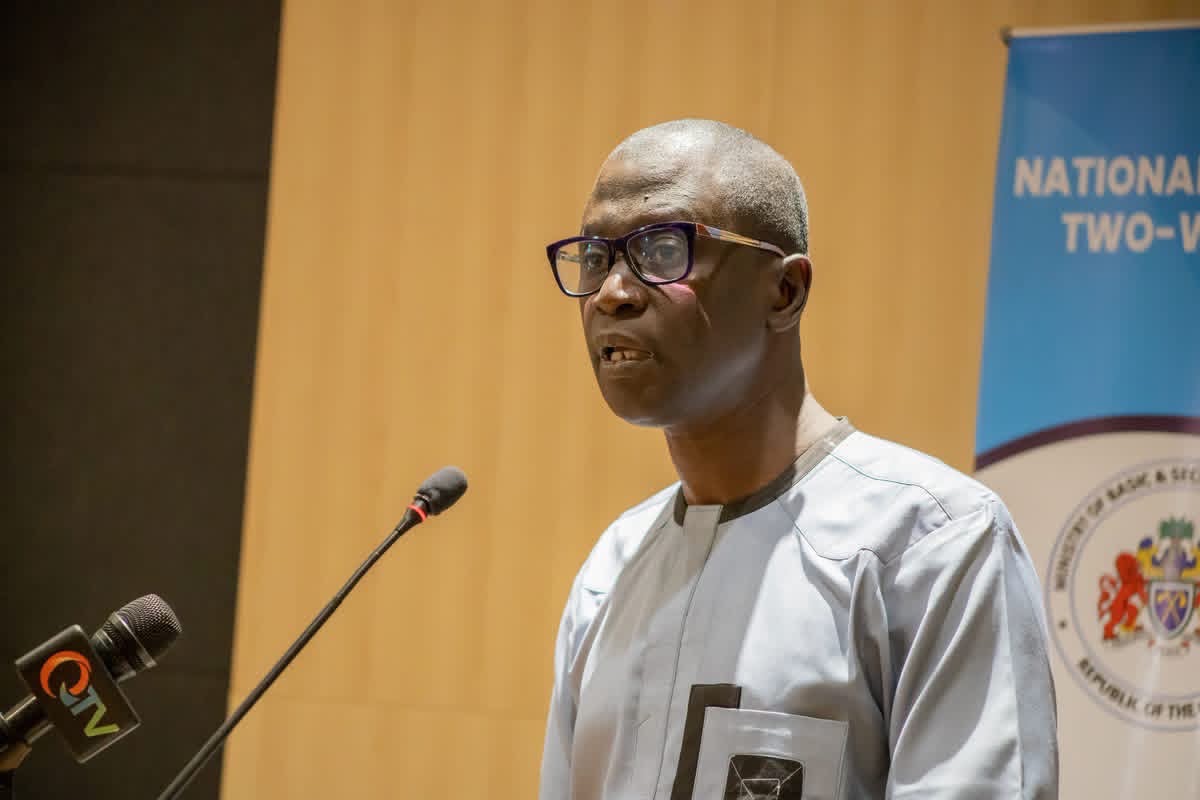
The Gambia Teachers’ Union used World Teachers’ Day celebrations on Monday to renew demands for higher salaries, a meaningful retention allowance and the immediate payment of benefits already agreed with government, arguing that official praise has not eased the financial strain driving teachers out of the classroom.
Speaking at a joint Ministry of Basic and Secondary Education and GTU event at the Sir Dawda Kairaba Jawara International Conference Center, union president Ismaila S. Ceesay said concrete improvements must match recognition of teachers’ role in national development in pay and conditions. Quoting the historian Henry Adams, he told the gathering: “If our influence reaches eternity, surely our salaries can at least reach the end of the month.”
Ceesay acknowledged that the ministry’s 2026 allocation had risen to D5.9 billion, but said the increase had not translated into remuneration that could keep experienced staff in public schools. He singled out the D250 monthly retention allowance as particularly inadequate.
“Ten dollars cannot buy half a bag of rice. It cannot fill a tank of fuel. In some homes, it will not even sponsor one week of attaya,” he said. The union contends that the allowance does little to offset living costs and is one reason teachers are leaving for private schools, non-governmental organizations, other sectors and posts abroad.
“We are losing good teachers to private schools, to NGOs, to other sectors, and to other countries,” Ceesay said, adding that retaining staff already trained at public expense is cheaper than replacing them.
He also pressed for the immediate payment of special skills and retention allowances agreed between the union and the Ministry of the Public Service after a teachers’ sit-down strike. “An agreement signed is a promise made. We respectfully demand that both allowances be paid, as agreed, without further delay, and that the retention allowance be reviewed to a meaningful percentage of basic salary.”
Beyond the outstanding payments, the GTU wants the government to revive and fully implement a new pay and grading structure for teachers and other civil servants, rather than rely on periodic increments. Ceesay argued that a structured system would improve fairness, strengthen pensions, reward qualifications and responsibility, and give clearer salary progression.
“Civil servants are not asking for another salary increment. We are asking for the revival and full implementation of the new pay and grading structure,” he said. He warned against treating teachers’ endurance as a substitute for pay: “They are resilient, but resilience is not a salary. You cannot pay rent with resilience.”
This year’s observance was held under the theme “Standing with teachers: 60 years of protecting the profession, advancing its status and shaping our futures.” The union said standing with teachers must mean better pay, meaningful allowances, improved working conditions, and greater professional recognition, not appreciation alone.