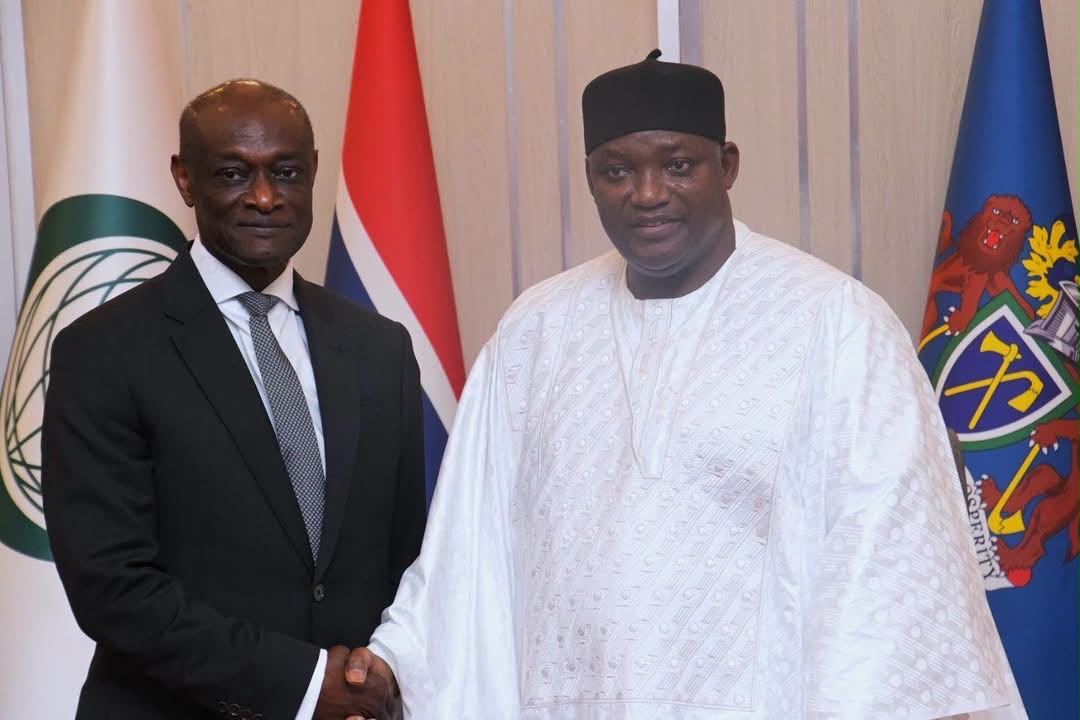
The Edward Francis Small Center for Rights and Justice (EFSCRJ) has urged President Adama Barrow to immediately rescind the appointment of Edi M.O. Faal as Chief Justice of The Gambia, describing the move as unconstitutional and a threat to the rule of law.
In a public statement dated 3 August 2026, the rights group expressed “grave concern” over Faal’s swearing-in on 31 July 2026, while the tenure of outgoing Chief Justice Hassan B. Jallow had not yet expired. The decision effectively left the country with two Chief Justices at the same time, EFSCRJ said.
The organization noted that the Gambia Bar Association (GBA) had opposed the appointment as early as 9 July, arguing that Faal did not meet the requirements under Section 139 of the 1997 Constitution. EFSCRJ itself stated on 13 July, calling for full transparency on the process, constitutional basis and qualifications behind the reported appointment. The government made no prior public announcement, and neither the President nor the Attorney General responded to written requests from the Bar Association.
EFSCRJ said a review of Faal’s publicly available résumé shows he has never served as a judge in The Gambia or elsewhere and provides no evidence of at least 12 years of practice as a legal practitioner in a common law country. Although Faal built a distinguished career in the United States, that country is neither a Commonwealth member nor designated by the National Assembly as a common law jurisdiction for Section 139.
The GBA has invoked the Supreme Court’s original jurisdiction to challenge the appointment’s constitutional validity. EFSCRJ said it is “profoundly troubling” that an appointment to the highest judicial office should begin under circumstances that trigger an immediate constitutional challenge.
The centre also pointed out that President Barrow’s action contradicts the Commonwealth Latimer House Principles, which stress transparent and lawful judicial appointments. Barrow had participated in a Tripartite Conference on those principles only days earlier, from 22 to 24 July 2026.
EFSCRJ called on the President to rescind the appointment or take steps to protect the integrity of the judicial process pending the Supreme Court challenge, disclose the process and constitutional basis for the decision, and ensure future judicial appointments strictly comply with the Constitution.
The group reminded Barrow of his legal and ethical duty to uphold the rule of law, noting that the Supreme Court has twice ruled against his administration—once in the 2019 removal of nominated National Assembly Member Ya Kumba Jaiteh and again in the 2025 removal of former Auditor General Momodou Ceesay.
“Repeated disregard for the Constitution is a hallmark of authoritarian rule,” EFSCRJ warned, urging civil society, political parties, the media and all Gambians to defend the Constitution.