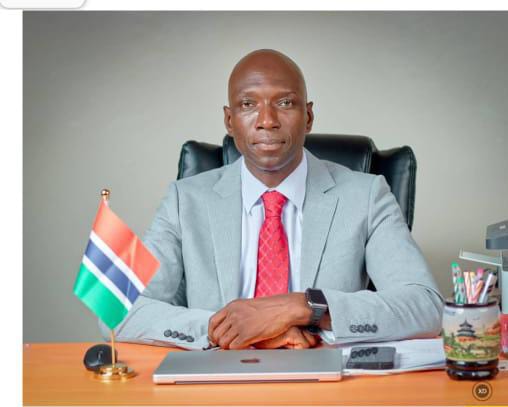
Prominent Gambian economist and politician Dr. Ousman Gajigo has accused the administration of President Adama Barrow of irresponsibly ballooning the country’s public debt, more than doubling it in less than a decade while misallocating the borrowed funds.
In a detailed statement titled “The Truth About The Gambia’s Public Debt,” Gajigo directly challenged recent comments by Finance Minister Seedy Keita, saying the minister had attempted to “spin a narrative at odds with reality.”
According to Gajigo, The Gambia’s total public debt stood at approximately D60 billion in 2016. Today it exceeds D140 billion. “No matter which way one looks at it, the Adama Barrow administration has added more to the debt than earlier administrations did,” he wrote. “So the legacy of earlier debt is not a major driver of the current public debt.”
He highlighted a particularly troubling shift in the debt’s composition. External debt, which must be repaid in foreign currency and cannot be inflated away, now forms a far larger share of the total than in 2016. Servicing this debt accelerates the depreciation of the dalasi, which Gajigo identified as a major contributor to inflation and the rising cost of living.
Gajigo also rejected attempts to treat debt accumulated by state-owned enterprises (SOEs) as separate from government liabilities. The central government, he noted, appoints SOE management and boards, sets their strategies, and often provides loan guarantees. “It therefore makes no sense to speak as if the liabilities incurred by these SOEs somehow mitigate the gargantuan size of the debt this government has accumulated.”
The economist dismissed claims that the debt financed meaningful development, focusing on the two sectors the government has most publicly celebrated: electricity and roads. Billions of dalasi have been spent on electricity, largely through the
National Water and Electricity Company (NAWEC), yet energy security remains elusive.
Gajigo cited more than D12 billion paid to Karpowership for temporary power and the country’s heavy reliance on electricity imports from Senegal. These arrangements, he said, leave The Gambia exposed to decisions beyond its control and were financed through deficit spending and multilateral loans that increased public debt without delivering clear long-term gains.
On roads, Gajigo argued that many projects suffer from poor planning and construction quality, contributing to traffic congestion and flooding. He claimed losses from the Senegambia Bridge deal alone exceeded the value of all roads built under the current administration, meaning the associated debt could have been avoided through better negotiation.
“In reality, while the country spends significant resources on the electricity and transport sectors, very little of it actually counts as investment,” Gajigo concluded. “It is all recurrent expenditure that worsens the unfavorable status quo.”
He described the overall picture as a classic case of fiscal irresponsibility: avoidable debt, incurred under poor leadership, and paired with gross misallocation of resources.