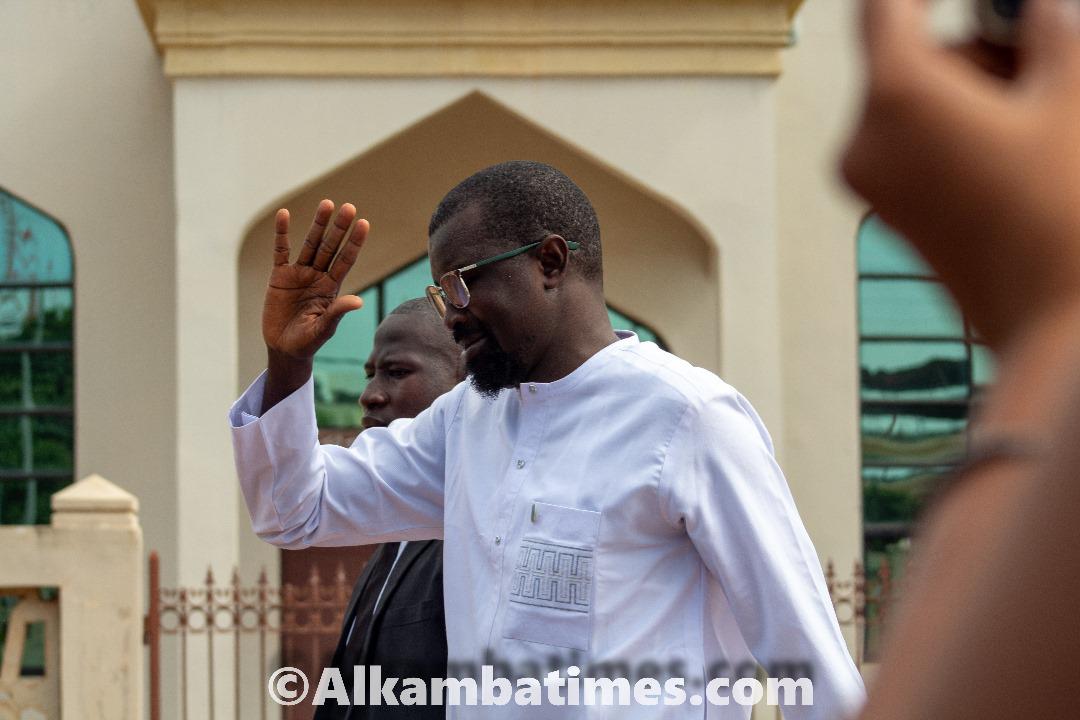
The Edward Francis Small Center for Rights and Justice (EFSCRJ) has voiced deep disappointment over today’s Supreme Court judgment declaring the 2025 removal of Auditor General Momodou Ceesay and his forceful eviction from office unconstitutional, while criticizing the court for stopping short of ordering his reinstatement.
In a strongly worded public statement issued on the day of the ruling, the human rights and governance watchdog argued that the judgment undermines constitutional protections and risks encouraging future executive overreach. Although the court ruled in Ceesay’s favor and awarded him full salaries for the remainder of his tenure, gratuity, pension, and D4 million in damages against the Inspector General of Police, EFSCRJ said the remedies fall dangerously short.
“The Supreme Court rightly declared both the removal and the eviction unconstitutional,” the statement reads, “but by declining to order reinstatement, it has weakened constitutional safeguards and exposed other independent institutions to similar interference.”
The group warned that commissioners of the Independent Electoral Commission, the National Human Rights Commission, the Ombudsman, and even Supreme Court judges could now face unconstitutional removal with little more than financial compensation as consequence. It described the decision as sending the wrong message that no authority, including the President, can be effectively checked by the Constitution.
EFSCRJ further objected to taxpayers bearing the financial burden of the government’s unlawful actions.
“The responsible officials—the President, Attorney General Dawda A. Jallow, and Inspector General of Police Seedy Muctarr Touray—face no personal sanctions. “Public officers who knowingly violate the Constitution should bear personal responsibility rather than transferring the cost to innocent citizens,” the statement said.
The organization also challenged the court’s view that reinstatement was impracticable due to a breakdown in relations between Ceesay and the Executive. “Public office is not personal property,” it argued. “Constitutional remedies cannot be sacrificed because of personal discomfort.”
This marks the second time in seven years that the Supreme Court has found President Adama Barrow’s actions unconstitutional, following the 2019 removal of nominated National Assembly Member Ya Kumba Jaiteh. EFSCRJ called on the National Assembly to summon the President under its oversight powers to explain the repeated violations, and renewed calls for the resignation of Attorney General Jallow and Inspector General Touray.
The group urged civil society, political parties, religious leaders, and citizens to defend the Constitution and demand accountability. “The Constitution is the supreme law of the Republic,” it concluded. “Its violation must never become a cost of doing business in public office.”