By Sainabou Sambou
In a unanimous decision that strengthens presidential authority over Commission of Inquiry outcomes, The Gambia’s Supreme Court has upheld the Commission of Inquiry (Amendment) Act 2023, affirming that the National Assembly acted constitutionally in granting the President the power to issue amnesties to individuals barred from public office.
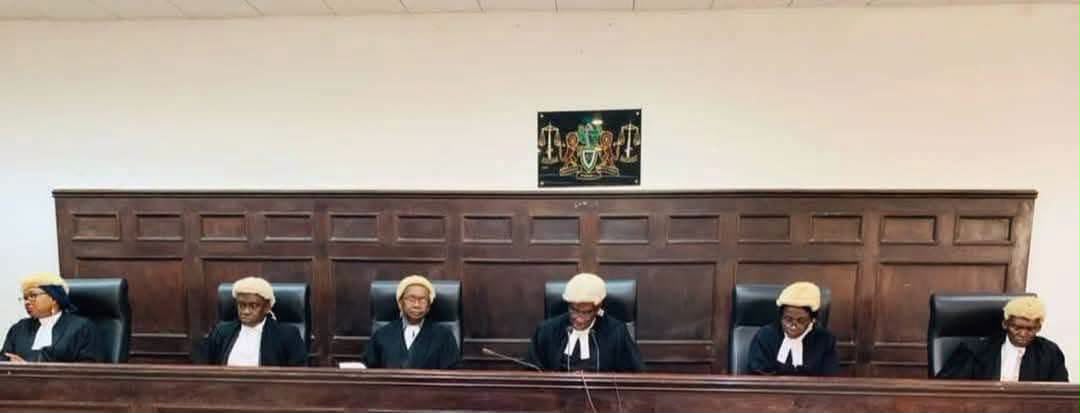
A five-member panel of the apex court headed by the Chief Justice, Hassan Jallow, on Wednesday dismissed the constitutional challenge brought by the Coalition of Progressive Gambians and prominent journalist Kemeseng “Kexx” Sanneh against the Attorney General and the Clerk of the National Assembly. The ruling effectively ends a legal battle that tested the boundaries between parliamentary legislation, commission findings, and executive clemency.
The contested amendment, passed by lawmakers on 2 September 2023, introduced new provisions allowing the President to grant amnesty to persons disqualified from holding public office by Commission of Inquiry reports. Prior to the law, such bans were considered permanent and irreversible.
Lawyers for the plaintiffs argued that Sections 19, 20, and 21 of the amendment conflicted with Sections 200 to 206 of the 1997 Constitution, which govern the establishment and powers of Commissions of Inquiry. They contended that Parliament had overstepped its authority by diluting the binding nature of commission findings through executive amnesty powers. At the heart of their case was the question of whether lawmakers could enact legislation permitting the President to overturn or mitigate the long-term consequences of formal inquiry reports.
Delivering the judgment, the Supreme Court panel ruled that the National Assembly possessed the constitutional competence to amend the relevant laws and to restructure the legal effects of Commission of Inquiry outcomes. The court declared the amendment valid and fully operational.
Senior Counsel Lamin J. Darboe, who led the plaintiffs’ legal team, expressed respect for the judiciary while voicing disappointment with the outcome. “I respect the decision of the Supreme Court. But I disagree with the decision,” Darboe told journalists outside the court premises.
He noted that a review of the judgment appeared unrealistic given the unanimous position of all five justices. Darboe said his team would now consult with the Coalition of Progressive Gambians and Kexx Sanneh to determine the next course of action, though options remain limited at the domestic level.
The decision carries significant political implications. It clears the way for President Adama Barrow and future presidents to exercise discretion in rehabilitating individuals previously barred from public service by commission findings. Legal Analysts say the ruling could influence the political landscape ahead of future elections, potentially allowing affected figures to return to active political life.
Supporters of the amendment have welcomed the judgment, describing it as a necessary balance between accountability mechanisms and the constitutional principle of mercy. Critics, however, worry it may undermine the credibility and deterrent effect of future Commissions of Inquiry.
With this verdict, the Supreme Court has settled a key constitutional question, reinforcing the National Assembly’s legislative supremacy in shaping the framework of public inquiries while expanding executive flexibility in their application. The amendment now stands as enforceable law, reshaping the post-inquiry landscape in The Gambia.