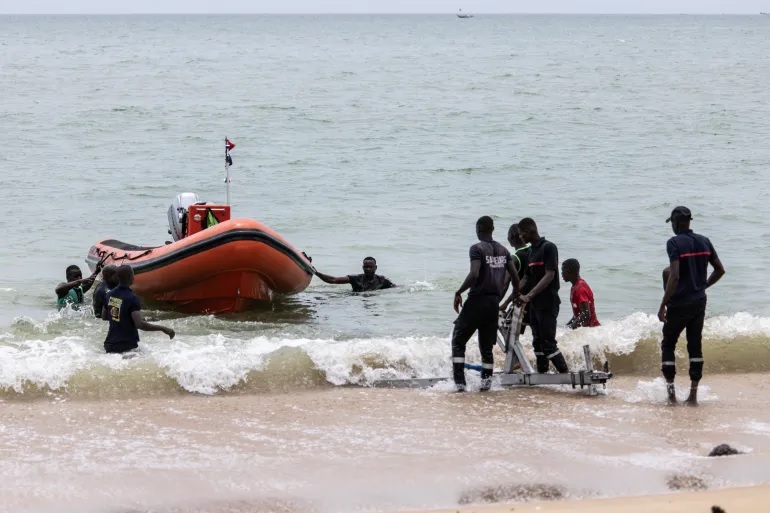
The International Organization for Migration (IOM) expressed profound sorrow Tuesday following what it described as the deadliest shipwreck so far this year on the perilous West African Atlantic route, where at least 143 migrants are feared dead after a overcrowded vessel capsized off Mauritania.
Survivors told rescuers the boat left The Gambia more than three weeks earlier carrying around 180 people, including men, women and children from several West African nations. After 25 grueling days at sea, the Mauritanian Coast Guard and local fishermen rescued 38 survivors near Nouadhibou on July 18. One body was recovered, while the remainder of those on board are missing and presumed drowned. Among the survivors were two children who lost both parents and a younger sibling in the disaster.
IOM extended its condolences to grieving families and praised Mauritanian authorities and fishing communities for their swift response. “Every life lost on this route is one life too many,” said Sylvia Ekra, IOM Regional Director for West and Central Africa. “My thoughts are with the families who are mourning loved ones, and with the survivors who have endured an unimaginable ordeal.”
The tragedy brings the confirmed death toll on the West African Atlantic route to the Canary Islands to 168 so far in 2026, with two additional suspected “invisible shipwrecks” still under investigation that may have claimed hundreds more lives. Despite a sharp drop in arrivals — only 4,440 migrants reached the Canary Islands this year compared with 11,575 in the same period of 2025 — the route remains exceptionally dangerous.
“What this incident shows is that a decline in arrivals does not mean the route has become safer,” Ekra warned. “People continue to risk everything because the pressures that drive these journeys remain.”
The IOM official called for deeper regional cooperation involving countries of origin, transit and destination. She stressed the need for greater investment in protection services, local economic opportunities and expanded legal migration pathways to reduce the incentive for dangerous irregular crossings.
The latest disaster highlights the persistent humanitarian crisis along West and Northwest African migration corridors, where desperation, poverty and limited opportunities continue to push thousands toward the Atlantic despite the well-documented risks. IOM urged governments and international partners to intensify efforts to prevent further loss of life.