By Alieu Ceesay
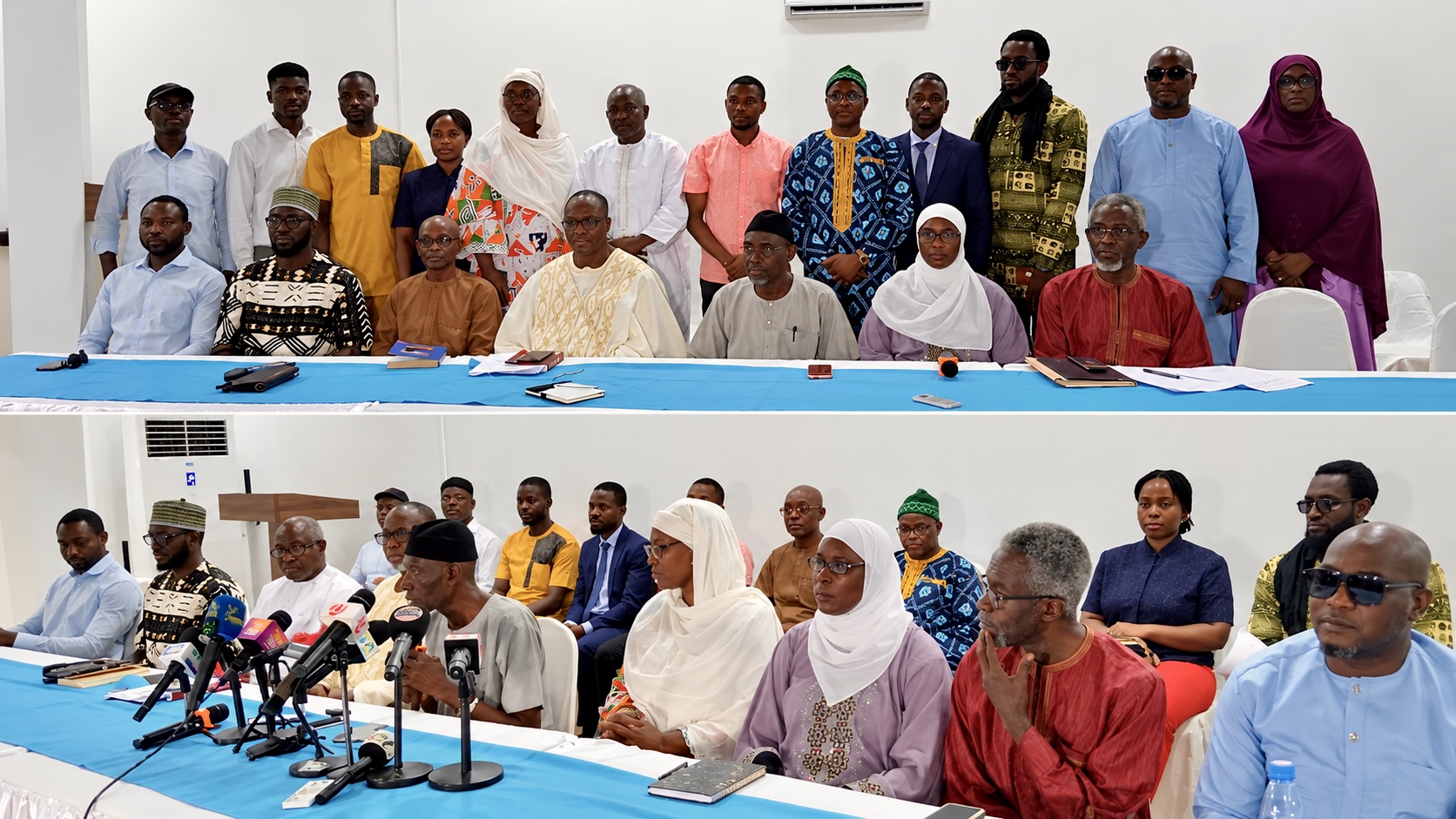
Five opposition parties and allied movements are close to forming a new grand coalition to unseat President Adama Barrow in The Gambia’s December elections, officials announced after months of talks.
The grouping brings together the Democratic Party, Gambia Action Party, National Democratic Party, National Unity Party, and the Peoples Democratic Organization for Independence and Socialism, along with other political movements and independent candidates. Consultations began on 2 March and concluded on 26 August 2026, participants said, as they sought “the best for our country.”
Organizers pointed to the 2016 coalition that ended Yahya Jammeh’s 22-year rule as a model. That alliance delivered Barrow to power, but many of the same actors now argue the incumbent has failed to deliver the democratic and constitutional reforms once promised.
A central pledge is to insert presidential term limits into a new constitution. “We pledge that we will ensure that term limit is imprinted in the constitution of our republic, and that no Gambian will ever again lead this country without more than the vast majority of voters voting for you,” said Halifa Sallah, a leading figure in the talks.
Sallah said a victorious coalition would treat the presidency as a duty of leadership rather than personal rule. “Eighteen months after it resumes what had been the responsibility of our leaders, [it] resumes leading the country in the right way, not ruling it. Leading the country in the right way, not ruling it, not being a monarch. Leading with consultation of the people,” he said.
The partners also committed to deeper engagement with civil society organizations, trade unions, farmers’ platforms, workers, women and youth. Sallah framed the effort as a transfer of sovereignty: “Power belongs to us. The wealth of the country belongs to us. But we are incapable of exercising power to ensure that our resources come back to us. All of us agreed that there is a need to hand over power back to the people, hand over resources back to the people of The Gambia.”
Eradicating extreme poverty would be the government’s first economic priority, with a cabinet focused on what organizers called “poverty eradication economics.” A dedicated committee on justice and human rights would examine past violations and remaining grievances “so that we do justice to the past while preventing its repetition, the repetition of injustices in the future.”
The coalition has not yet named a single presidential candidate or published a full manifesto. Negotiators said they would finalize remaining details, including the allocation of posts and the precise wording of constitutional amendments, in the coming weeks.
Barrow, who won a second term in 2021 after the original coalition fractured, has not publicly responded to the latest talks. His National People’s Party is expected to campaign on infrastructure projects and claims of stability.
The December vote will be the first general election since parliament rejected the 2020 draft constitution. Opposition figures argue that without entrenched term limits and stronger checks on executive power, The Gambia risks repeating the personalization of office that defined the Jammeh era.
Whether the new alliance can hold together longer than its 2016 predecessor will determine if it becomes a genuine alternative or another short-lived electoral vehicle. For now, its leaders present the talks as proof that a second chance at reform remains possible.