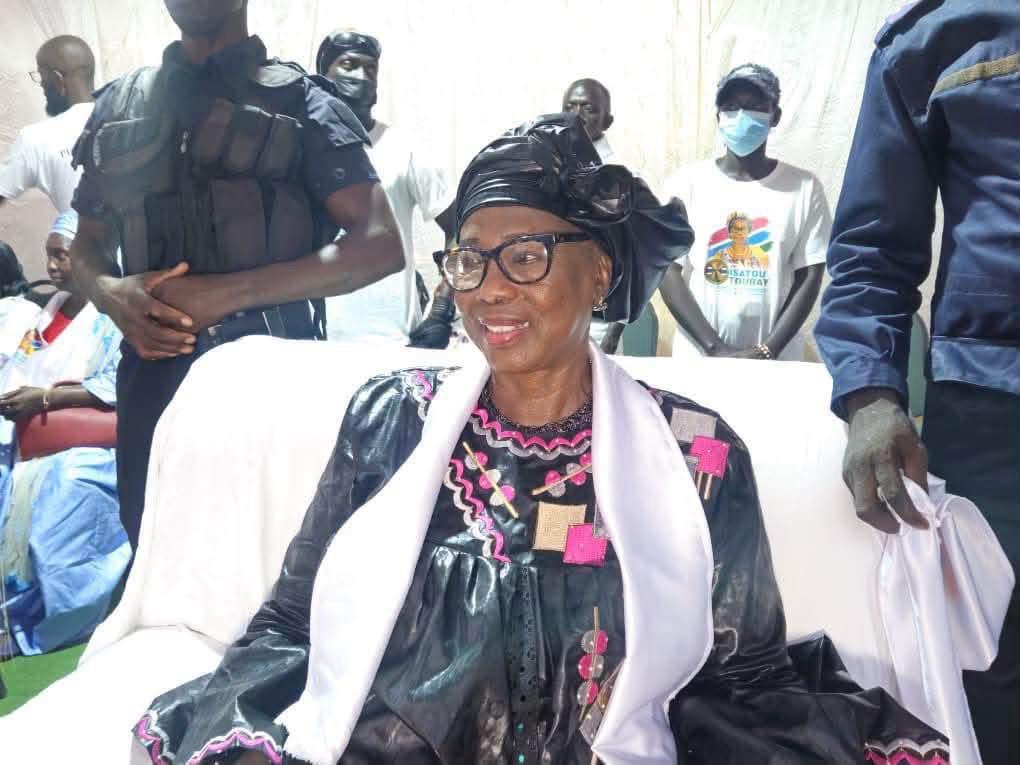
Independent presidential candidate Dr. Isatou Touray has declared that female genital mutilation (FGM) is no longer a problem in The Gambia, while pledging to enforce the existing law criminalizing the practice if elected on December 5.
Speaking in response to questions from journalist Omar Faye about her position on the deeply rooted cultural practice and the approach she would take if elected, the longtime anti-FGM campaigner and former vice president said the country has already achieved formal equality to end FGM. She pointed to the law and to women present as testimony, referring to a group of women as “kaafos.”
The women are here to testify,” Touray said. “And there’s a law. The Gambia has gained formal equality to end FGM. Now this is a practice that is embedded in our social norms, and we need to educate the people to know more about it.”
While reaffirming the need to address the practice, Touray argued that the fight against FGM should not be confrontational. Instead, she said it must be driven by sustained sensitization and community engagement. She emphasized that changing deeply rooted cultural beliefs requires education rather than confrontation, even as the law remains in place.
“Not all religious leaders are in for FGM. Sometimes politicians use it as a political tool. It is not religious leaders. Even though some of them are coming out, they know within their hearts. They read the authentic hadith. Sometimes this is politics,” she said. “I am not going to have any confrontation with any of the religious leaders. Whatever the law is, people will always violate it. The law is there to be enforced, and I will make sure that it is enforced.”
The debate over female genital mutilation remains one of The Gambia’s most sensitive social and cultural issues, drawing strong opinions from both supporters and opponents of the law banning the practice. The country criminalized FGM in 2015, and the National Assembly upheld the ban in 2024 after a high-profile attempt to repeal it.
Touray, who previously led the Gambia Committee on Traditional Practices Affecting the Health of Women and Children (GAMCOTRAP) and has campaigned against FGM for decades, has long been a prominent voice in the effort.
Her remarks come as the presidential election approaches and add another dimension to discussions about how the next government should approach one of the country’s most contentious social issues. Touray, the only woman among the nine candidates cleared by the Independent Electoral Commission, is contesting as an independent after previously serving as Minister of Trade, Minister of Health and Social Welfare, and Vice President under President Adama Barrow.
She has framed her candidacy around issues including constitutional reform, accountability, and women’s leadership, arguing that after decades of male presidents, Gambians should give a woman the opportunity to lead. Her comments on FGM highlight a preference for community-based education alongside legal enforcement, rather than open conflict with religious or traditional authorities.